Since researching folds previously I have been looking out for current artists who are using folds in their work. I came across artist Ty Locke whilst researching the Turner Prize shortlist for 2019. He showed up on my searches of Margate artists and had won the Platform Graduate Award in 2018 at the Turner Contemporary in Margate. Locke is studying a Masters degree in Fine Art at the Slade School of Fine Art, London.
He uses folds in very innovative ways, for instance by cutting and folding a ladder in on itself to make a very differed form. He has hand bent cold metal painted sheets and piled them up to make a site specific sculpture leaning/happening against a wall in a gallery. His work has a strength from his seemingly light touch of the materials. He uses found materials or his own belongings, rendering them into an artwork, often that can still be used for its purpose, and some not, like his bent measuring tape seen below.
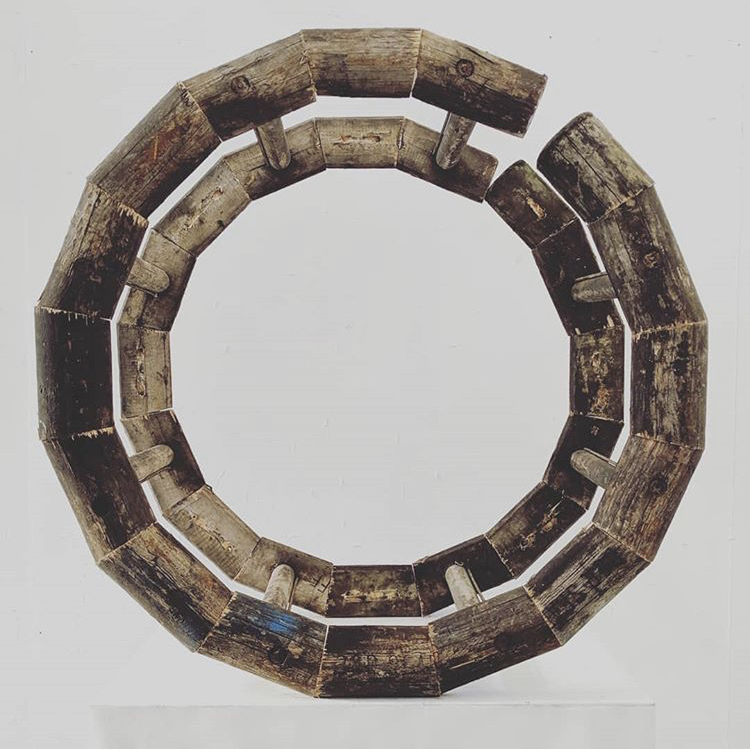
Fig 1, 16 sided ladder Locke, T (2019)
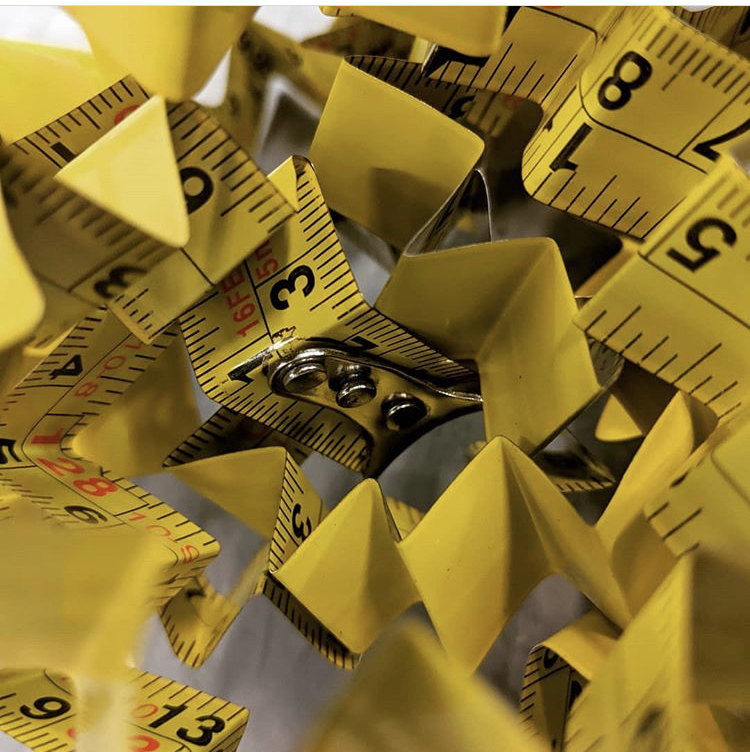
Fig 2, Slade week one Locke, T (2019)

Fig 3, Bent KFC Ceiling Tiles Locke, T (2019)
I asked Locke to tell me more about his folding and he sent me the following statement to include in my research: ‘I think I’ve always been compelled to fold, when I was younger I went though a huge origami phase and would make anything and everything out of paper. As a sculptor I like the idea of folding objects. It almost feels like a gesture. It’s a simple disruption of an object that changes its function. When I’m confronted with an object some of my first thinking is normally “can I fold it …. Can I cut it?”‘ (LOCKE, T. (2019) Message to Culverhouse, T. 28 November 2019)
The week preceding this, I had been folding found materials and prints in the studio. I reuse materials, reduce waste and adopt an ethical approach to materials acquisition. The works shown below were all made in the postgraduate studio between the 19th and the 25th November.
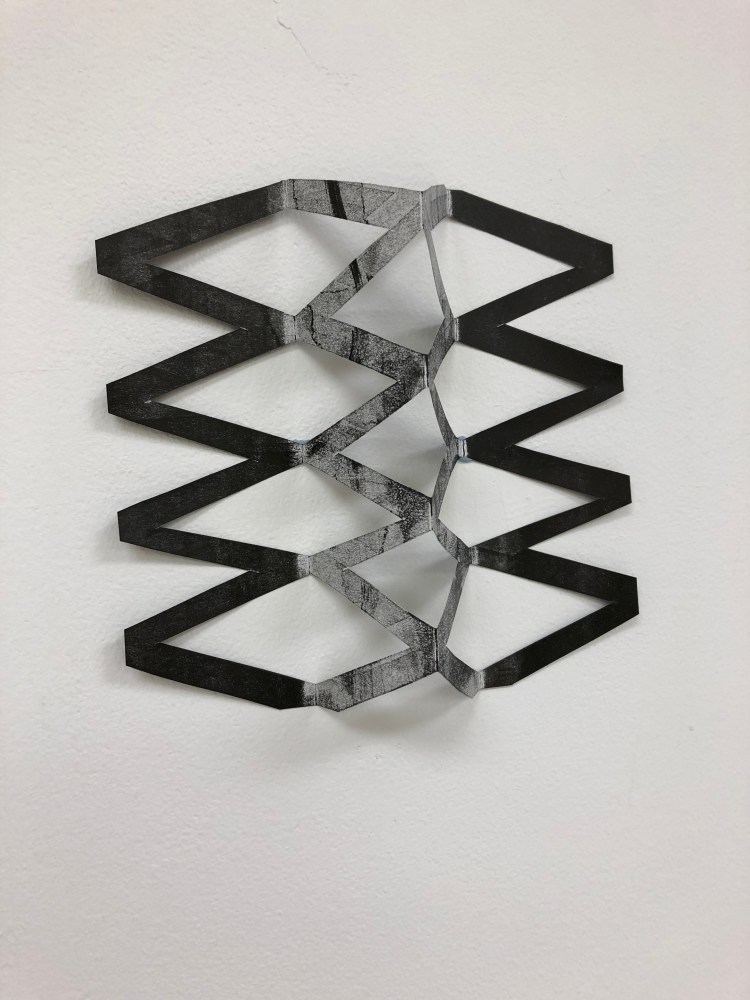
folded paper cut print 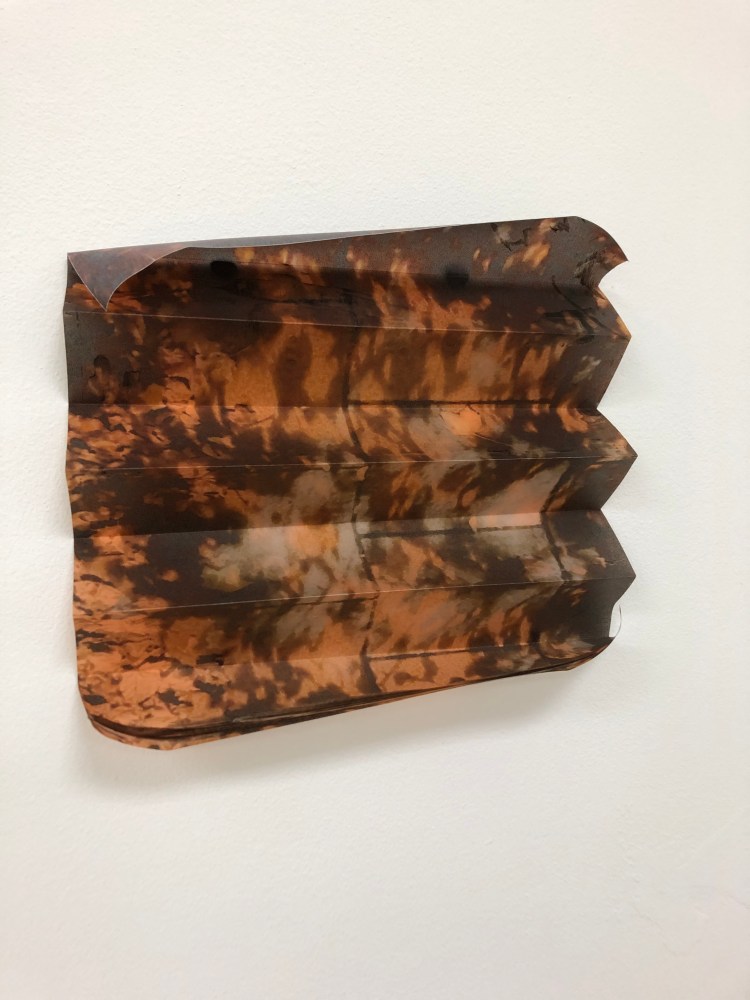
folded tracing paper print 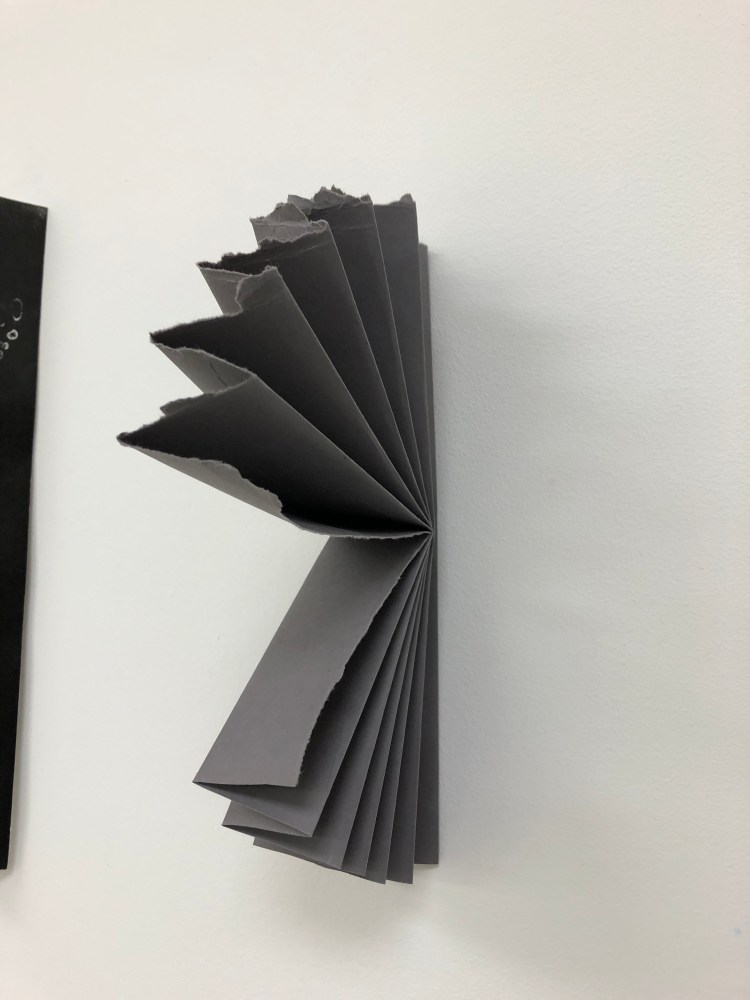
folded found paper 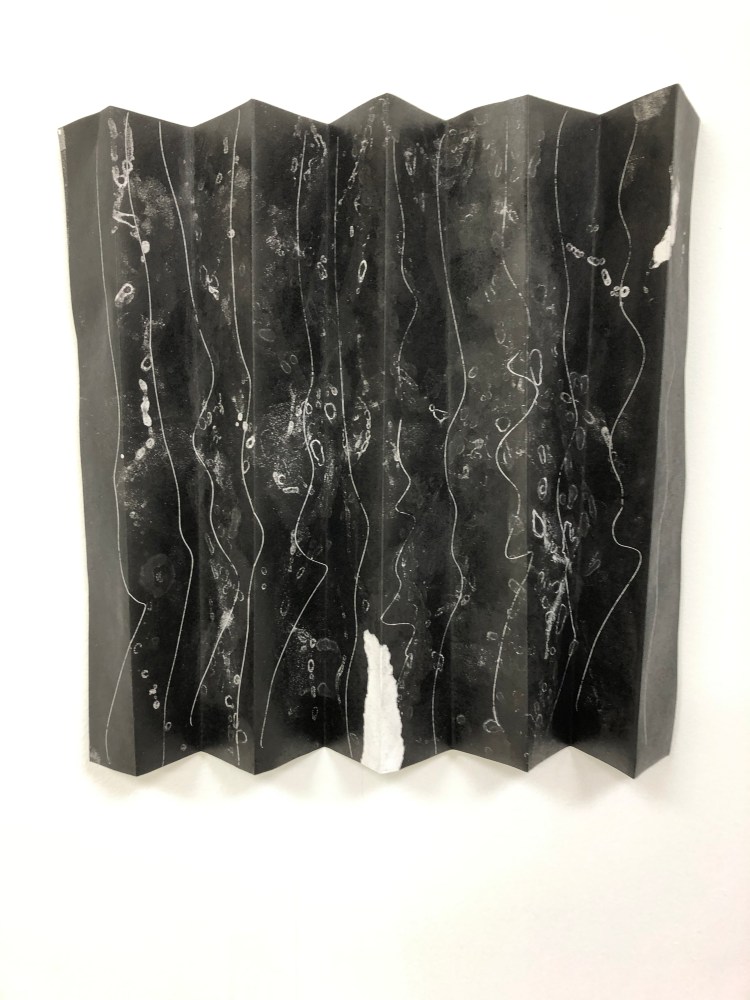
folded monotype
Looking reflectively at the folds, they have been in my practice since the first works made as a child. The ritual and return of the folds in my current practice feels significant and finding other artists like Locke, who make work like this for similar experiential needs in their practice is important in the currency of my work. Using the physicality of materials through making all kinds of objects I realise this method has equal relevancy in practice, working in parallel to more conceptual aspects within my practice.
Fig 1 16 sided ladder, Locke, T (2019).[Available online] https://www.instagram.com/p/B1WwiVRFdm3/?igshid=8xb0y0gptxbx Accessed 30 November 2019
Fig 2 Slade week one, Locke, T (2019) [Available online] https://www.instagram.com/p/B3CTYsRFZm4/?igshid=145eksownaux6 Accessed 30 November 2019
Fig 3 Bent KFC Ceiling Tiles, Locke, T (2019) [Available online] https://www.instagram.com/p/BsjK5abFNks/?igshid=13xabckmj2h7v Accessed 30 November 2019
 Tina Culverhouse