First workshop 17th June 2020
In preparation for the workshop with Anna Ray we were asked to be prepared to do some work. I developed some initial sketchbook ideas (see 1 and 2 below)1 into a series of drawings. These were two dimensional images that I took into a corner and then a cube.
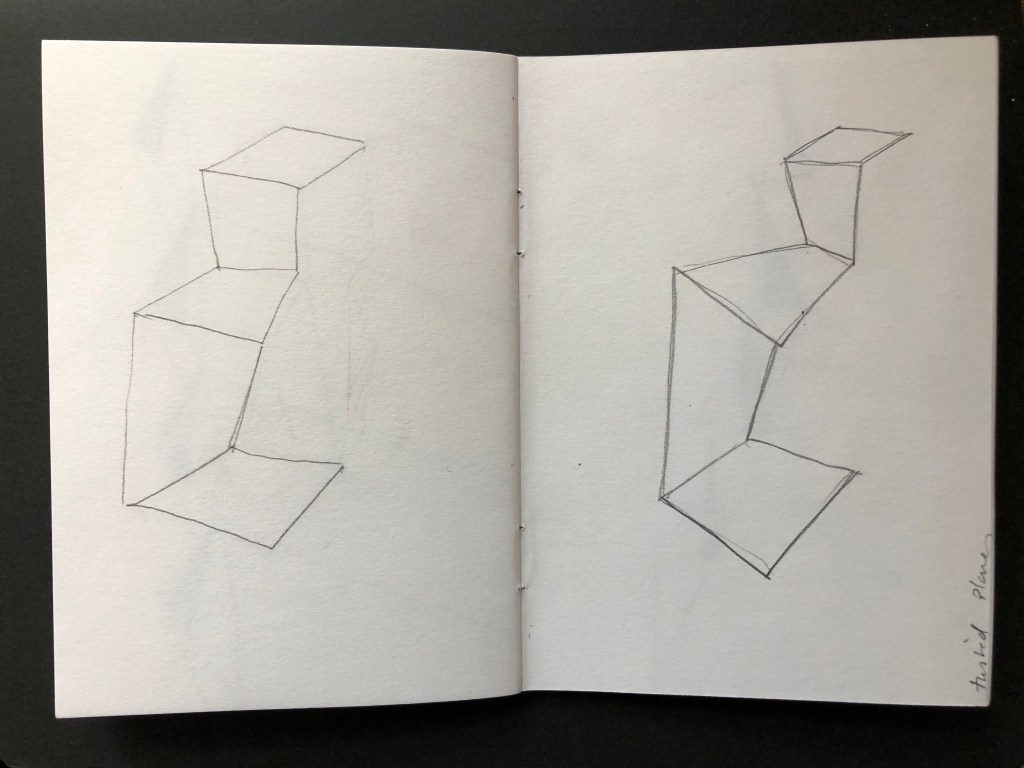
1 sketchbook pages from archive 150mmx200mm 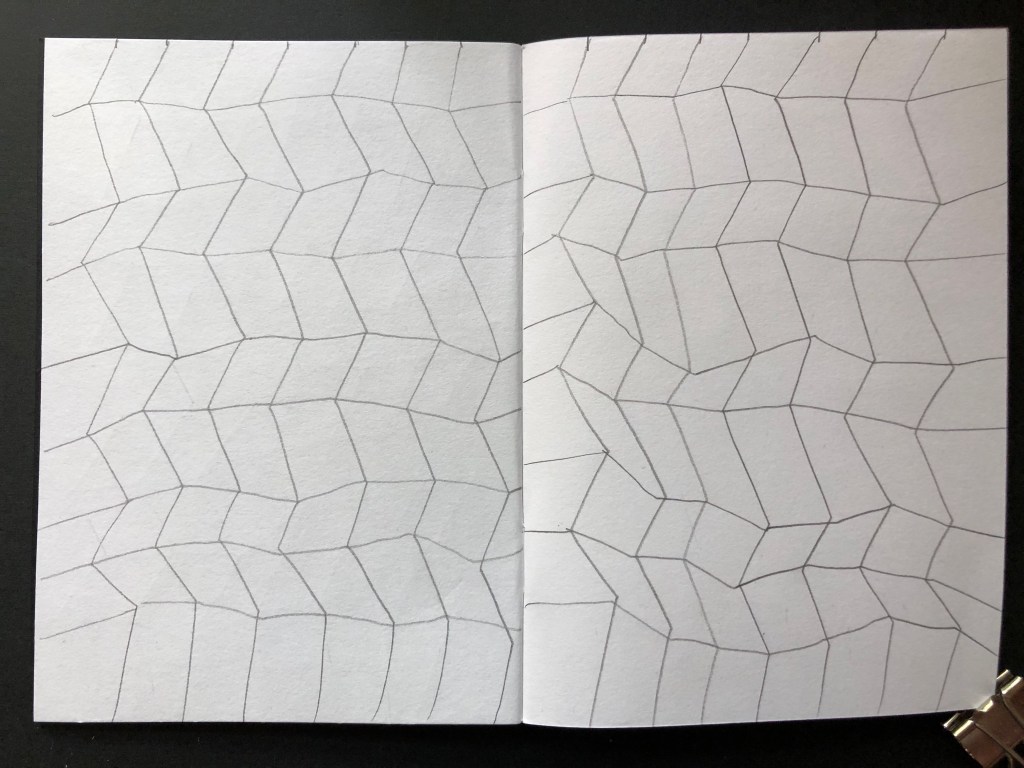
2 sketchbook pages from archive 150mmx200mm
insert pictures from the smaller sketchbooks here
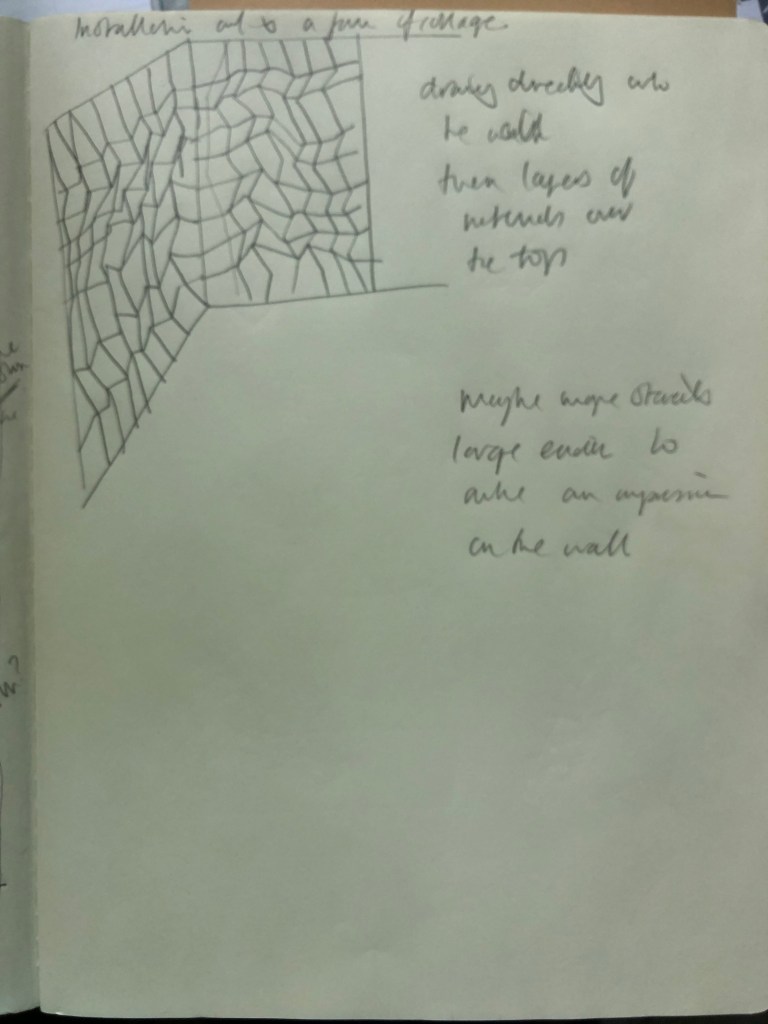
3 sketchbooks proposal initial sketches 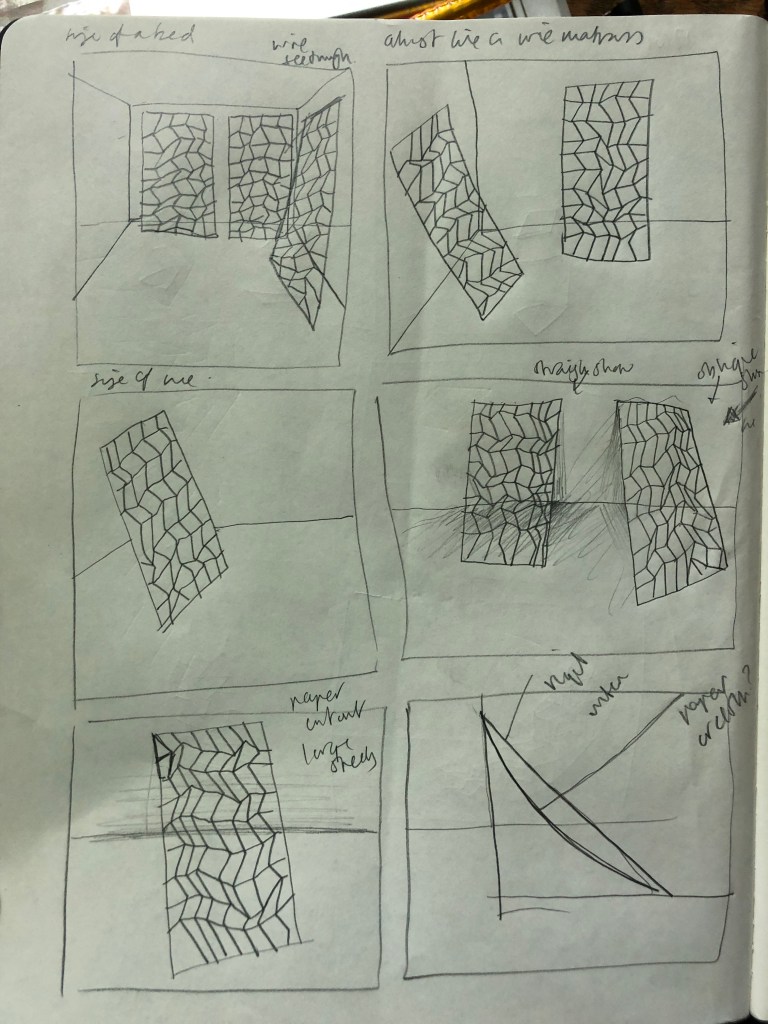
4 sketchbooks proposal initial sketches 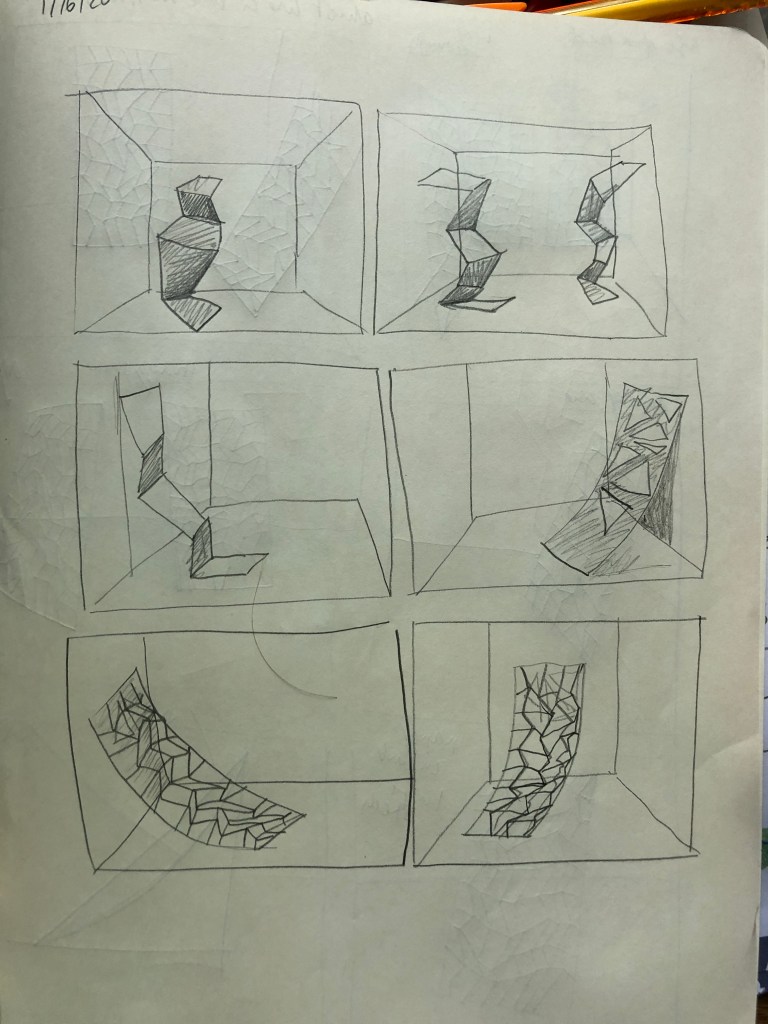
5 sketchbooks proposal initial sketches
Second workshop 24th June 2020
We reviewed the work as set out below as a group and discussed problems and issues one might encounter.
Making the scaled paper sculpture from prints some photographic prints that I had unearthed during my studio rearrange. I applied my system the back of the pieces and cut them out. I decided to stop cutting at a certain point that felt right as the piece had a good weight to it with some left uncut. I then also used some black spray paint and the cut out acted as a stencil.
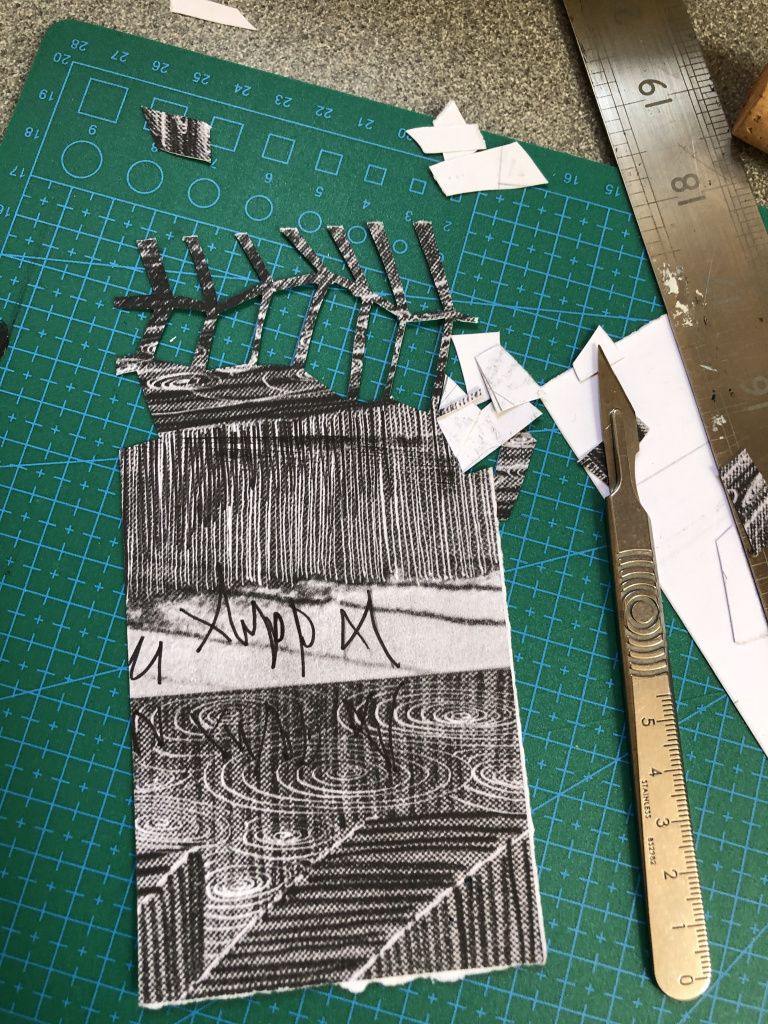
6 working on the cutouts maquettes 
7 working on the cutouts maquettes
This made two pieces that I could place in the scaled gallery and lit them. I moving the sculptures around and also turning them around to show different material properties of the surfaces.
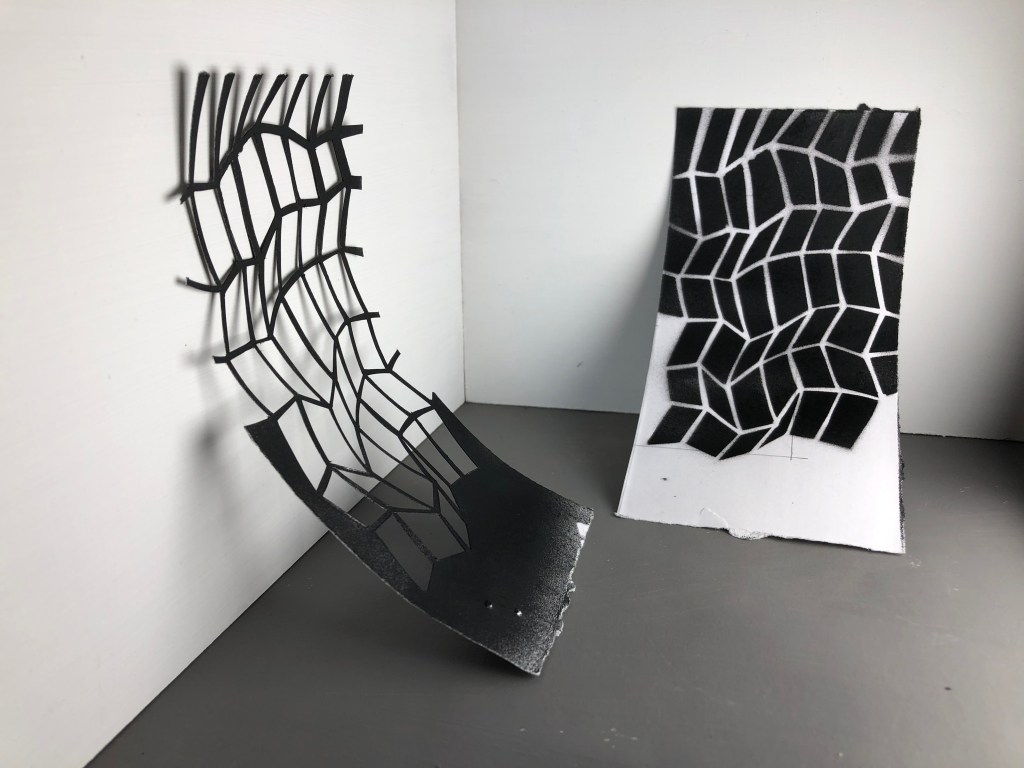
version 1 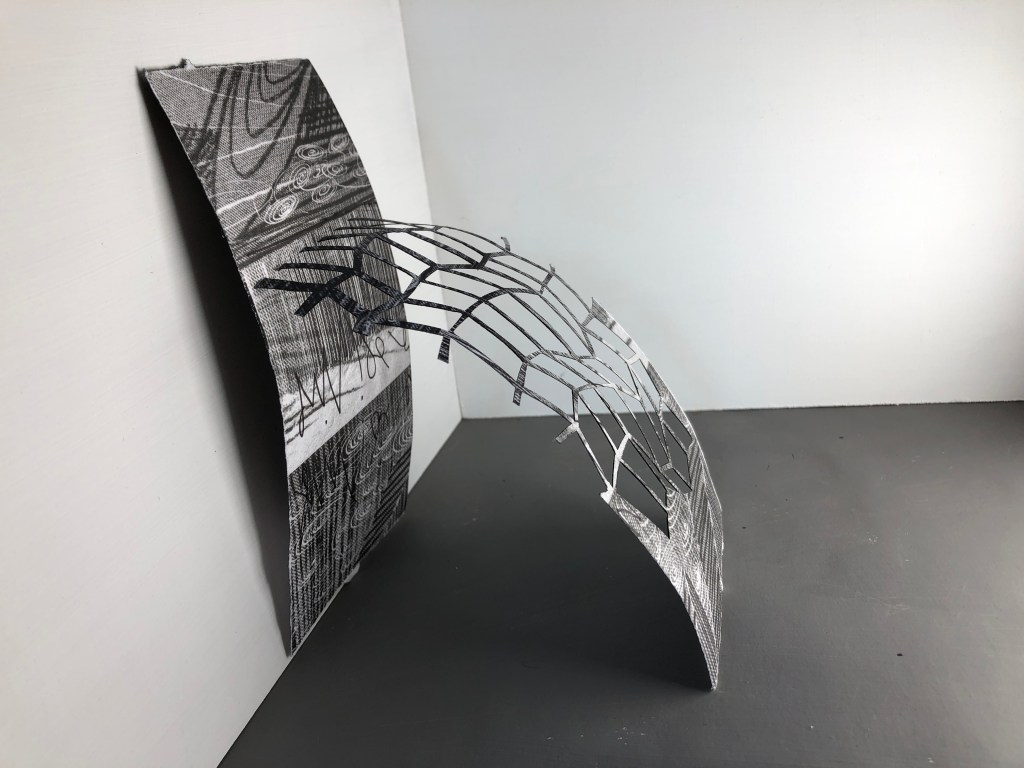
version 2 
version 2 front angle 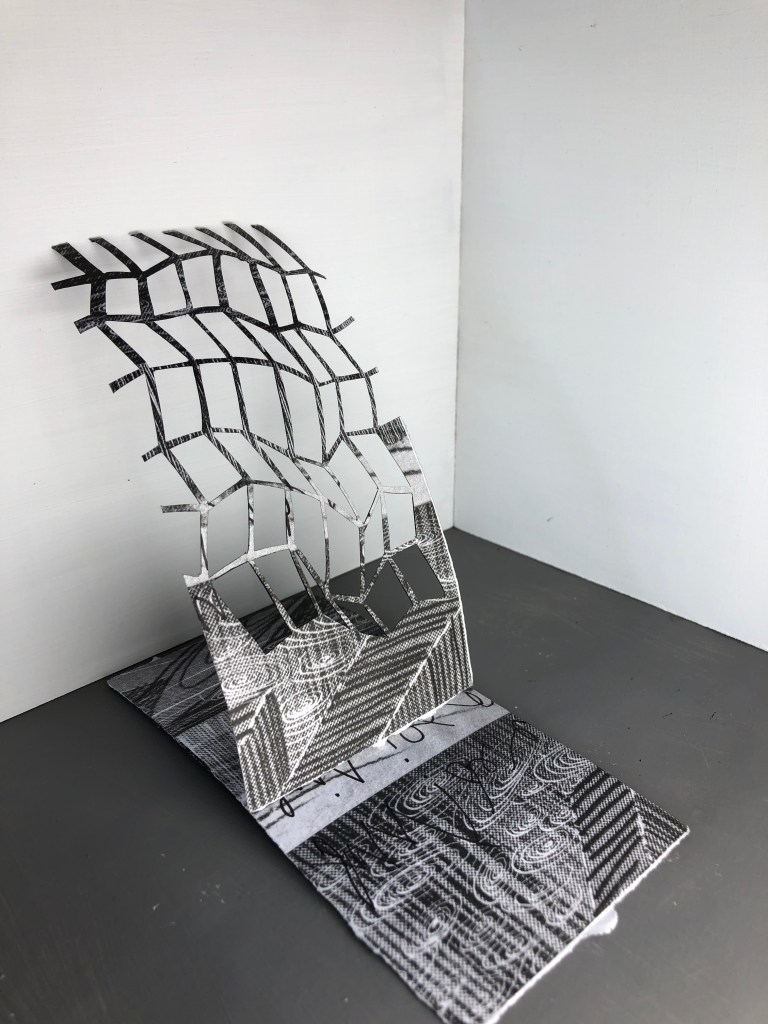
version 3 front angle 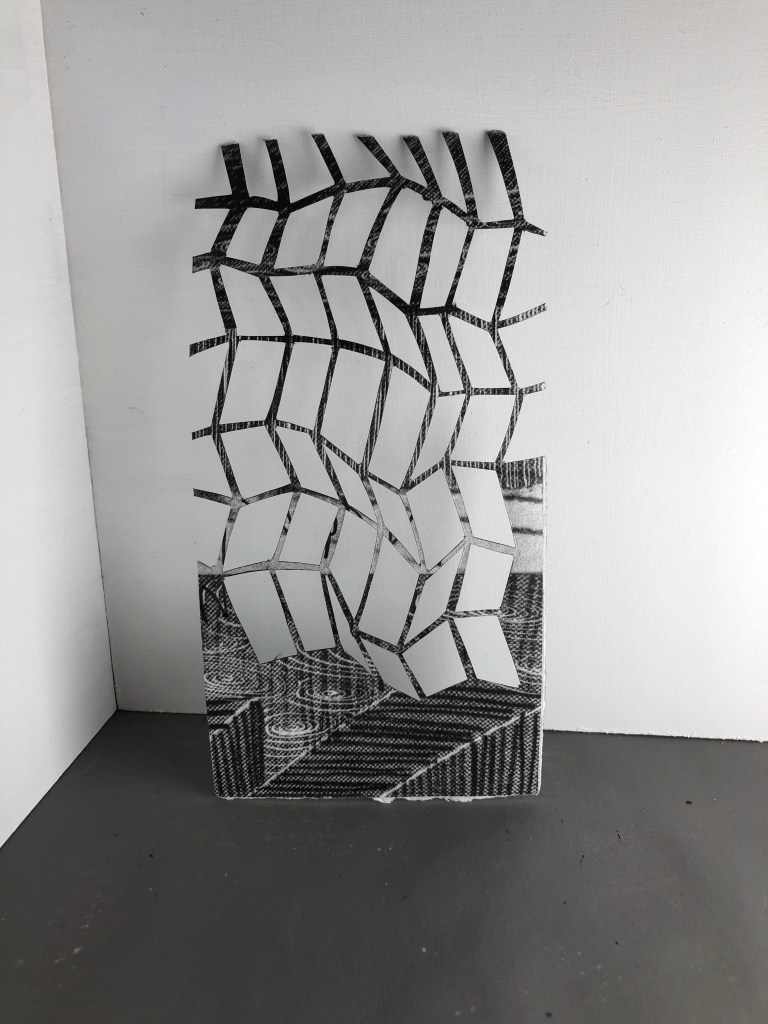
version 4 single panel front 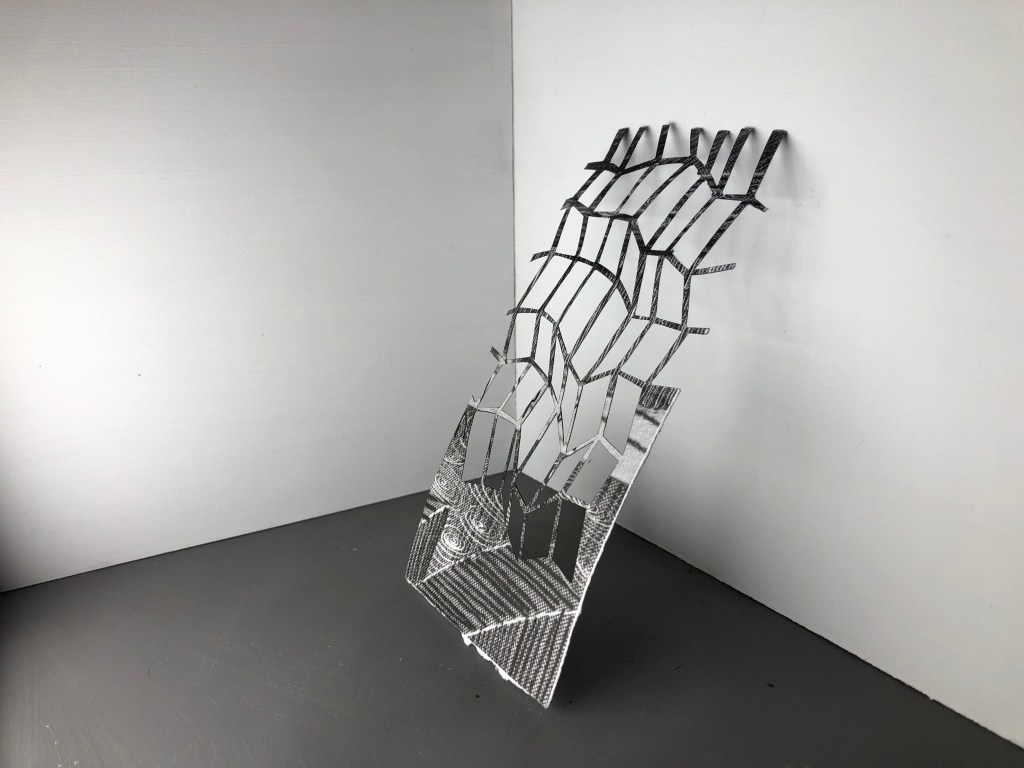
version 4 single panel from the side 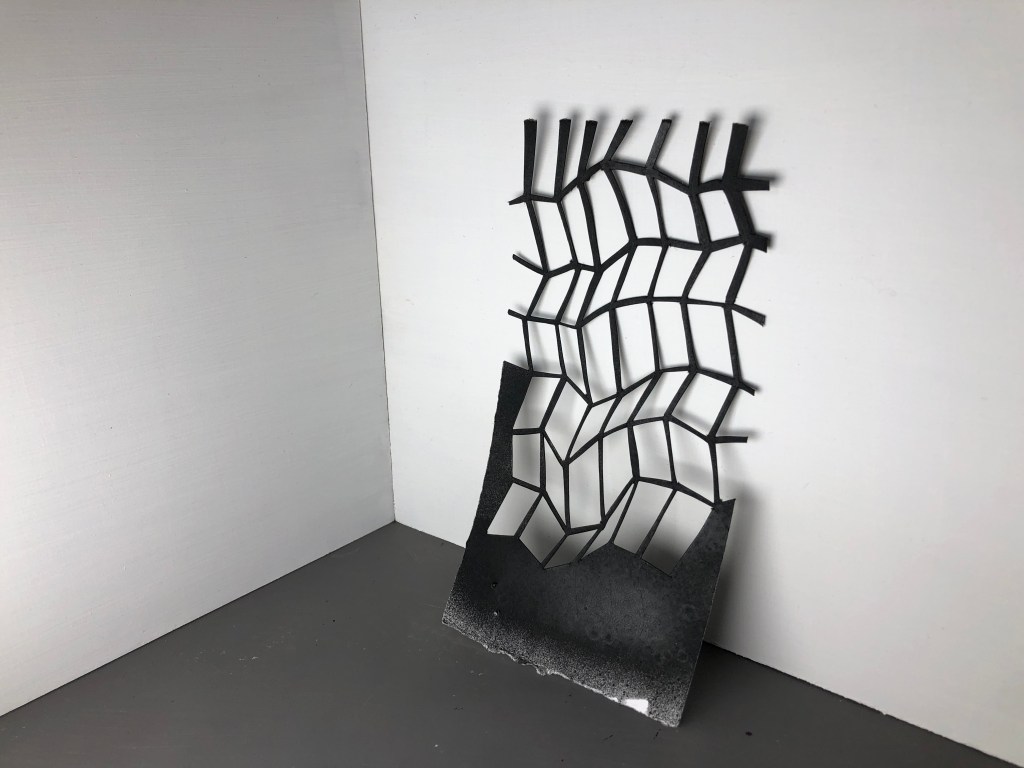
version 5 reverse of single panel 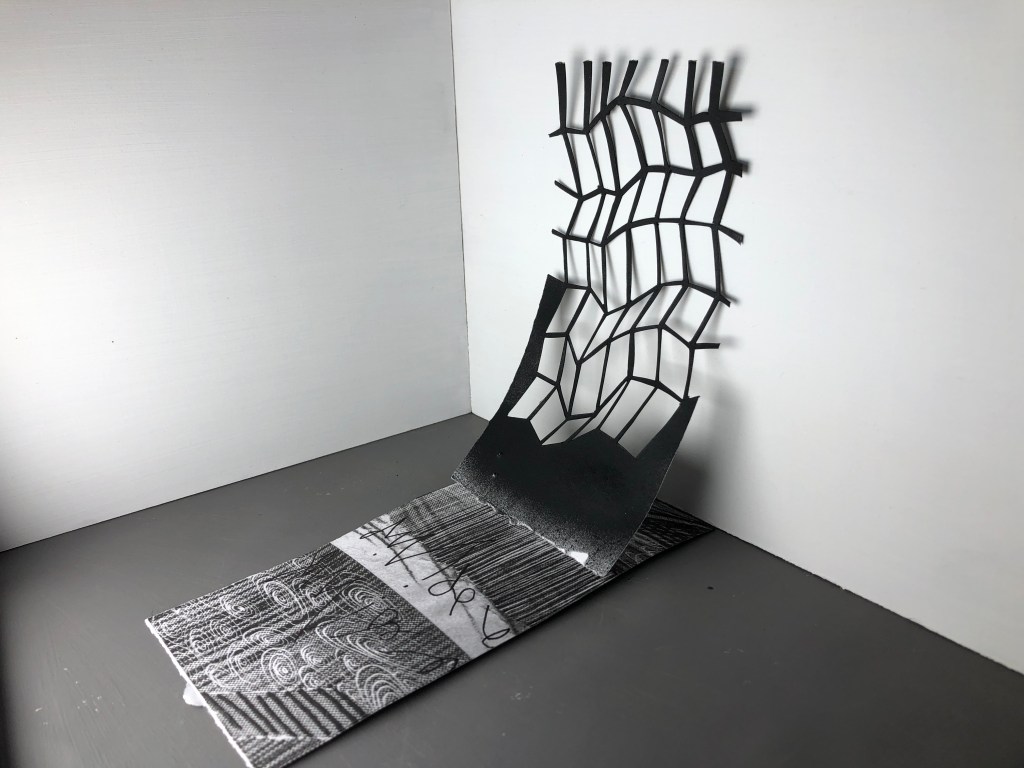
version 6 both panels full panel flat on floor, cut panel verso leaning
Progression since the second session with Anna Ray 24th June 2020
I went back into the studio and made some more pieces. During a tutorial with Michael Wright, it was suggested that I use my prints to make sculptures. So I this second time I took a photographic print from a collagraph print I had made. See the images below for the original prints and collagraph plate.
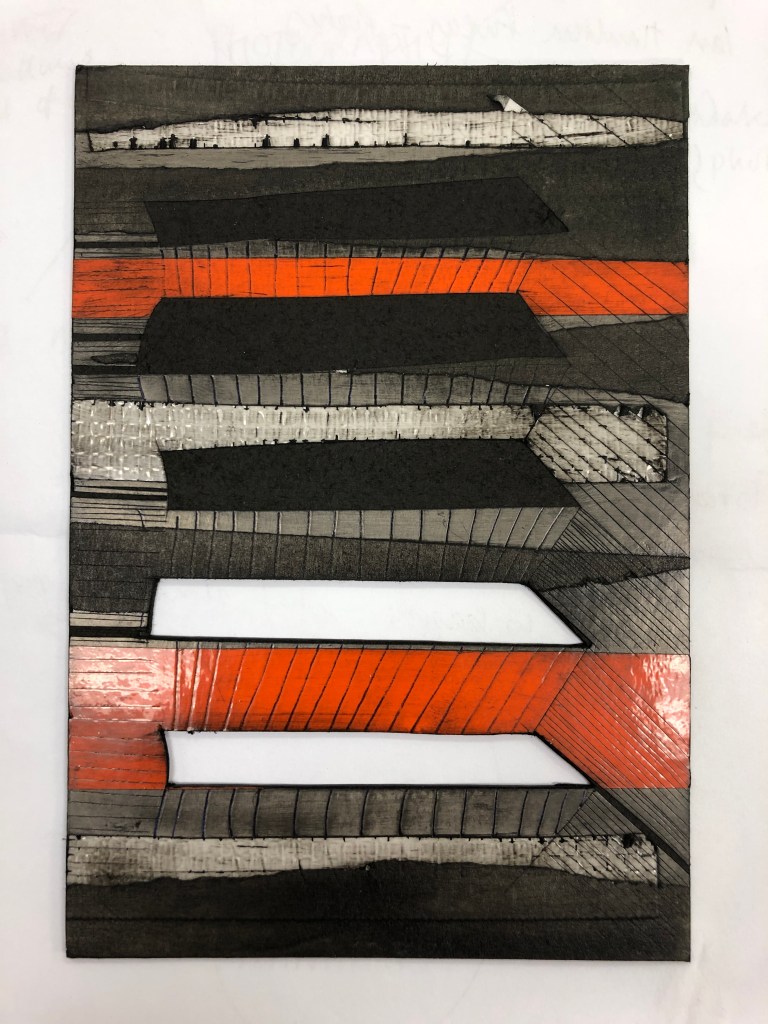
collagraph plate used to make the next two prints used as a starting point for the sculptural installation 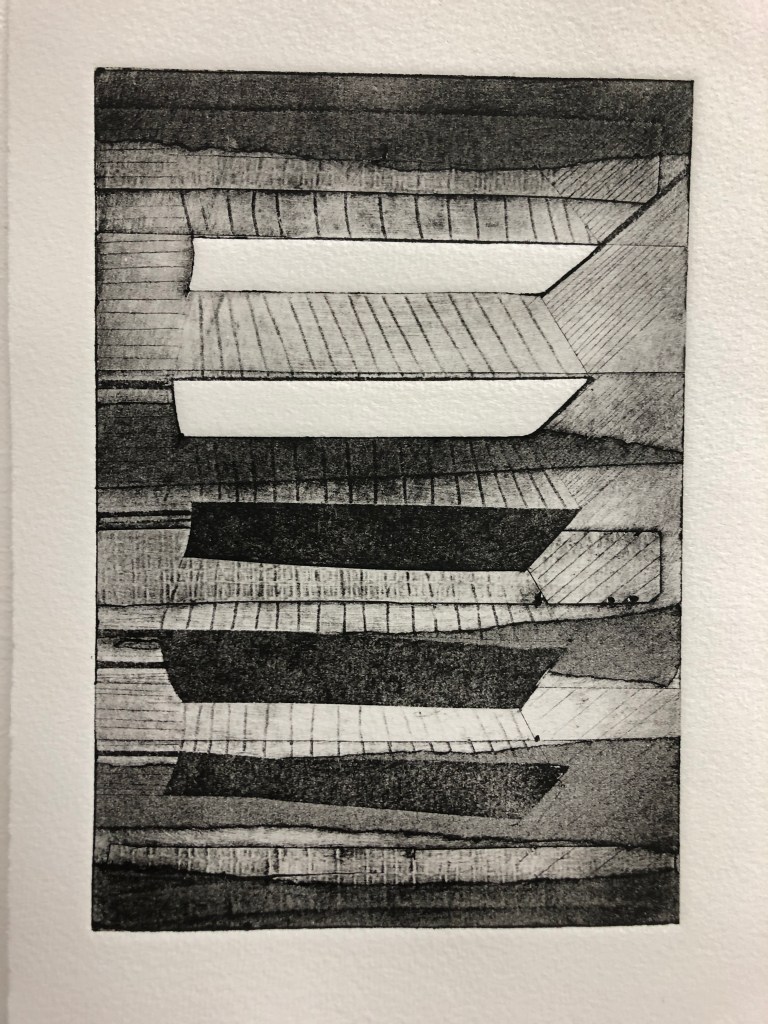
ink print used as starting point for the sculptural installation 
embossed blank plate used as a starting point for the sculptural installation
I cut it up the inkjet print outs, folded into a shape and sprayed the back with a colour I had decided upon because it is a colour Phyllida Barlow had used on the works she made for the show at the Royal Academy, Cul-de-sac. The red tape I used to make the plate originally also is referenced in this paint choice. I had really been attracted to this colour as it reminded me of many markings I see on the pavements and road on my walks. This gives it a reference to my rituals and my everyday environment. As I use colour very scarcely presently I feel drawn to using some colour and this red neon felt right.
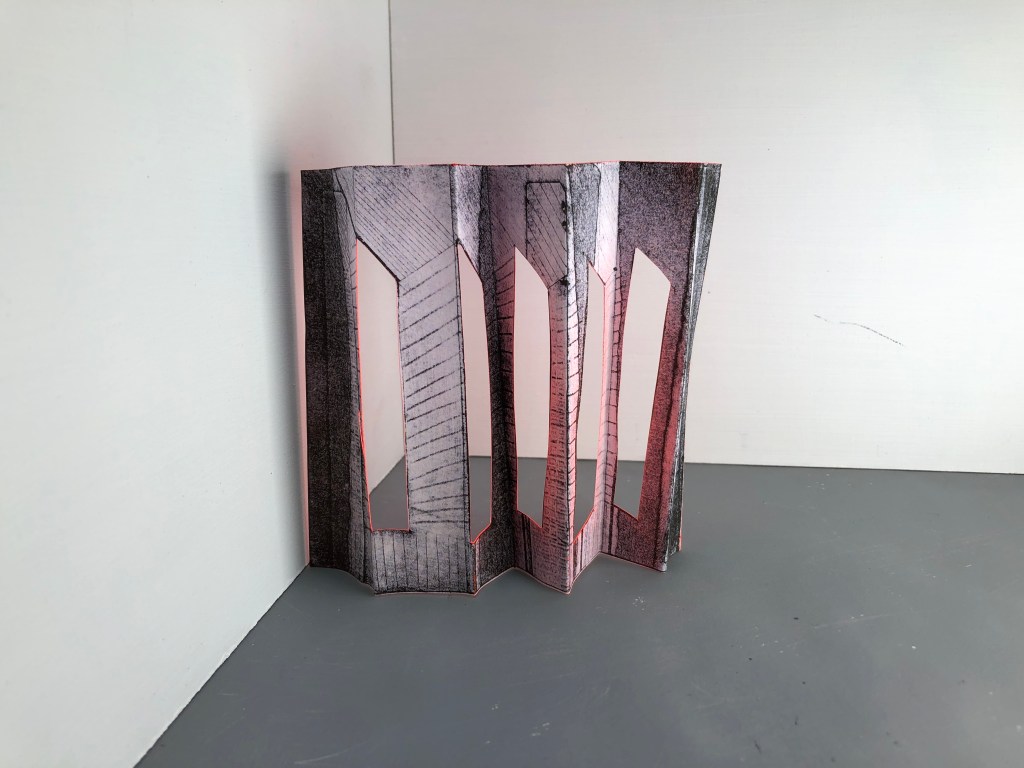
version 1 against wall at 90degrees 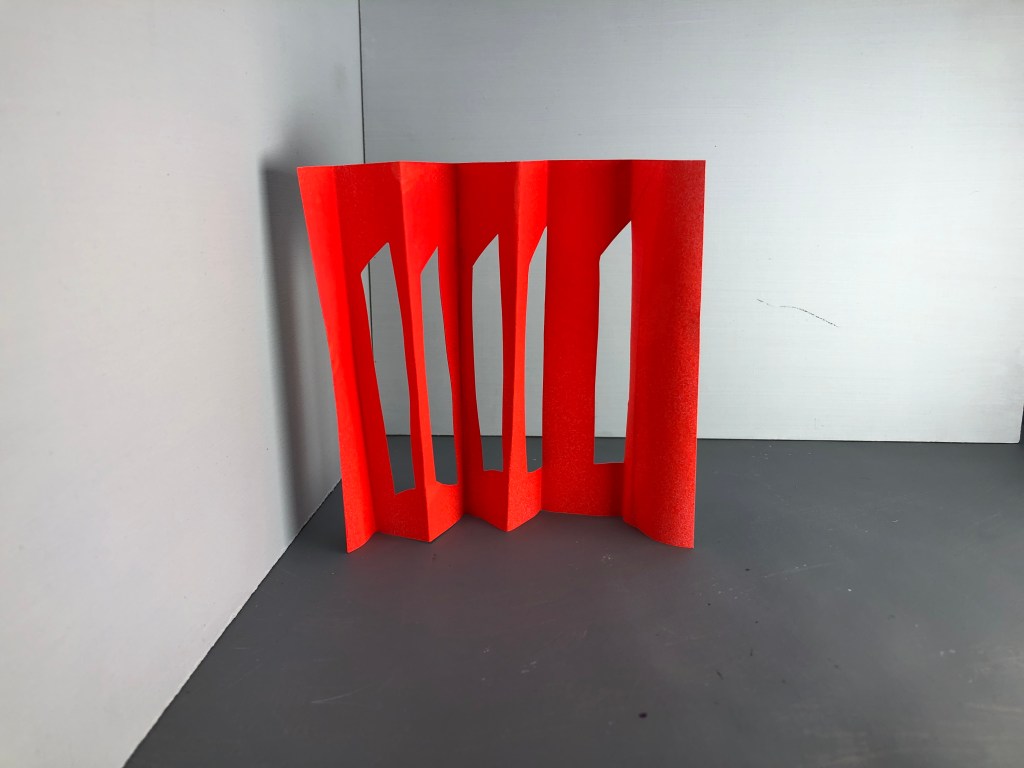
version 2 against wall verso facing at 90 degrees to wall 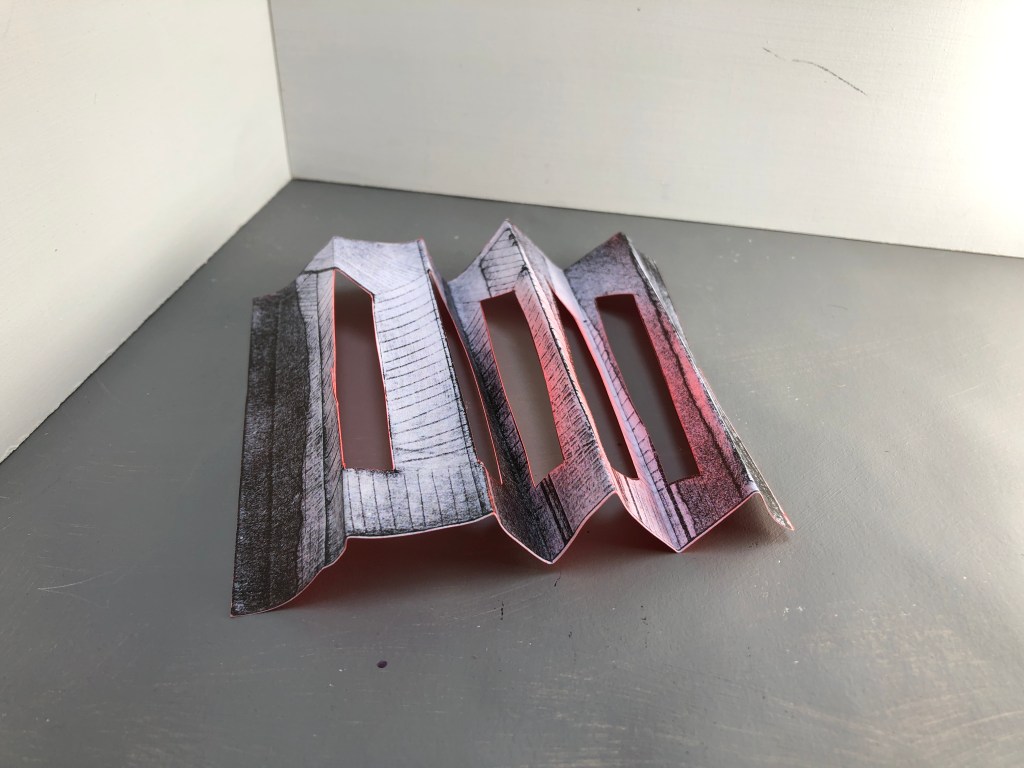
version 3 horizontal on floor 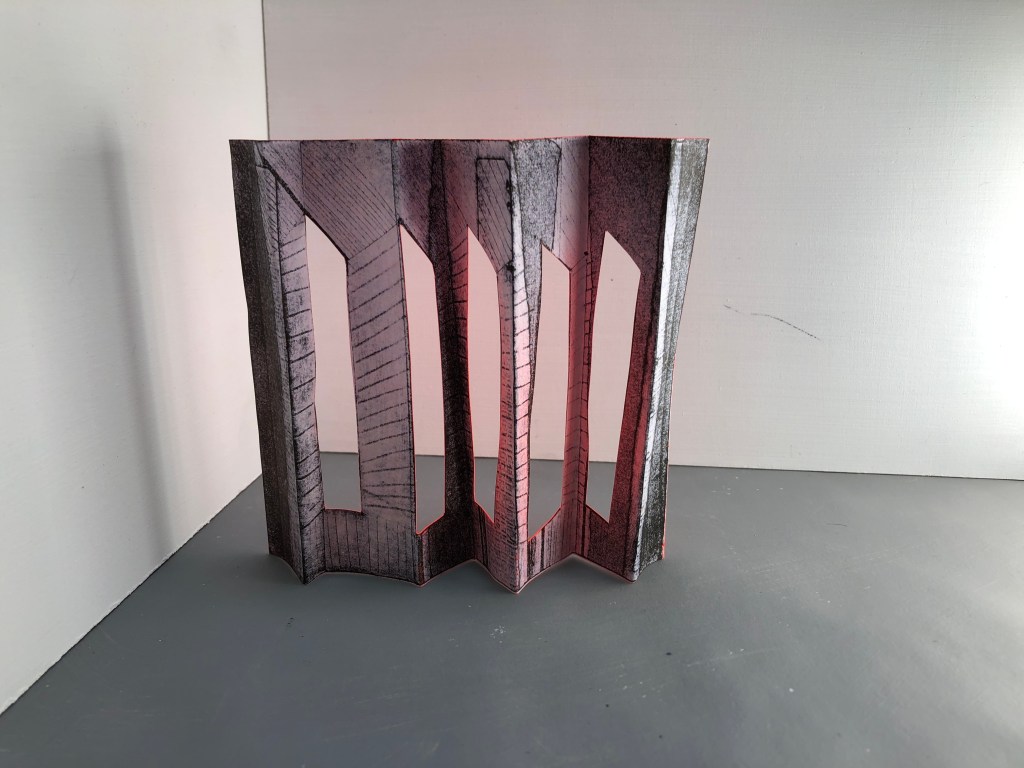
version 4 away from wall free standing 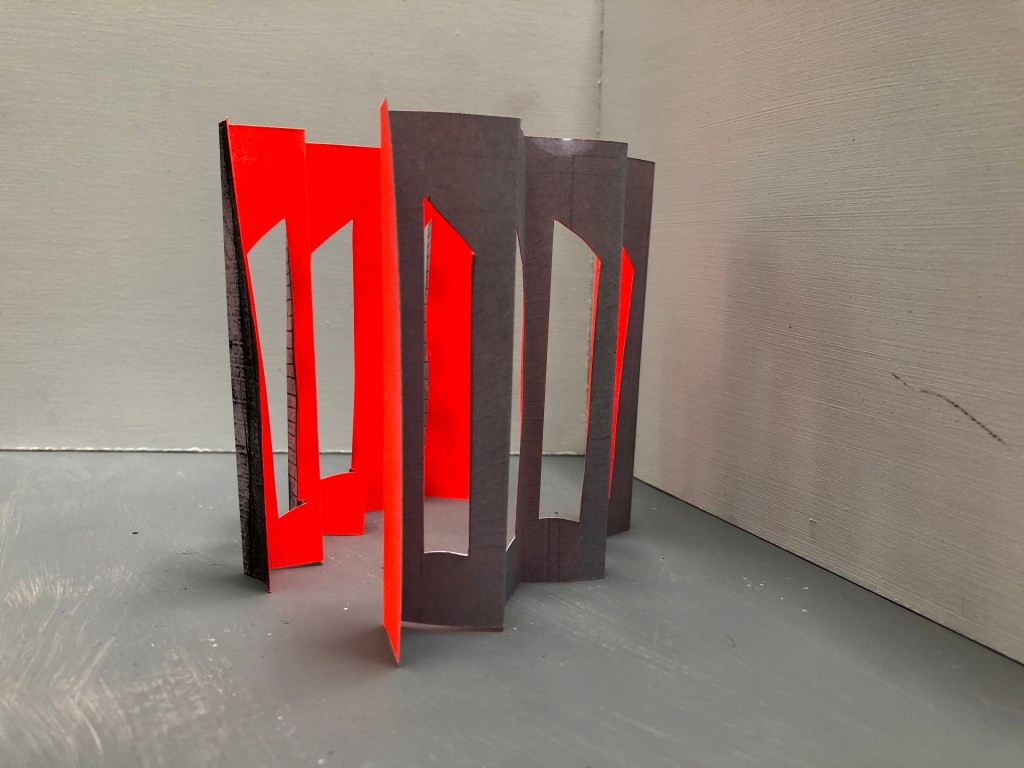
version 5 both pieces slightly apart, freestanding with red faces facing each other 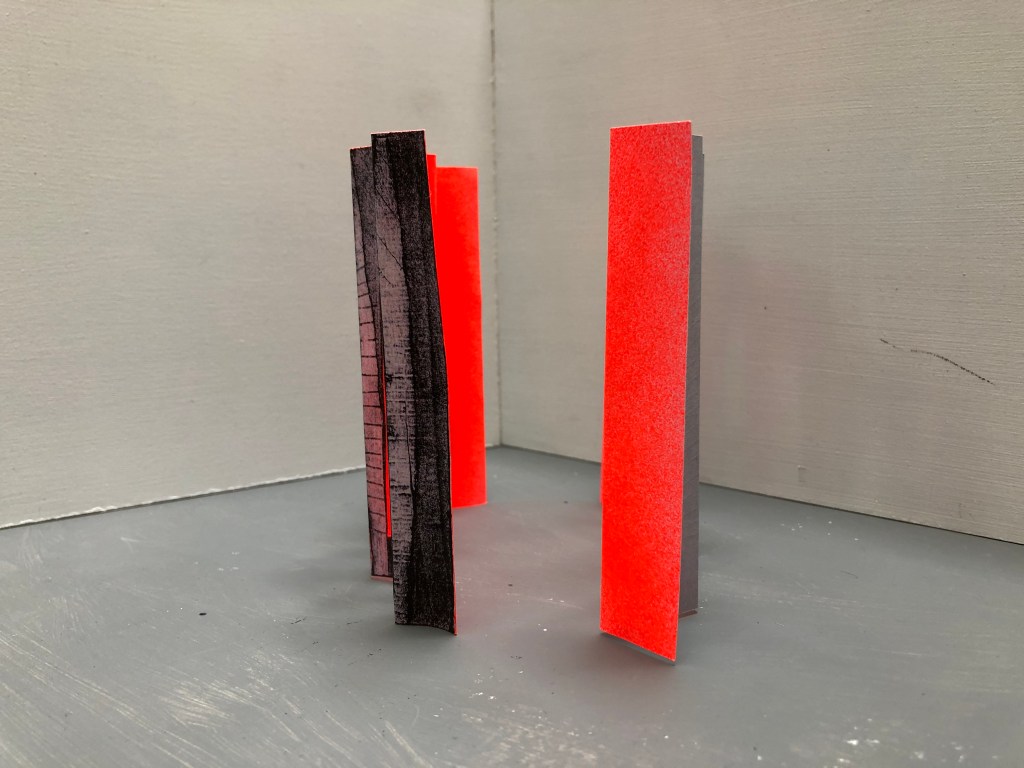
version 5 both pieces slightly apart, freestanding with red faces facing each other, side view 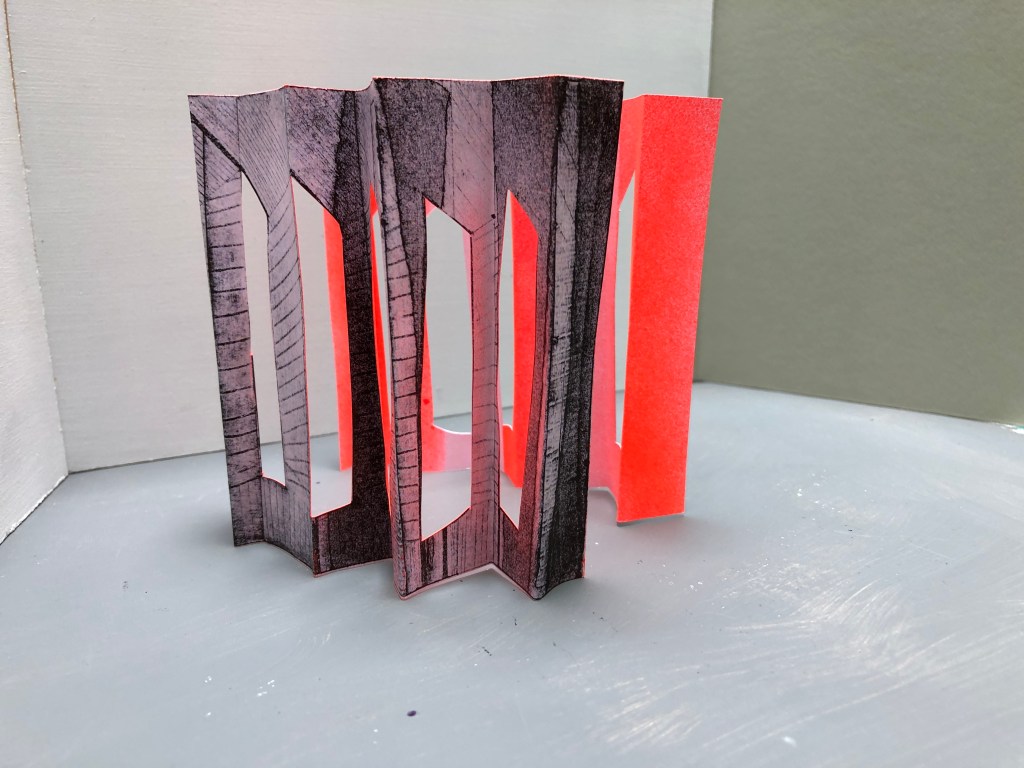
version 5 both pieces slightly apart, freestanding with red faces facing each other 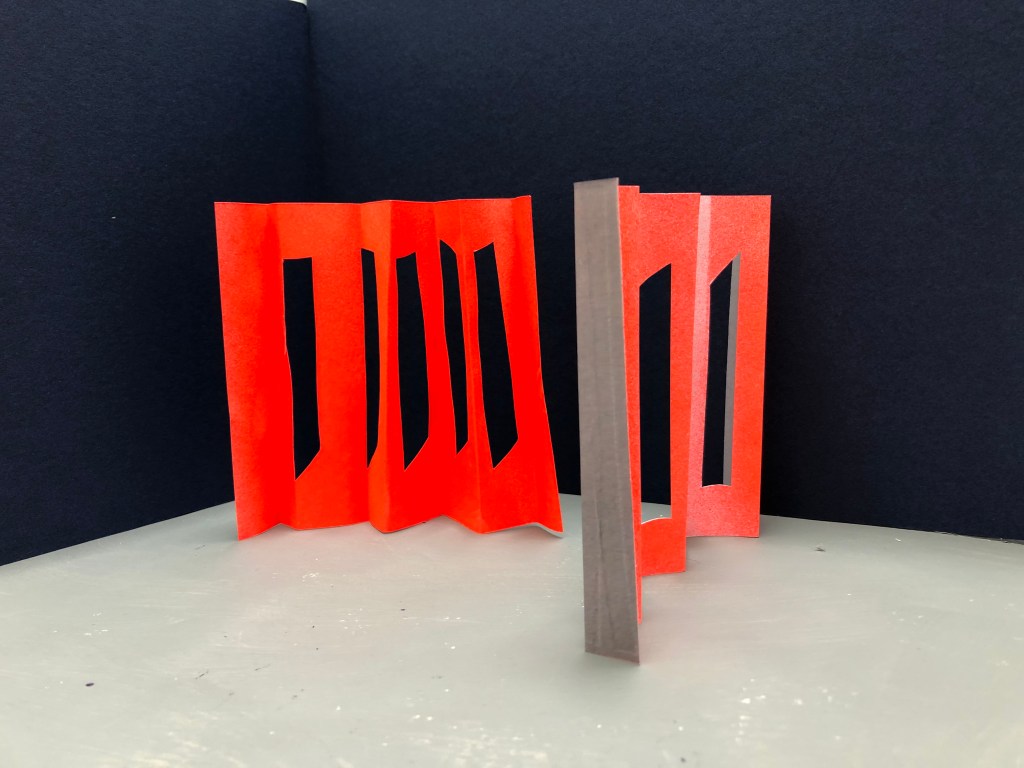
version 6 dark blue walls pieces at angle to one another 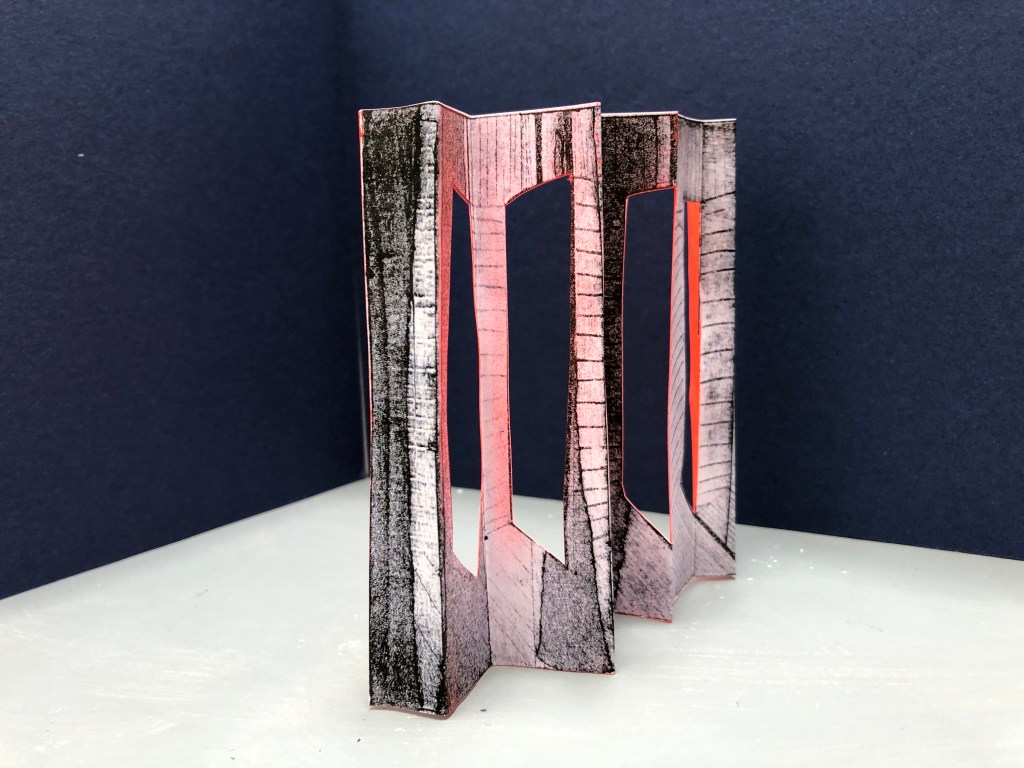
version 7 solo printed piece free standing from back wall, dark blue walls 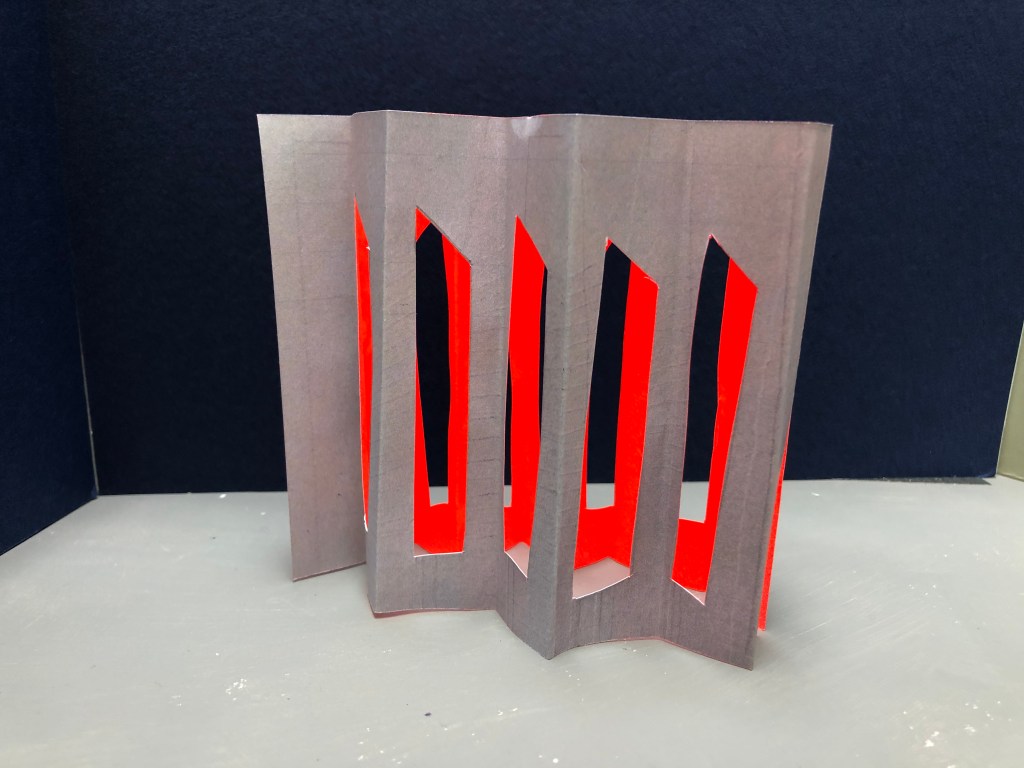
version 8 two piece free standing neon red sides together 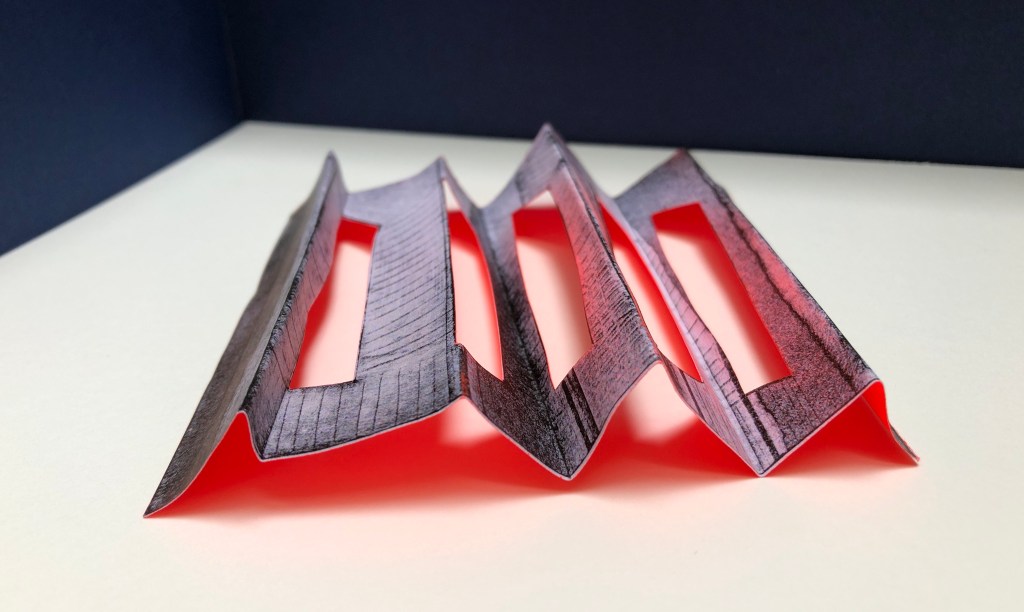
version 9 printed piece horizontal on floor with dark blue background 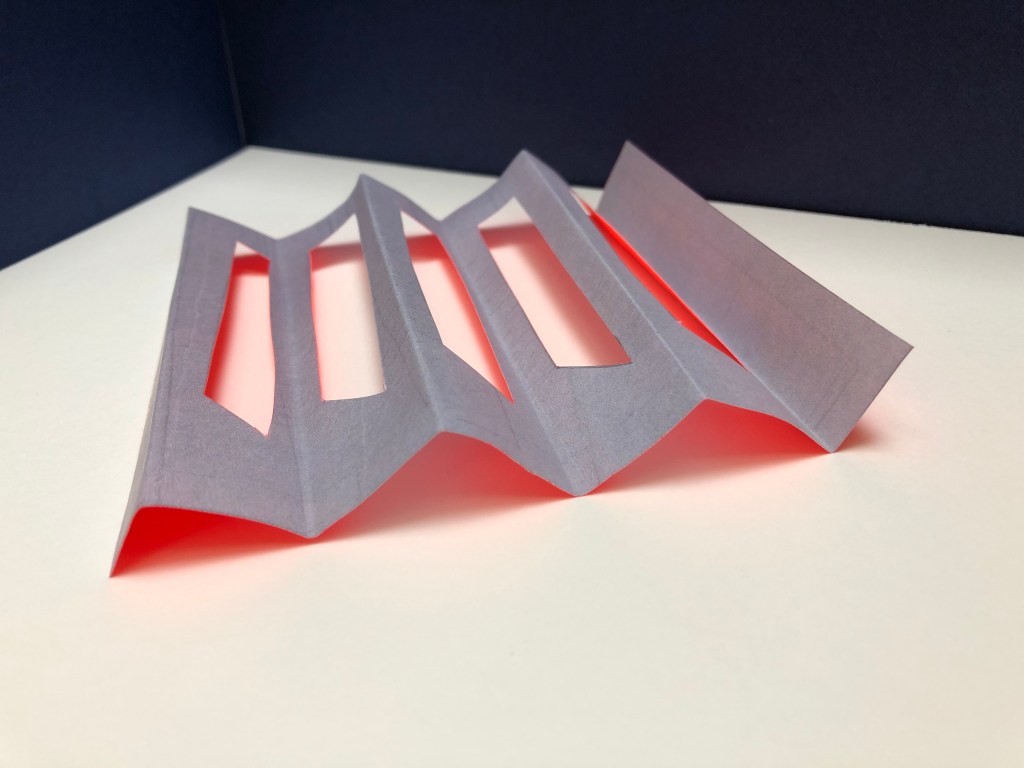
version 10 unprinted piece horizontal on floor with dark blue background 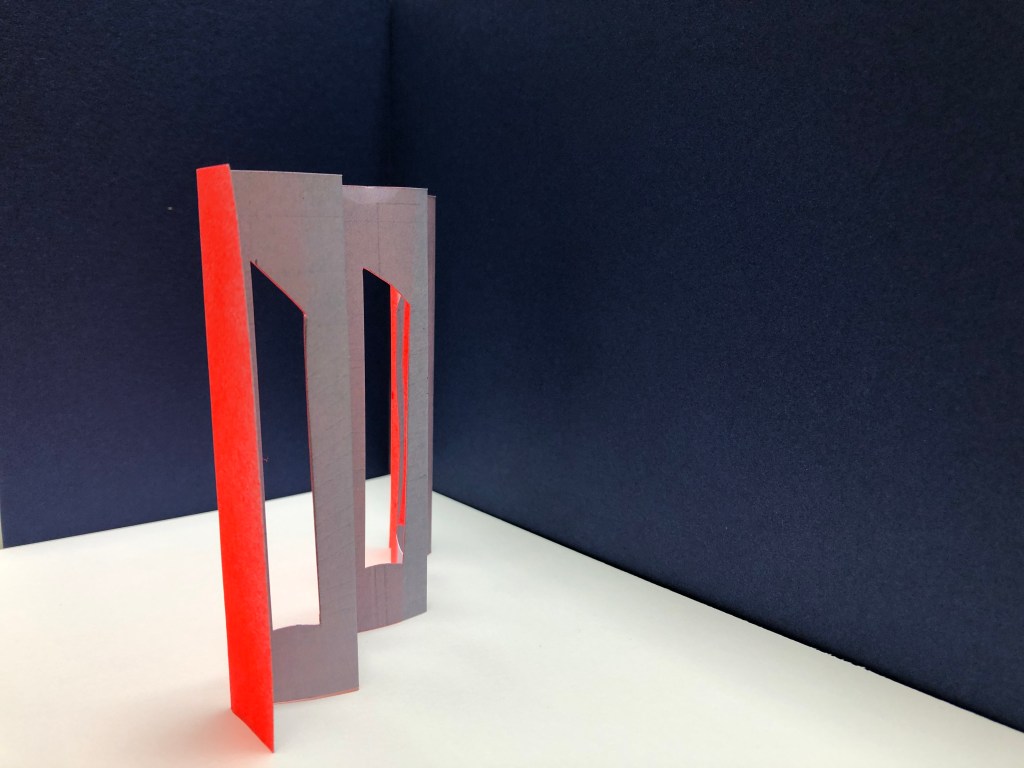
version 11 unprinted piece at 45degree angle from back wall red neon side on the left 
version 12 unprinted side not visible and apart from the wall with neon red painted side frontal
I have imagined these pieces as fabricated in possibly aluminium, spray painted with the neon red side and possibly etched or laser etched on the printed/unprinted side. My next step is to make some maquettes in plaster and see how the materials stand up in heavier materials as I have not made floor pieces only wall and leaning pieces.
 Tina Culverhouse