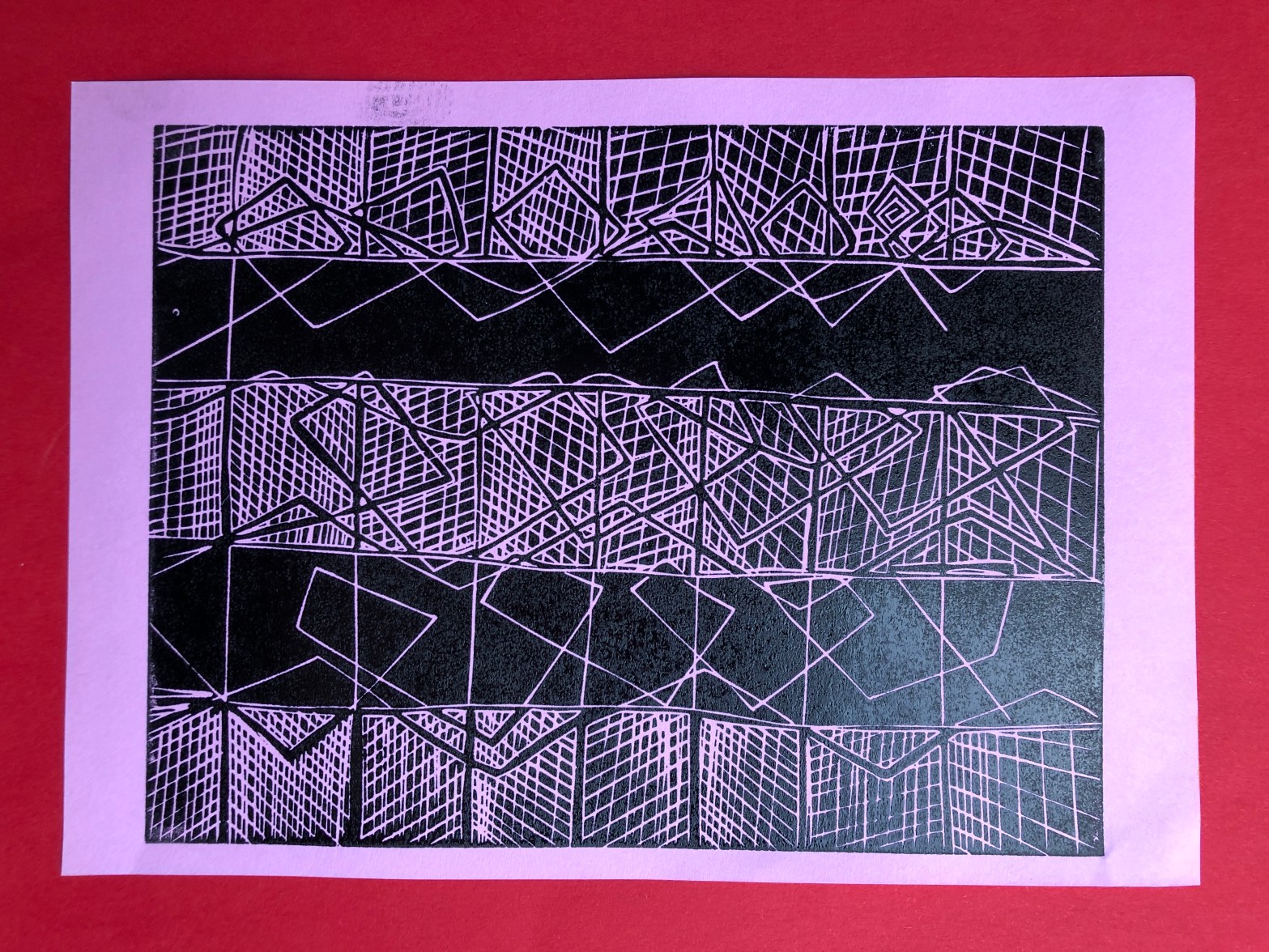
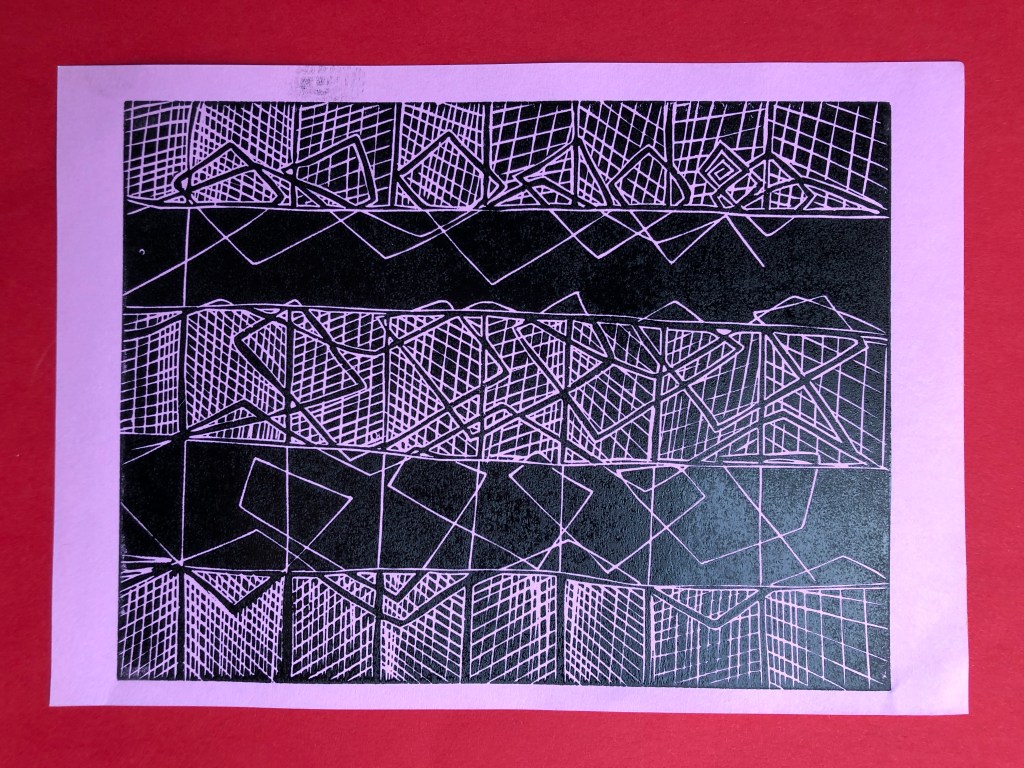
Printmaking has re-emerged in my practice as a major influence on my thinking for the other aspects of my work. It somehow weaves through my work creating a cross over thread that catches all the varied ideas and somehow makes the ideas seem to connect into a common tapestry that I see as my practice.
The prints here are three Lino-cut prints that I have been working on since early January. I very rarely sit and cut a Lino in one go. They are detailed and take time to cut. The three I am showing here were all printed on a domestic set up during the isolation period of Covid-19 virus in a response to the recent times I have spent in Berlin, the post graduate studios at Hertfordshire University and the ideation comes from both my studio work, my sketchbooks and the notes that I take most days.
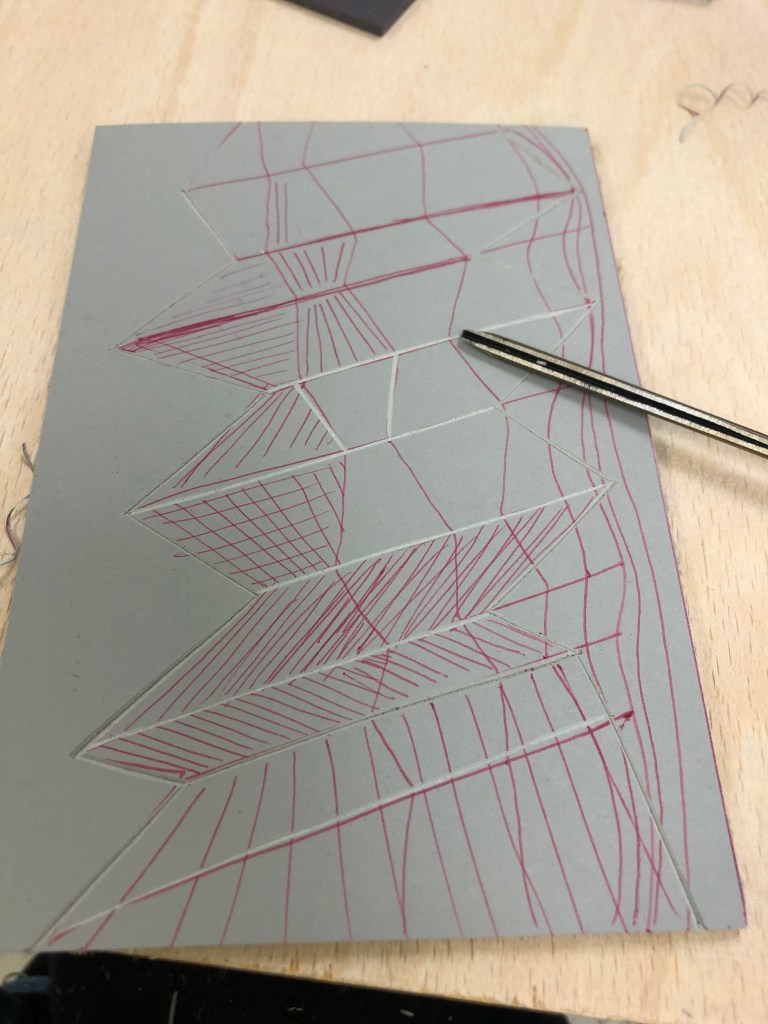
first cuts of line plate postgraduate studios January 2020 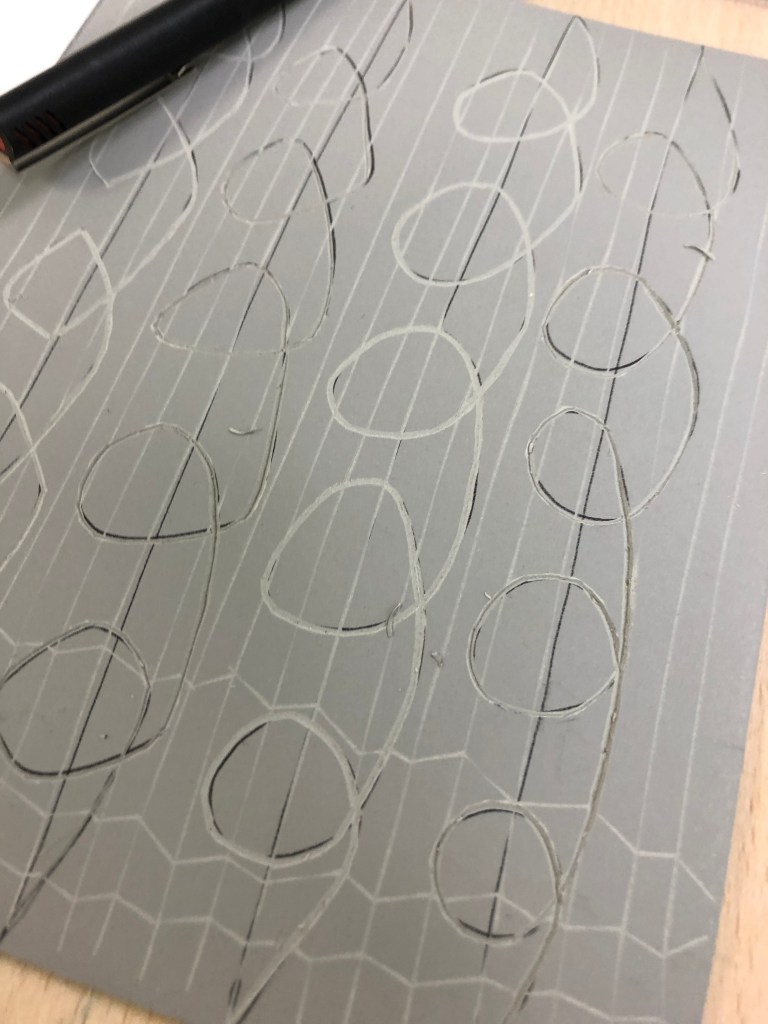
cutting lino plate postgraduate studios March 2020 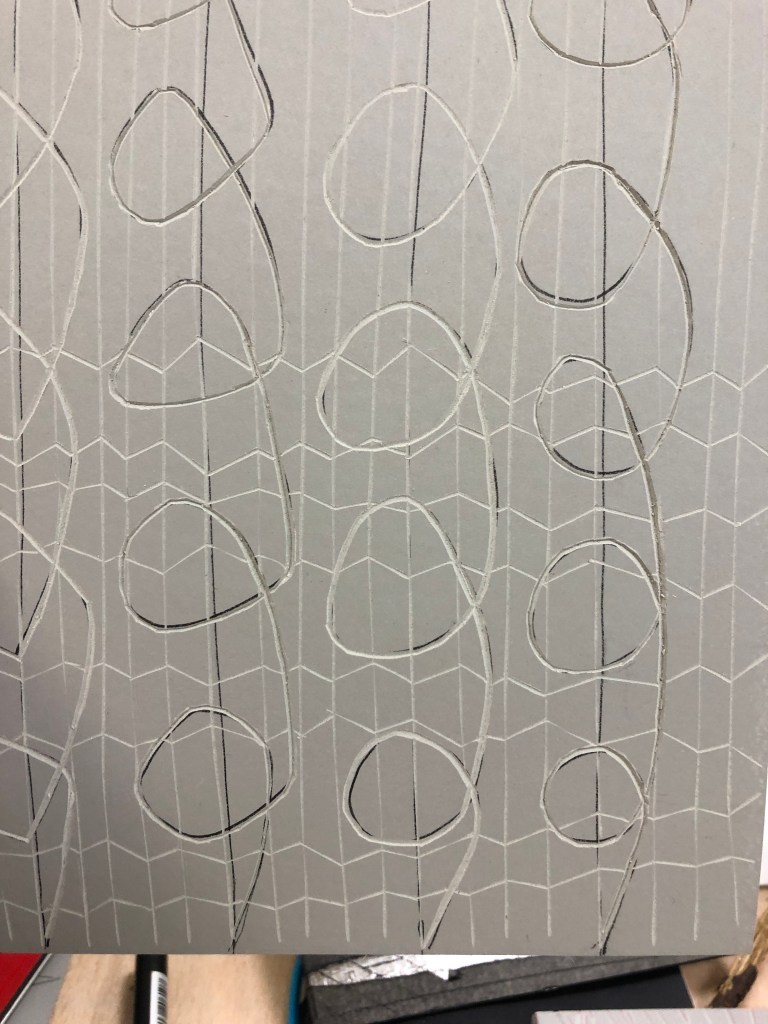
making more cuts 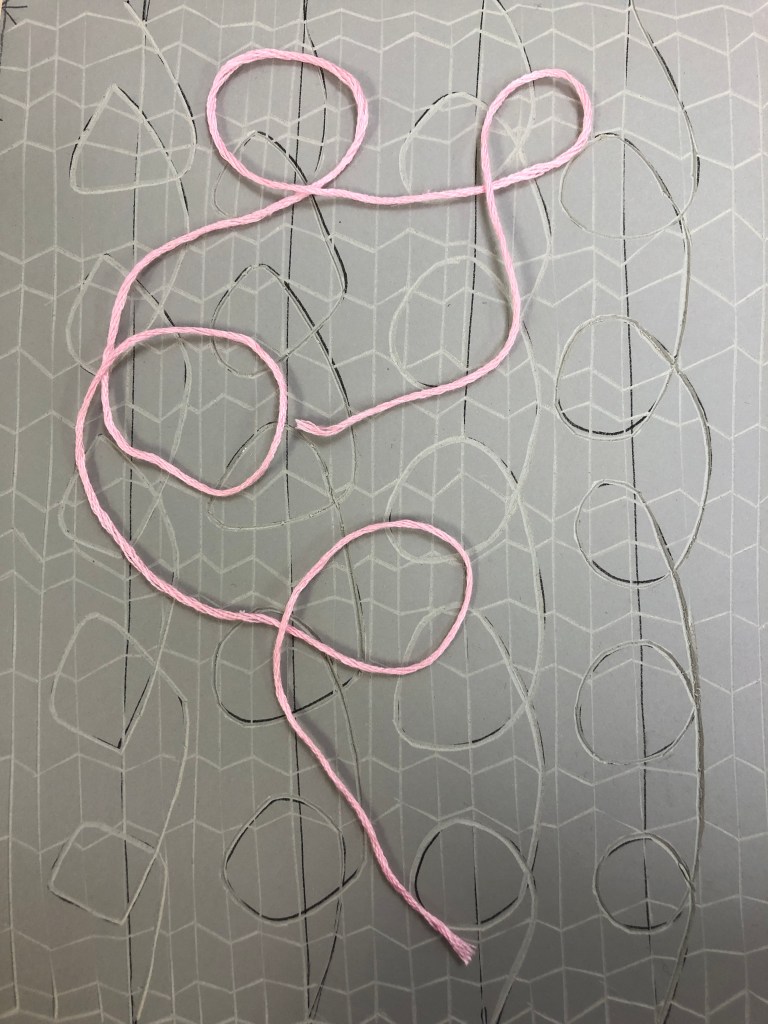
placing silk thread onto the plate to aid the drawing 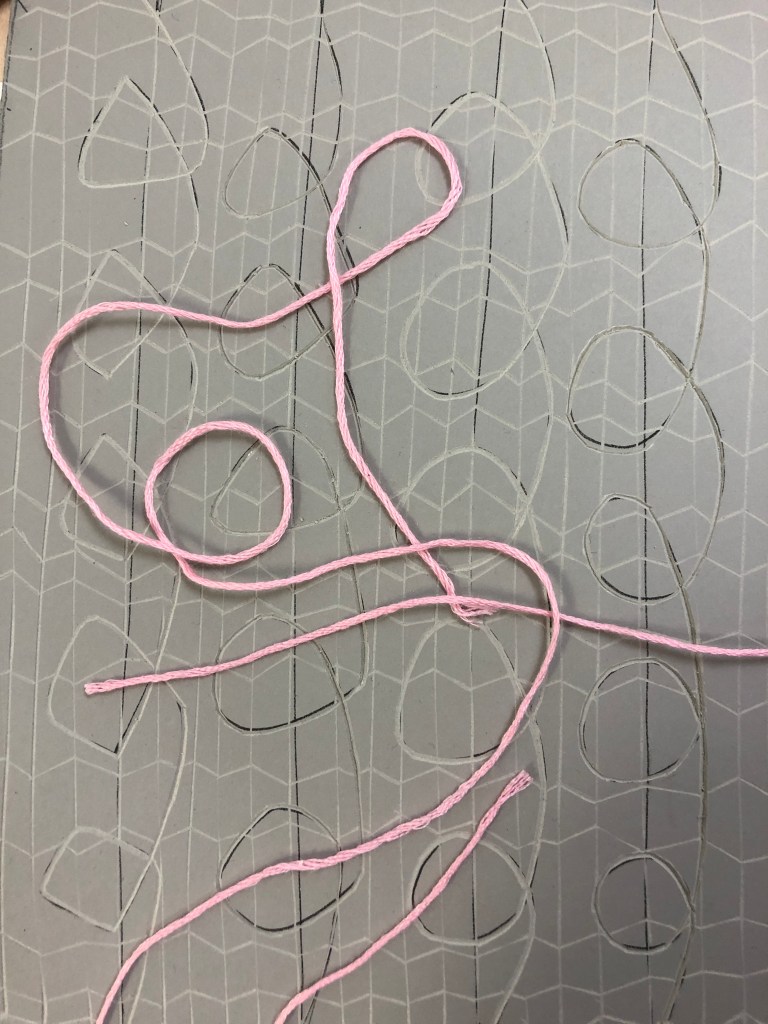
looking at organic forms on the plate 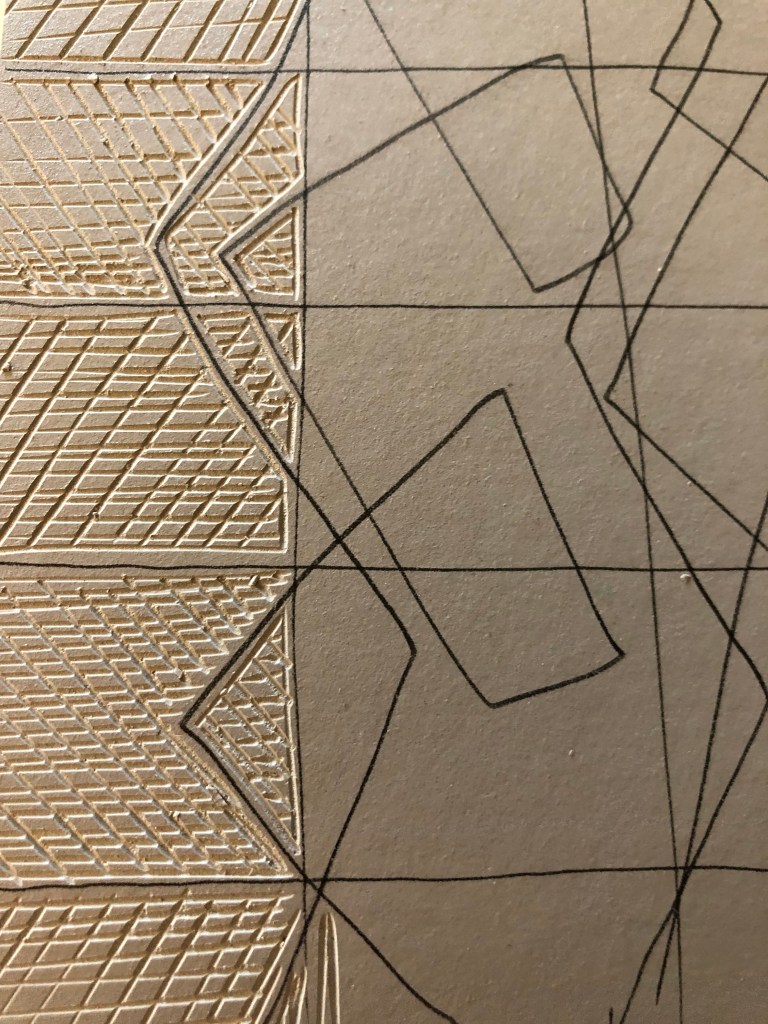
first cut of “the wall’ plate 
close up details 
close up and checking the plate is deep enough to print
A selection of visual influences on this linocut series. Upon reflection at the influences my studio work has on the cutting of the lino plates, I compiled this series of images from the same time I was working on and cutting the plates. The time spent away from the plates making other work, drawing and gathering visual research all play a part in the visual process. I often clear my head and start a plate with little idea of what is going to come out onto the plate. Sometimes I will draw onto the lino and sometimes I will free cut a plate drawing on memory and a sense of purpose and intention about the forms that may appear. Below are some of the images from my practice and other artists work I looked at whilst making these plates.
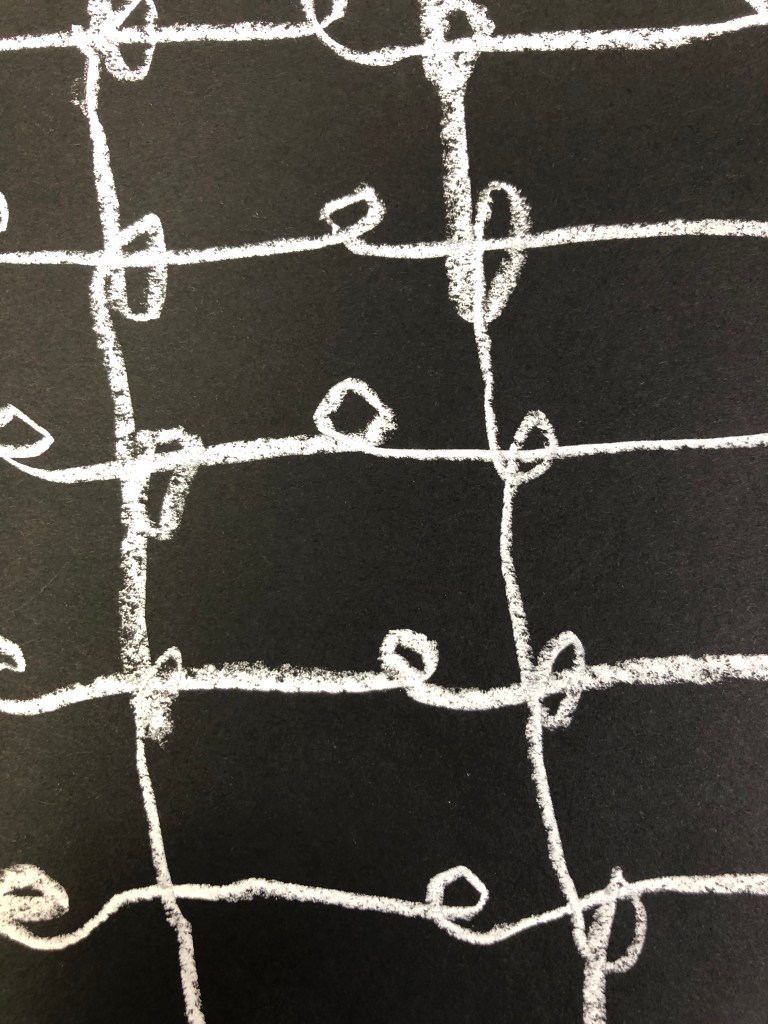
chalk drawing on black paper, postgraduate studios 26th February 2020 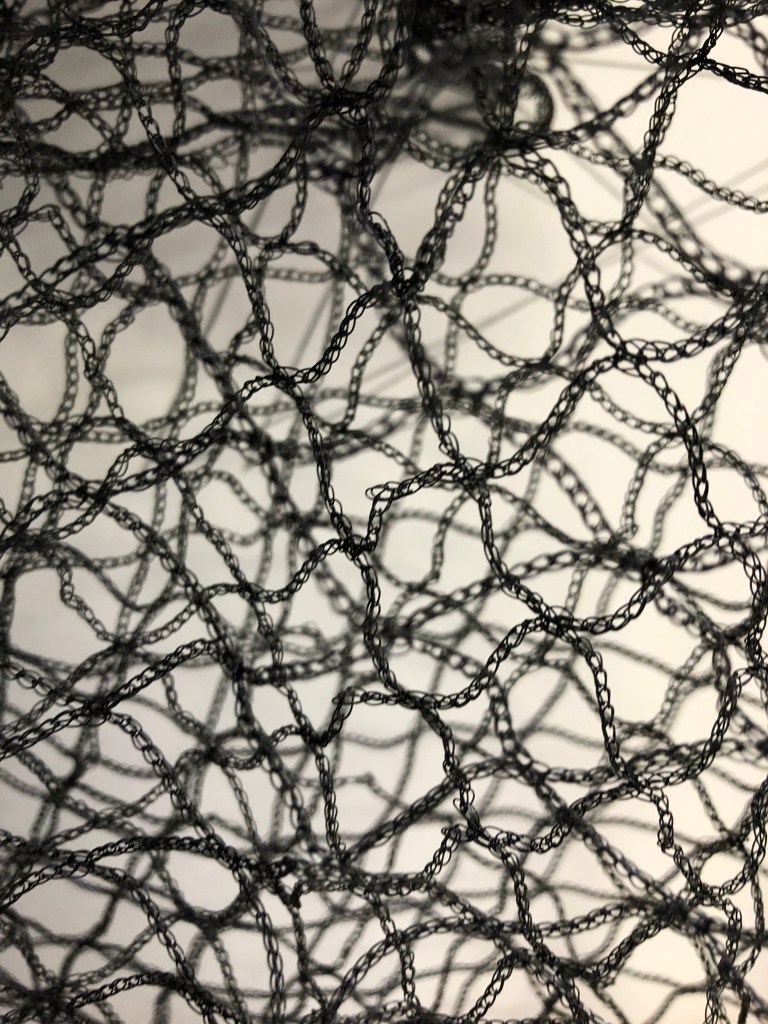
Net installation postgraduate studios 25th February 2020 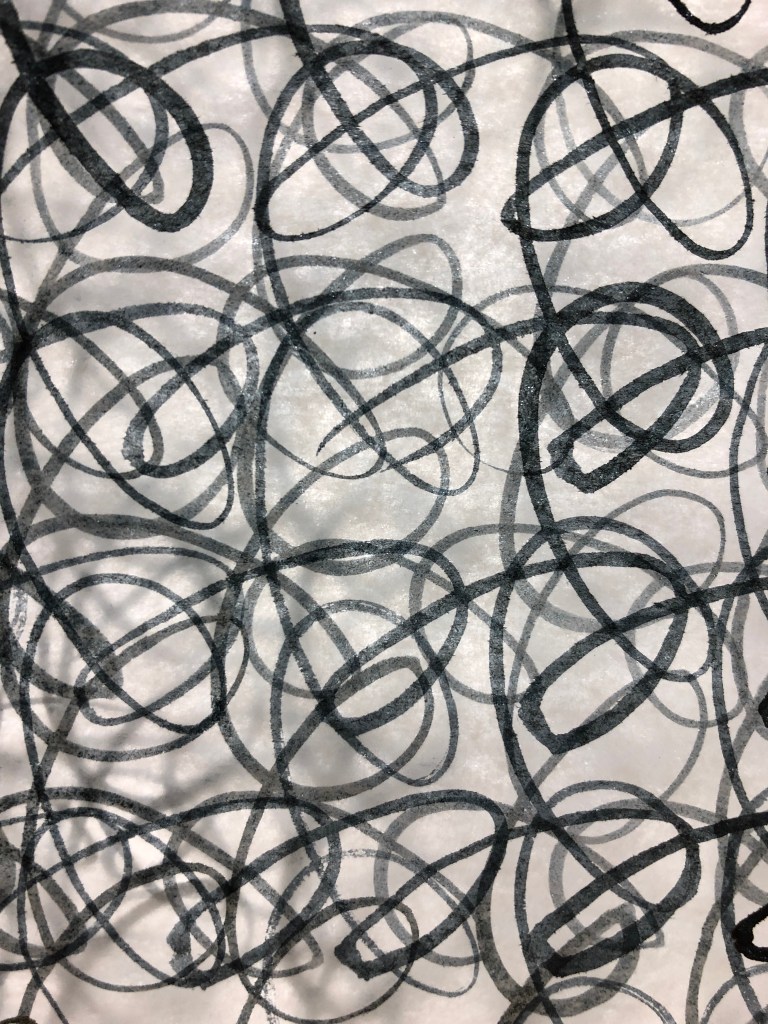
ink drawing from sketchbook 
beginning of linocut January 2020 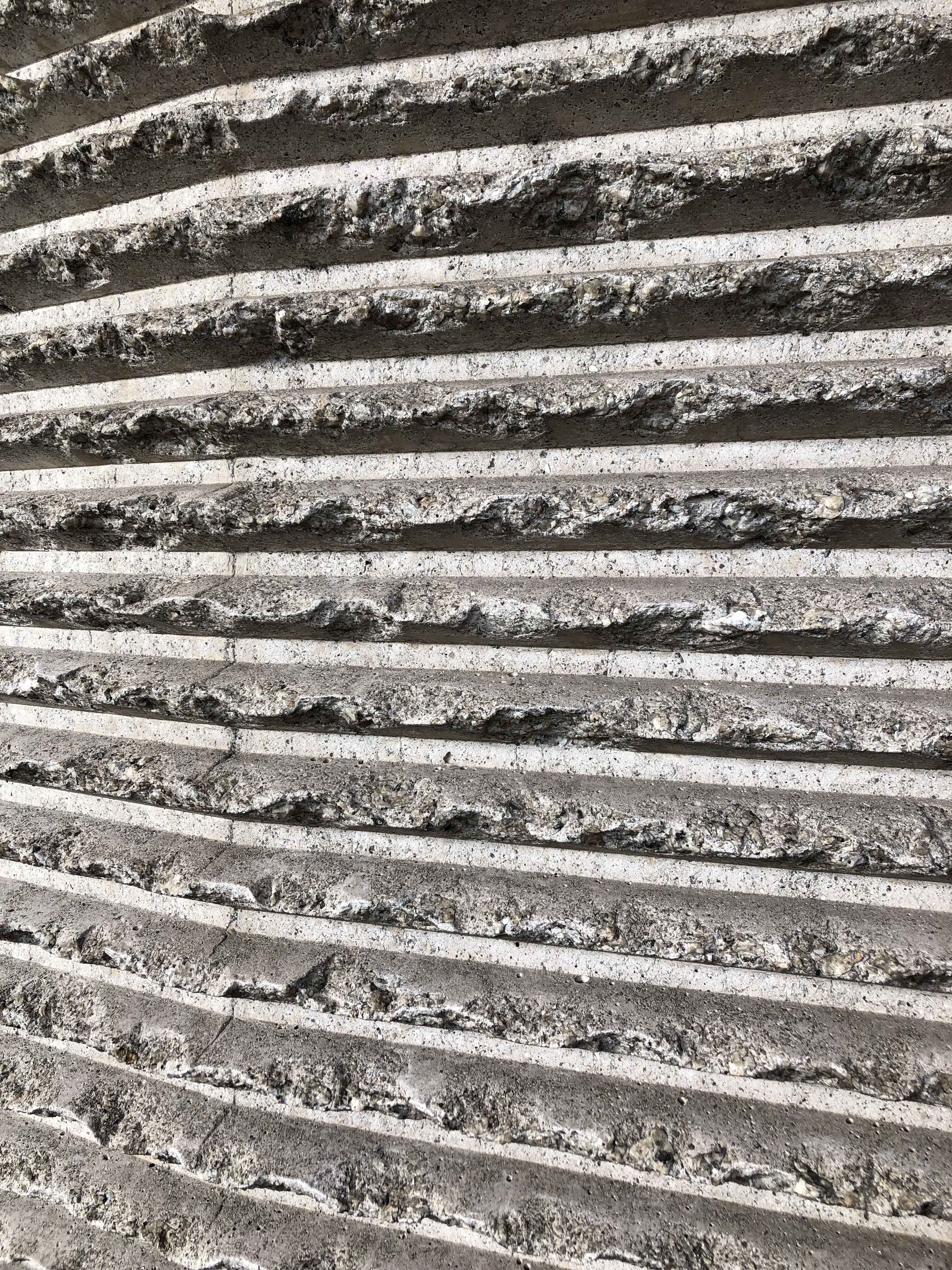
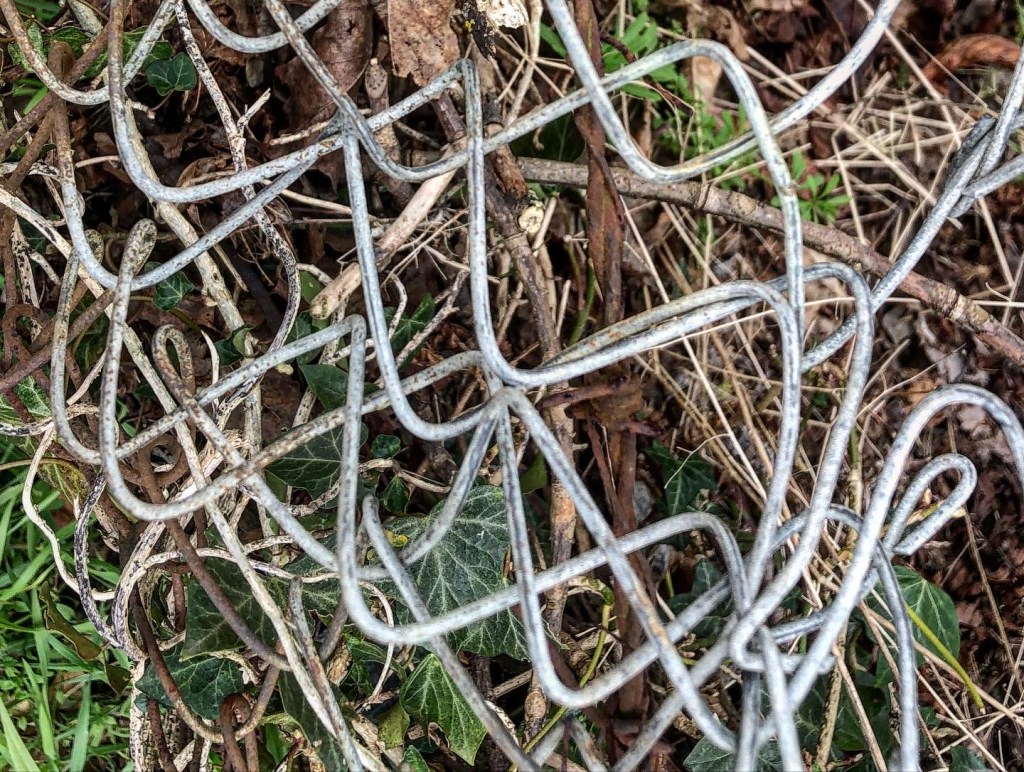
tangled fence, photo walk 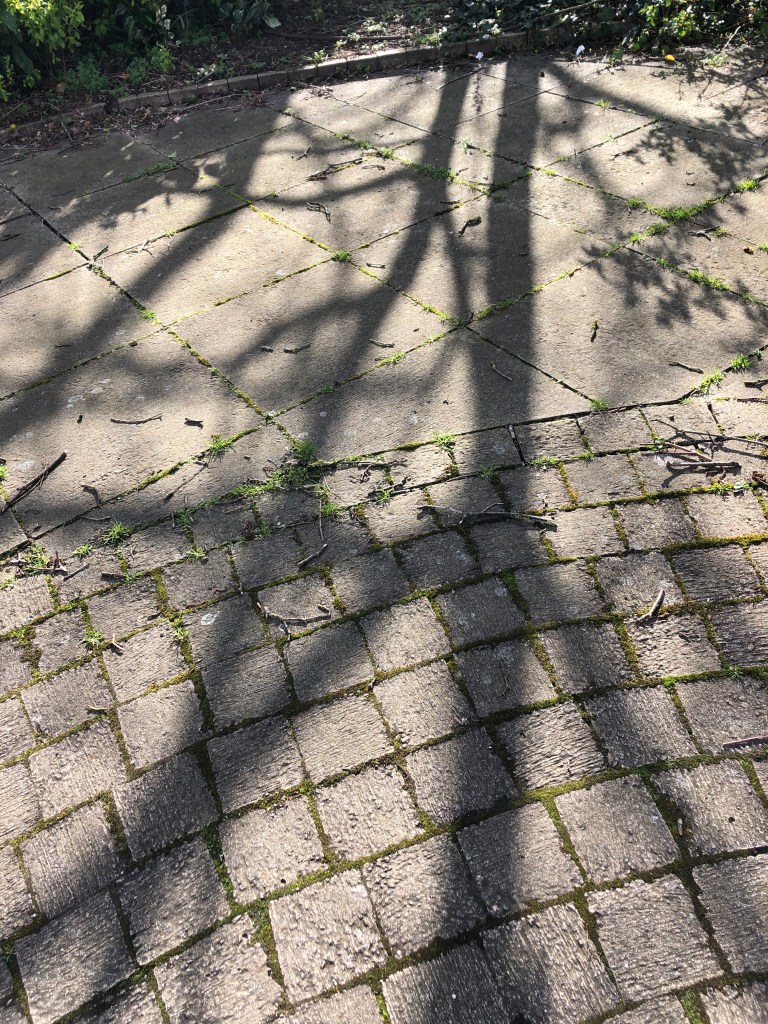
tracery of trees shadows art walk 20th March 2020
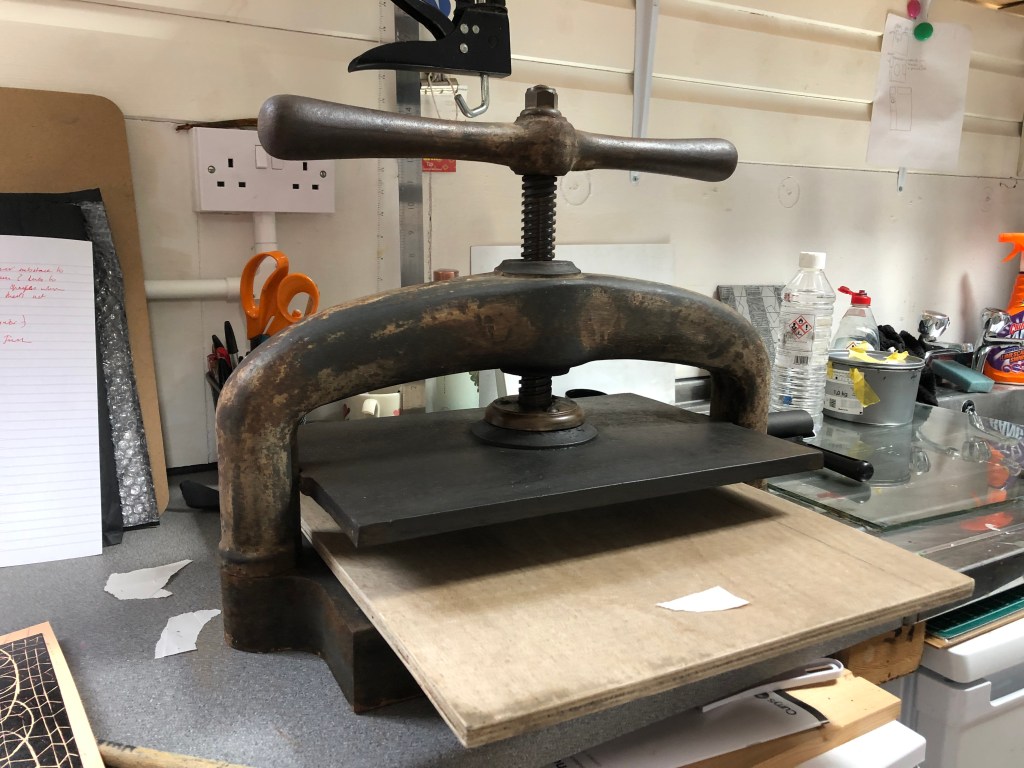
I decided that I needed to complete these prints during the isolation. My artist friend Tyler Watson had managed to lend me a book press he has saved from his mothers garage, and I had picked up (at a safe distance) from his home with the help of a skate board! I finished up the cleaning process he had started and got the press more or less rust free.
I spent time developing the lino cut The Wall during the day of the 5th April 2020. I was mainly considering the positive and negative spaces and how the lines would flow through these negative(black) spaces back into the lighter spaces.
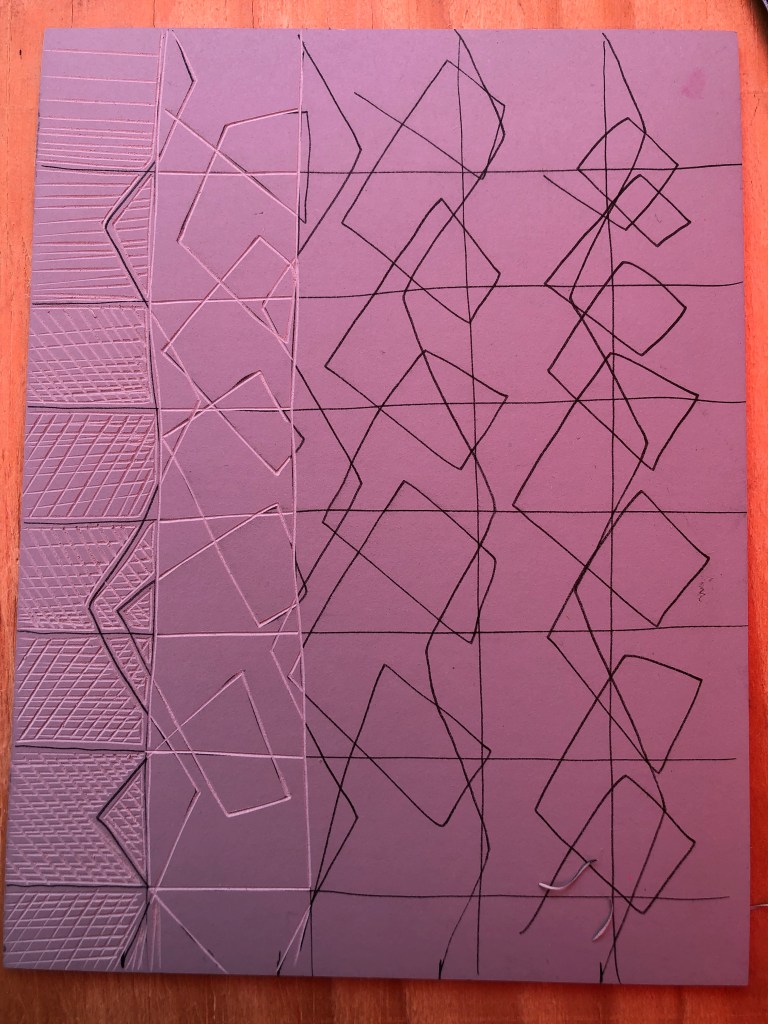
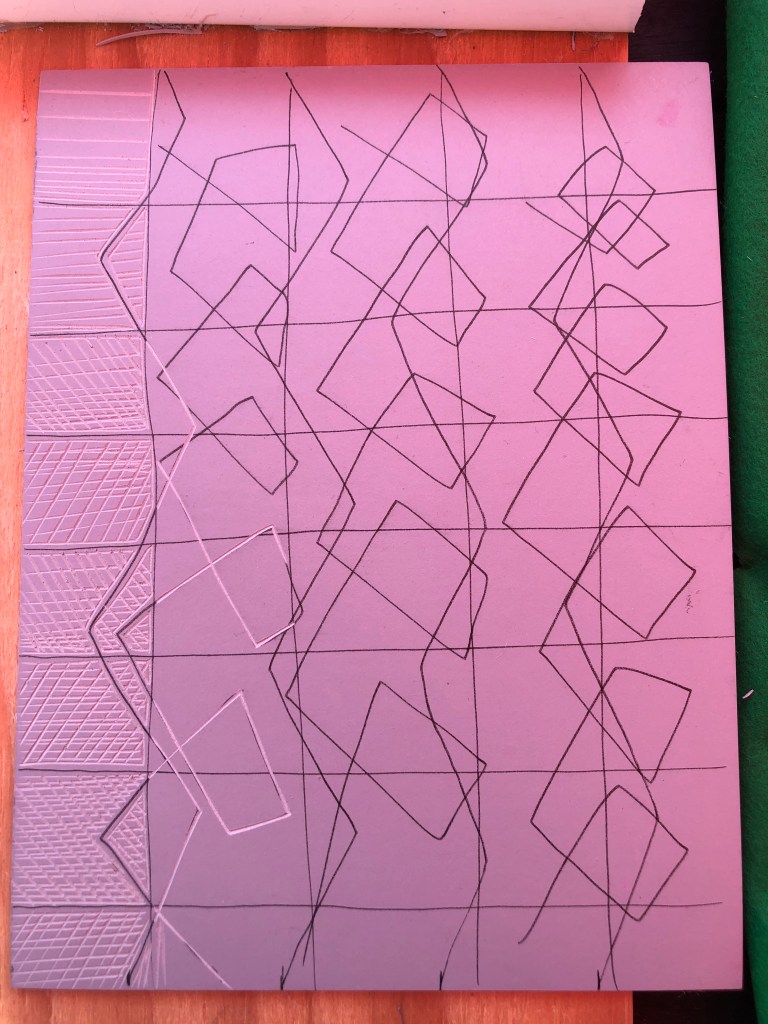
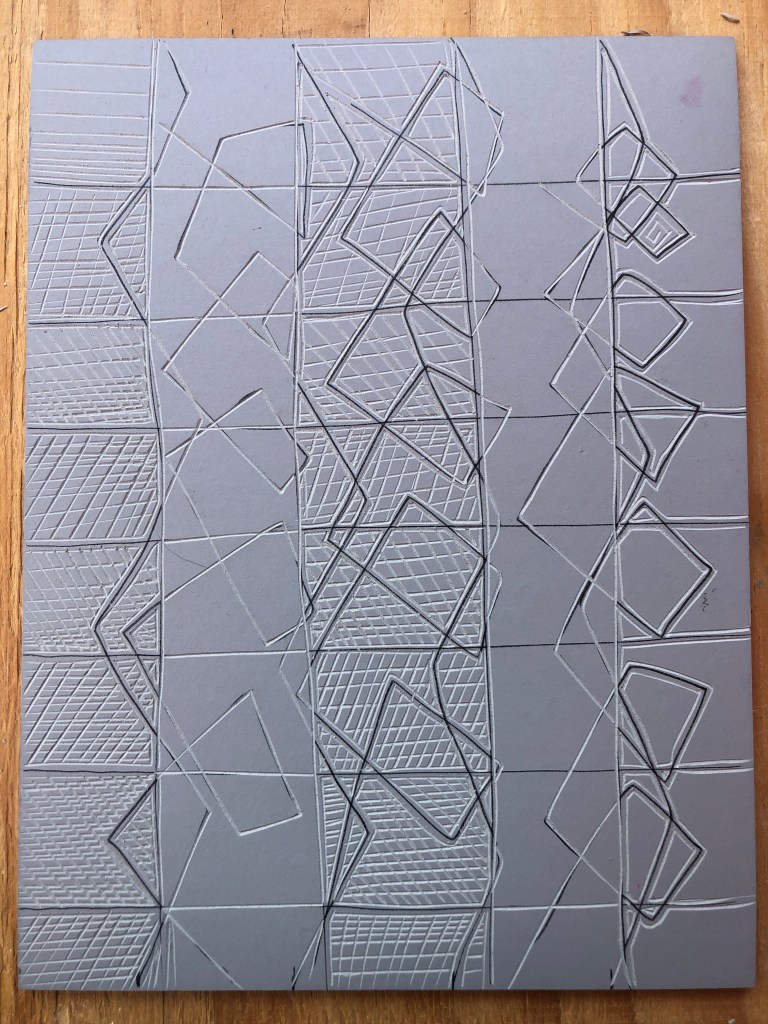
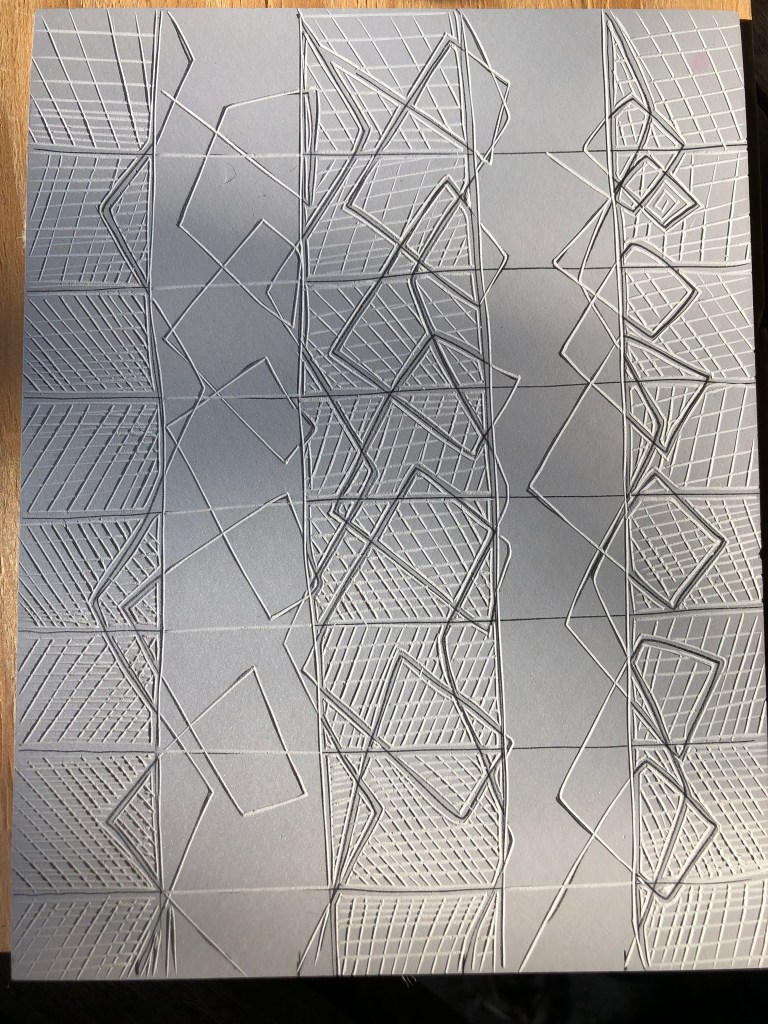
I wanted the lines forming the lighter areas to be similar to my sketchbook drawings. The drawings below are from my sketchbooks between November 2019 and March 2020.
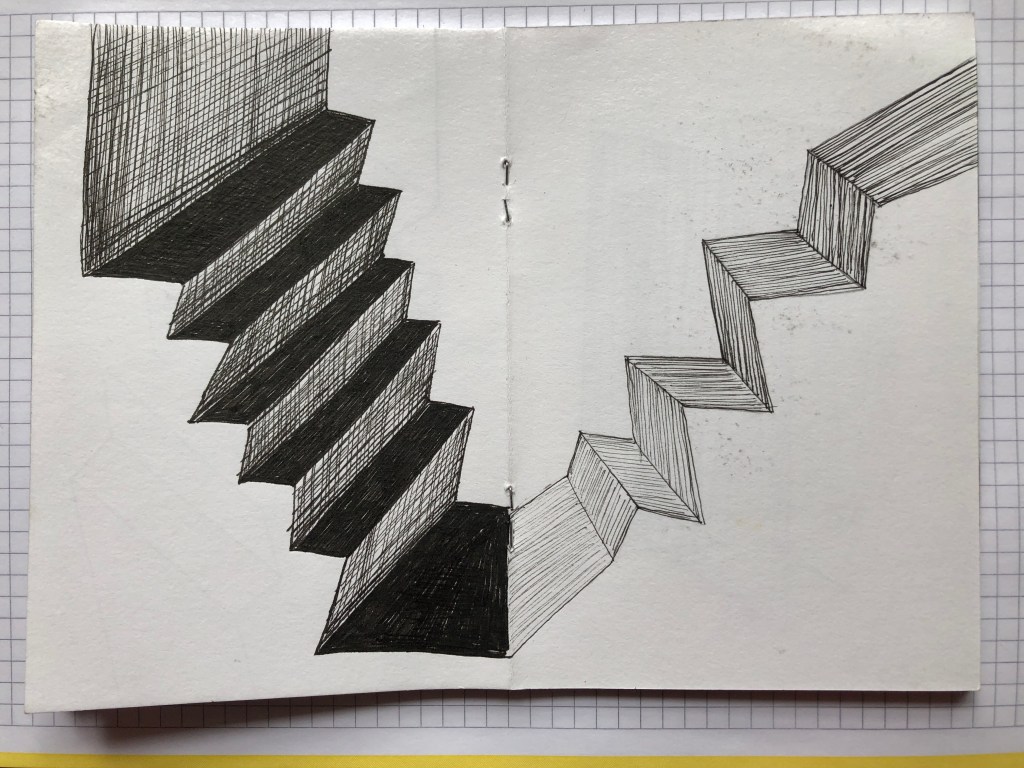
1 detail of sketchbook work inspiring the prints 
2 detail of sketchbook work inspiring the prints 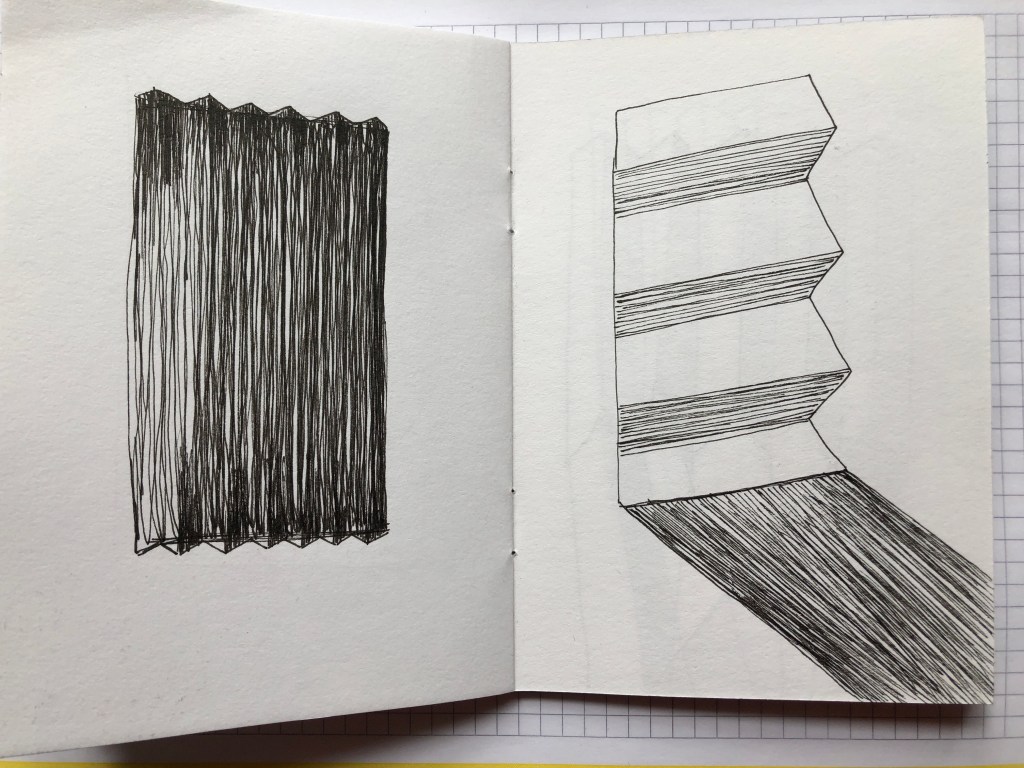
3 detail of sketchbook work inspiring the prints 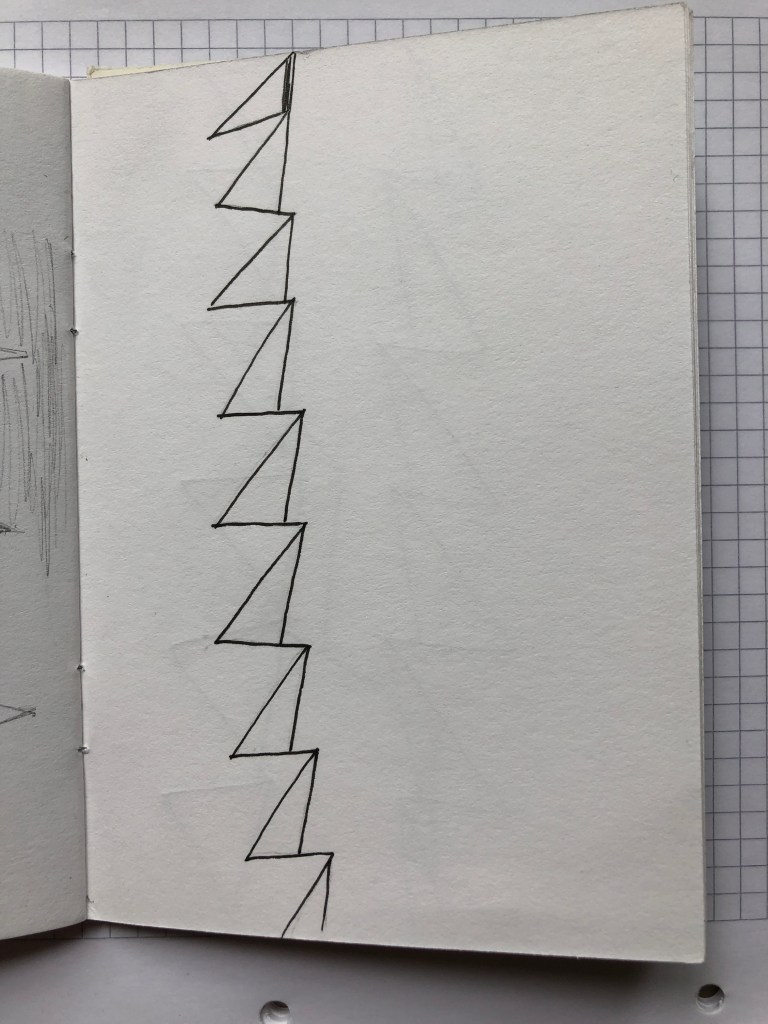
4 detail of sketchbook work inspiring the prints 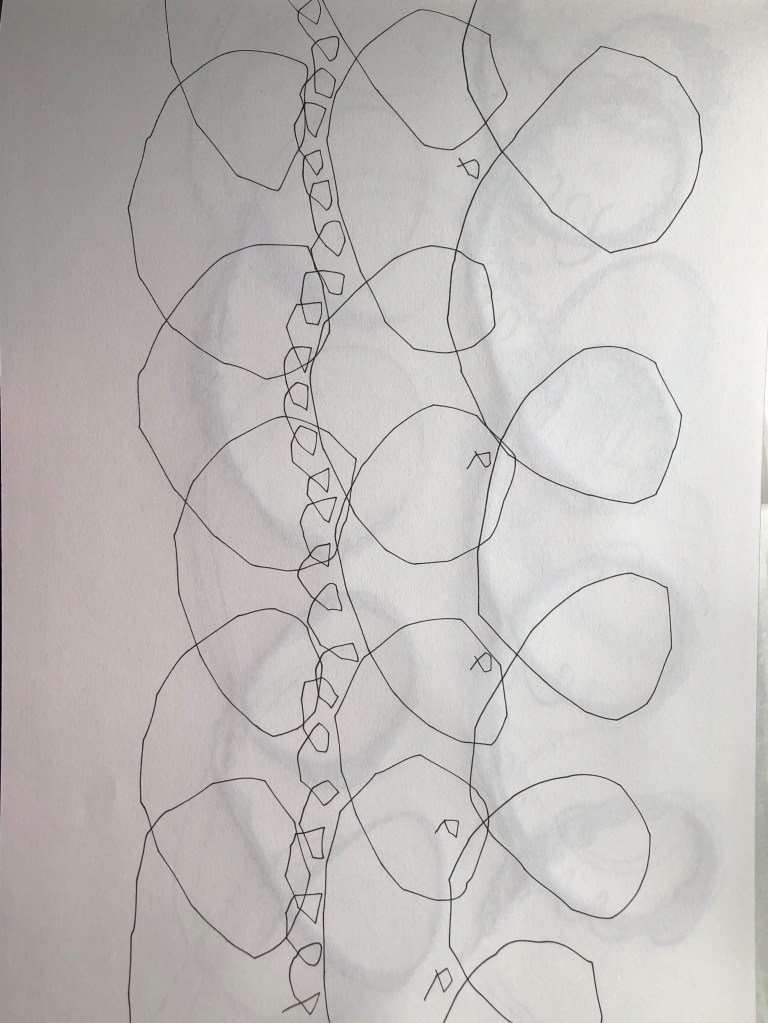
5detail of sketchbook work inspiring the prints 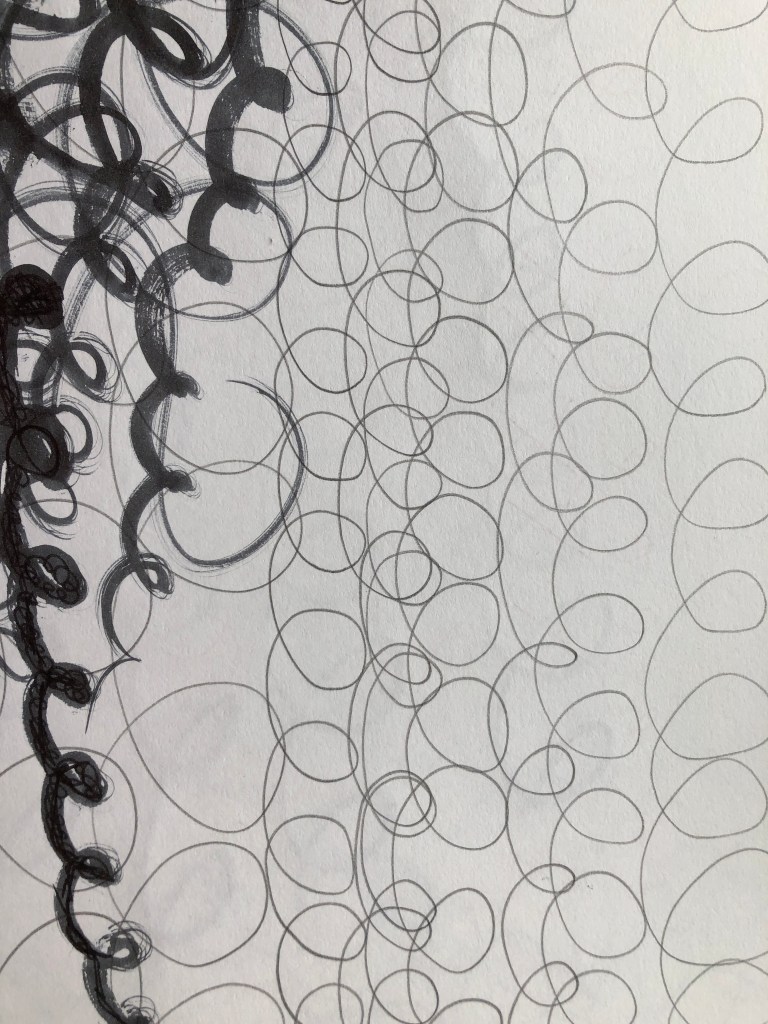
6 detail of sketchbook work inspiring the prints
The Outcome – prints
Whist in isolation and unable to buy paper, I have sorted out paper to use from what I have available. I have opened out envelopes, used graph paper and lined paper from the children’s old school books. I have found a pack of tracing paper and odd bits of coloured paper from workshop projects I run with my not for profit, Modern Suffrage. I also got a ream of shiny card from document services at Hertfordshire University, before lockdown which was going to be recycled. I found for these relief prints, the most successful papers were the cheapest ones. The coloured card was more absorbing and this ink didn’t sit happily on the surface. It is difficult to get the inking right when printing like this on say five diff
ering types of paper in one session. As I do not have a drying rack at home, I used a washing line across the studio to hang the papers to dry. This caused a few issues with transference of the inks whilst hanging. I found the next day some of the ink hadn’t dried, the tracing paper was the slowest to dry. This means that I need to leave a few days between printing sessions and I am limited to how many prints I can produce. However, this process is quite physical and therefore starting at 9am and finishing at 2pm was about the physical limit for me.
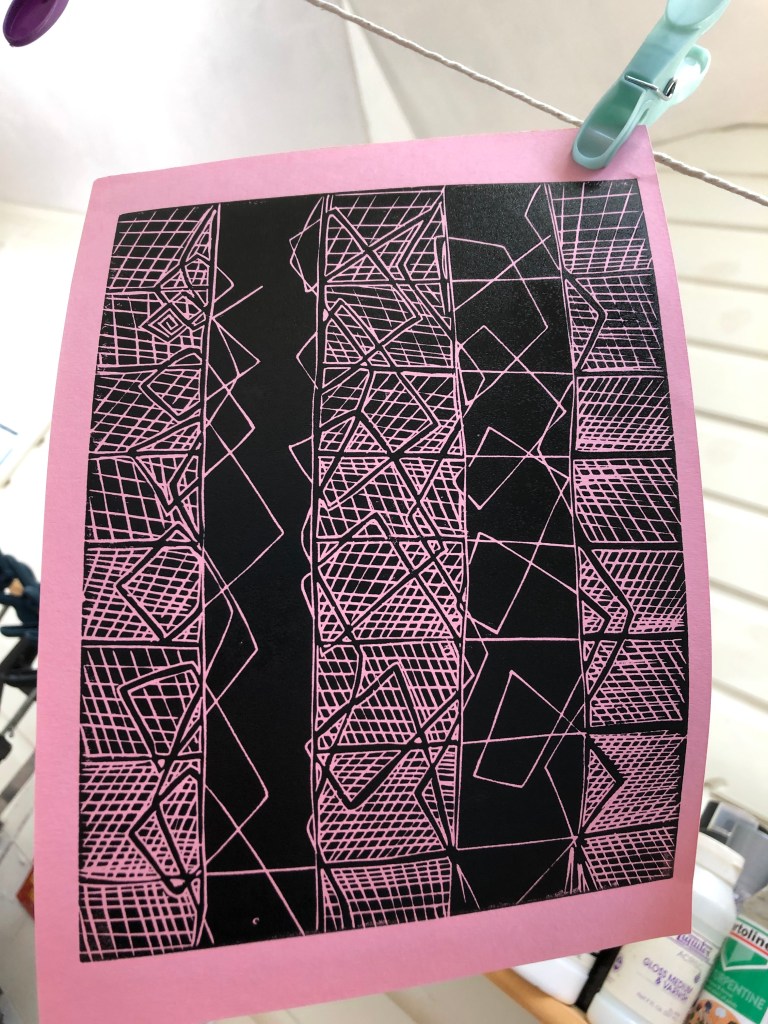
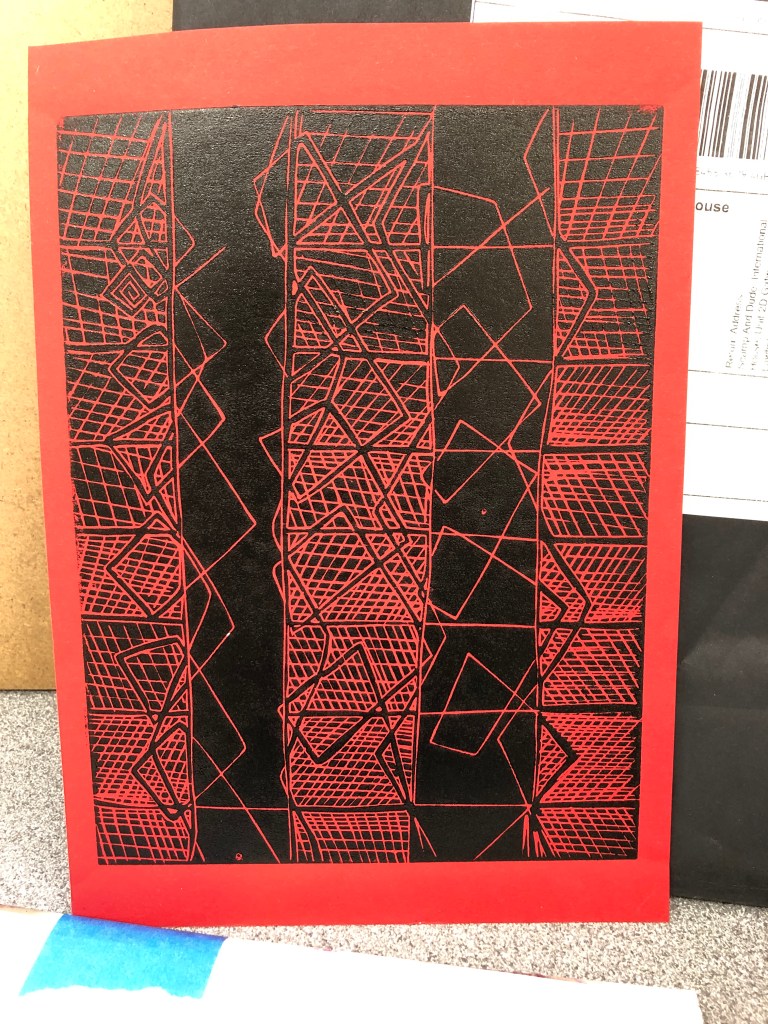
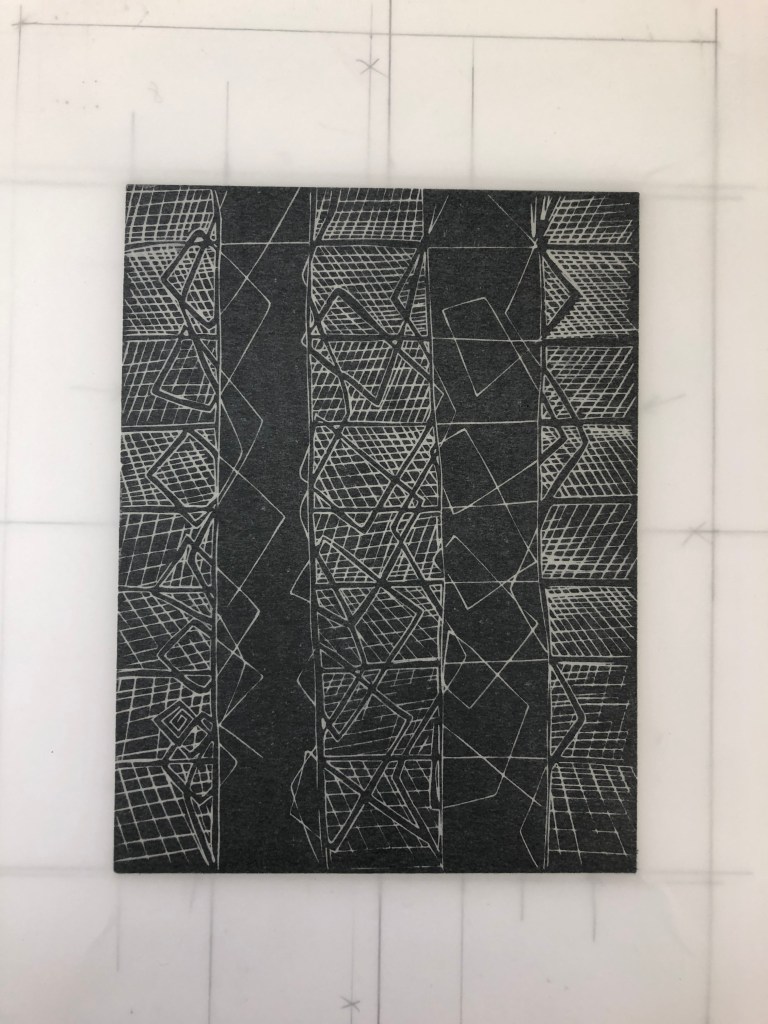
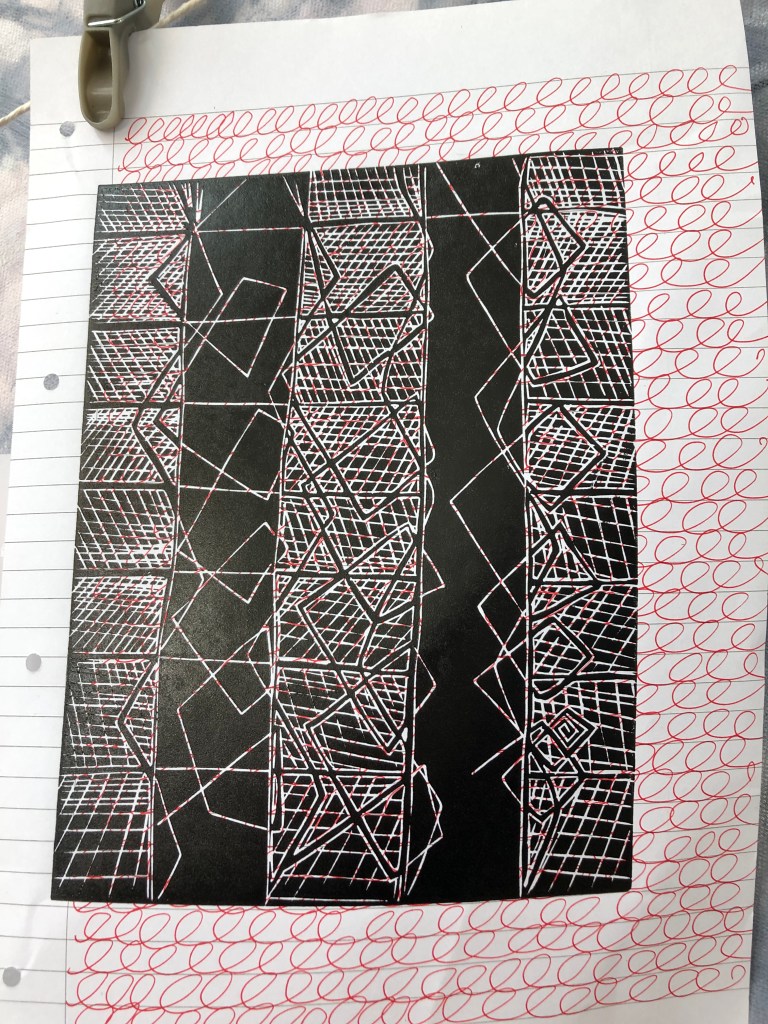


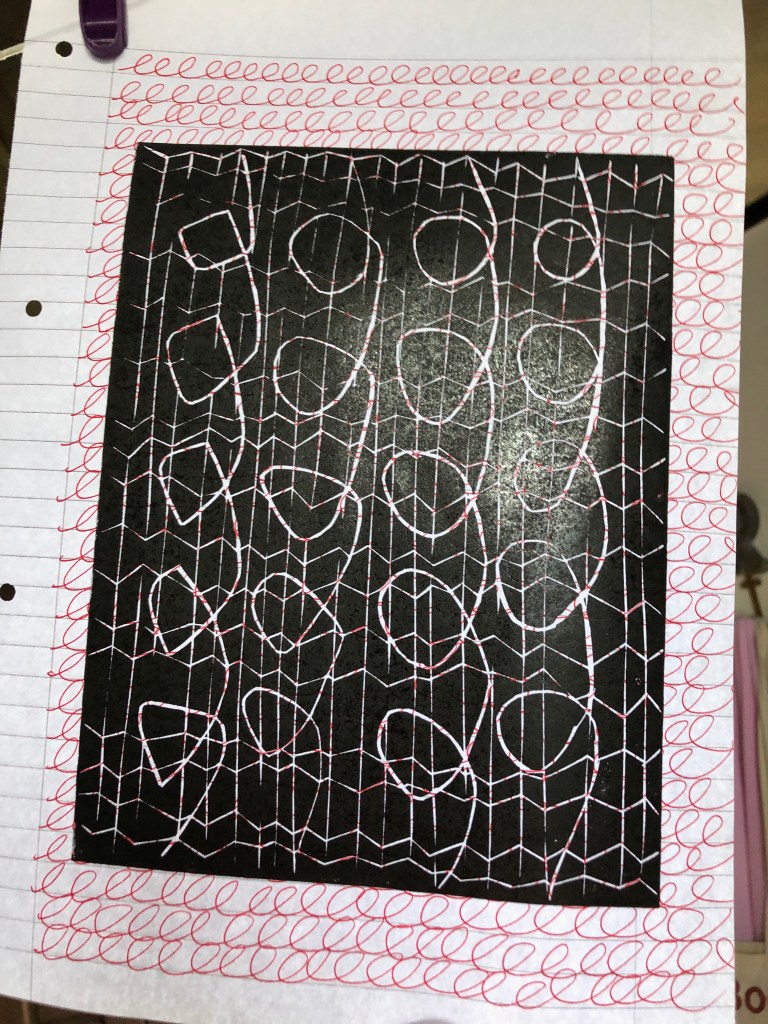
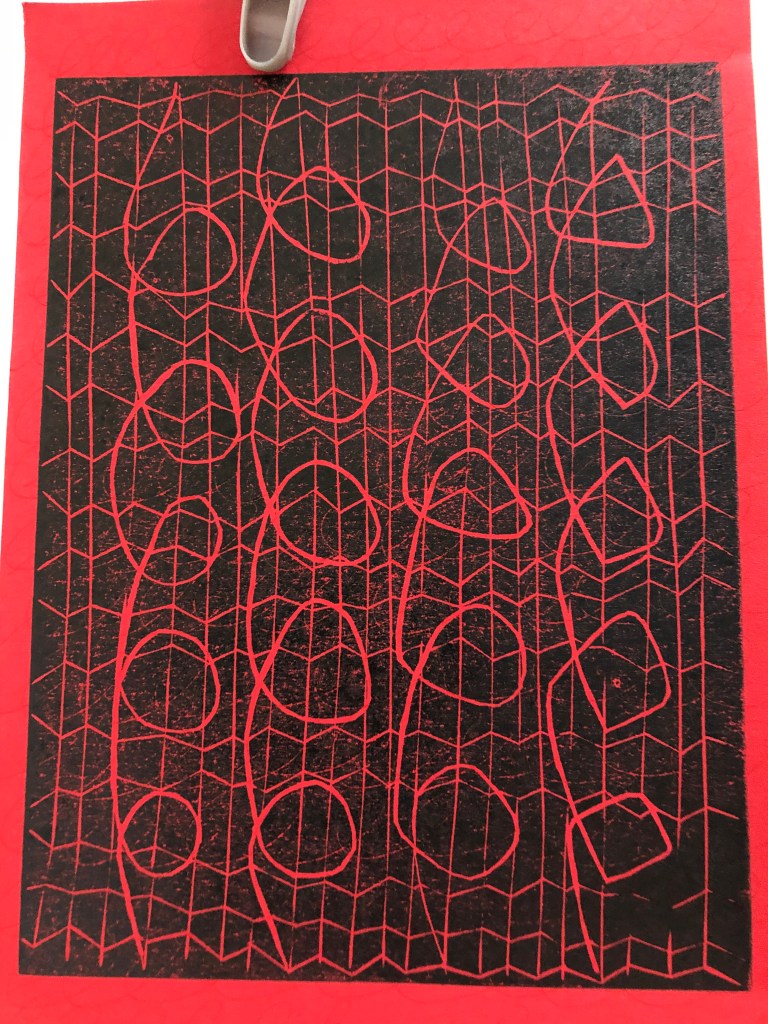
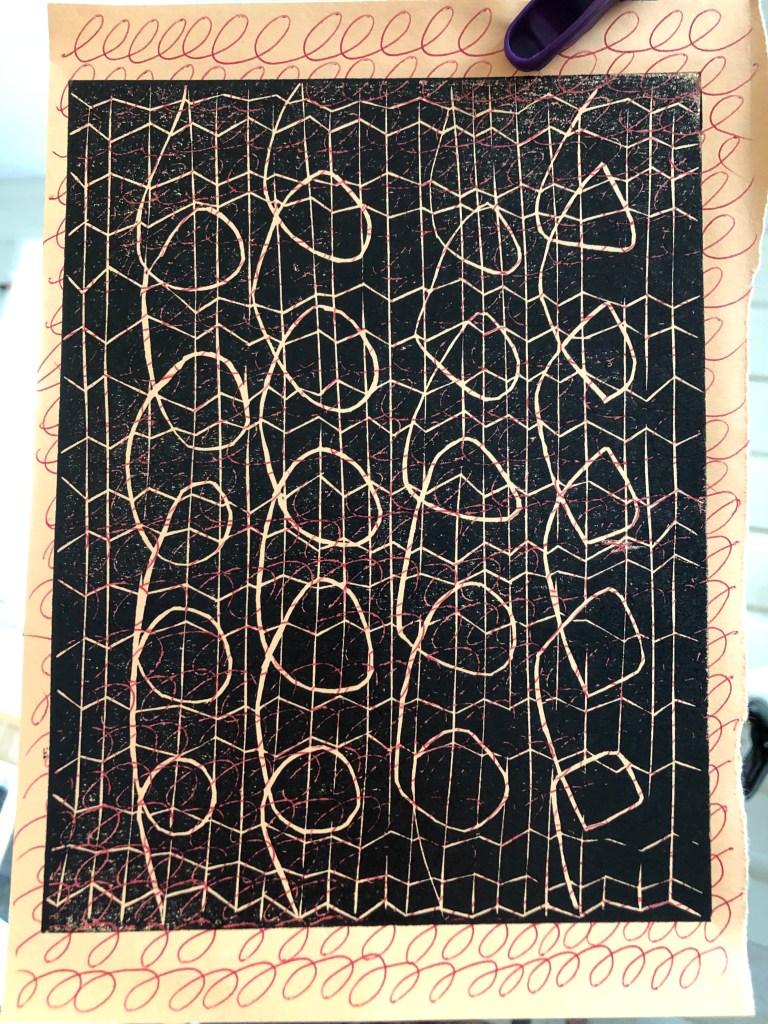
I printed the final smaller lino plate a few days later. I printed this plate only in pink of coloured paper. I used black, grey and red paper with the same pink mixed from red and white.
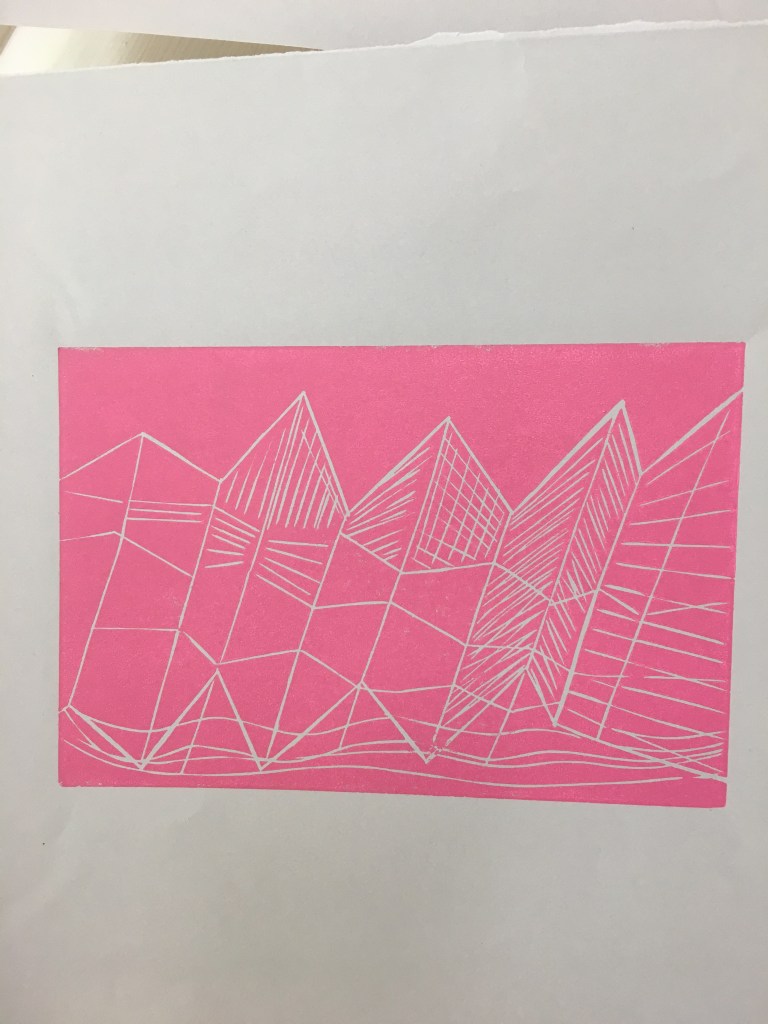
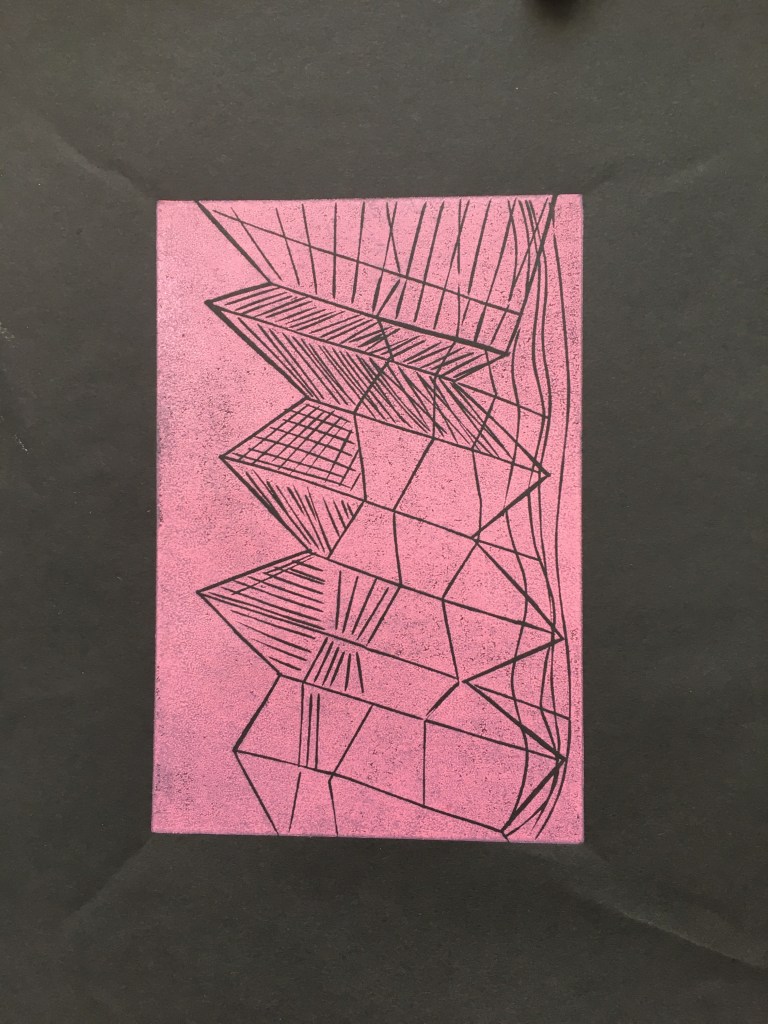
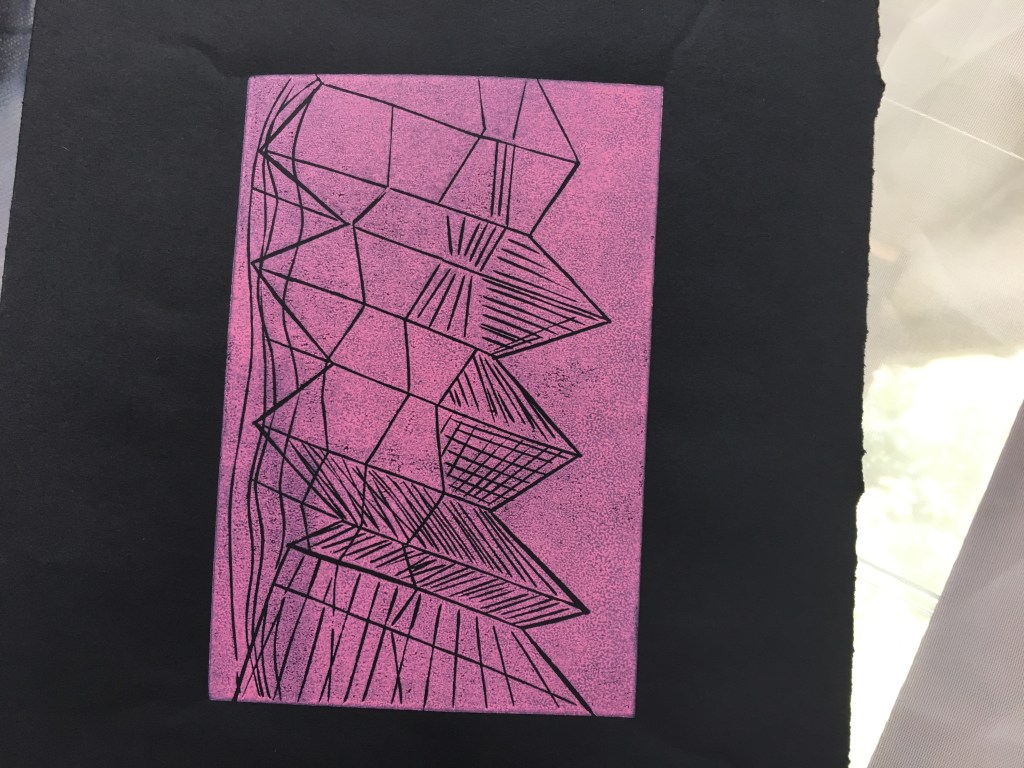
What I really like about the process of printing is the ideas it gives me to feed back into my studio practice. The layering of these prints with using paper I had drawn on, re-used or found meant that it gave more narrative to the piece and rather than have an edition. The outcome is a series of works, all different and each with a story to tell. This layering I would like to take into a full scale piece, possibly by adding drawing, print and possibly to tile the pieces together in a series. I am limited to what I can achieve in the home studio, and what inks I can use, however, I am also developing, in my sketchbook the idea of layering with the same colour to produce really subtle difference to the surface.
With repetition, series, themes and technique I was inspired during my research by works such as Anselm Kiefer and Agnes Martin. I studied their work on recent art gallery visits, with their use of whites and subtle changes in the surface of the paint, Kiefer’s work is more three dimensional and Martin’s if very meditative. Both artists use a ritualist method of working and applying layers albeit in very different ways with outcomes that couldn’t be further apart. What I take from each artist however is their differing uses for materials in the repetitive, series led work aspect in a reductive way this has helped me with my own processes and multidisciplinary confusion.
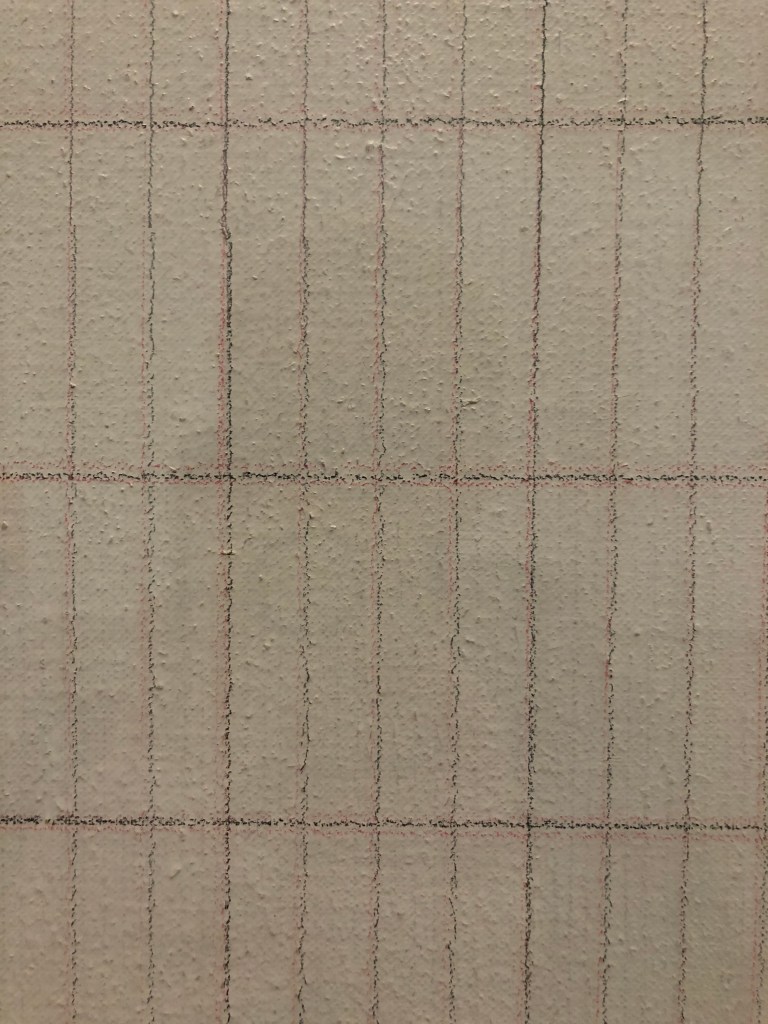
Morning Agnes Martin 1965 Tate Modern photographed by T Culverhouse 
detail of Anselm Kiefer close up at White Cube photographed by T Culverhouse 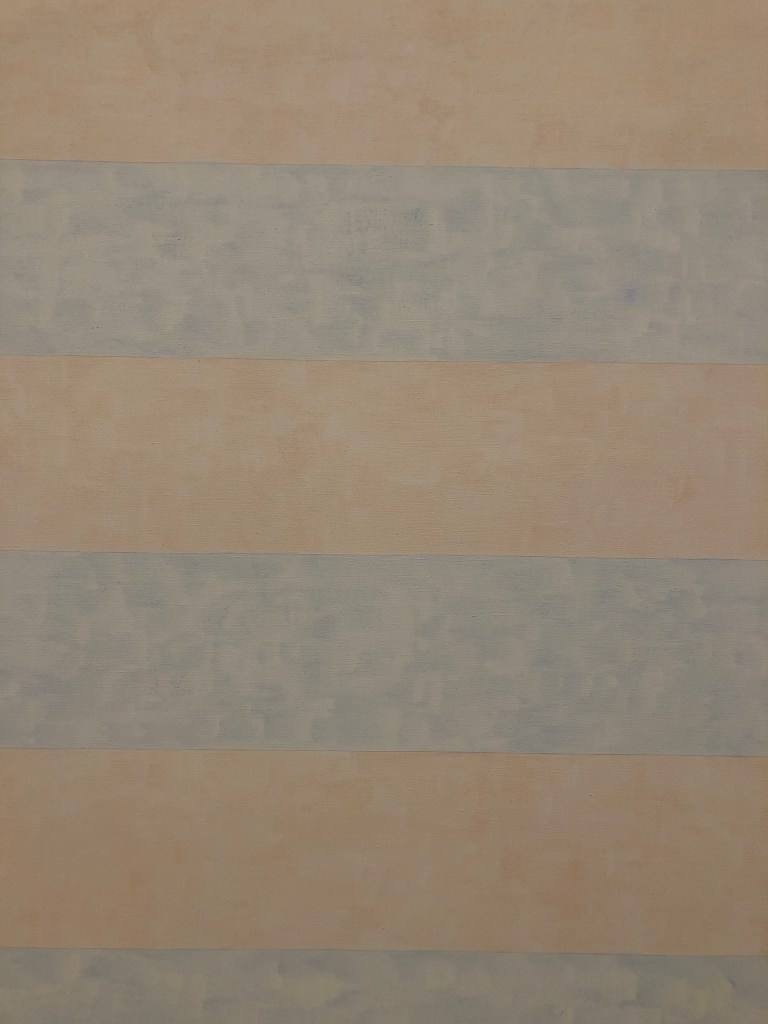
Untitled No. 5 1994 (detail) Agnes Martin on view Tate Modern photographed by T Culverhouse
Looking forward, I am going to include these prints in a larger piece that I am thinking about making using this repetition, series and tiling concept.
 Tina Culverhouse