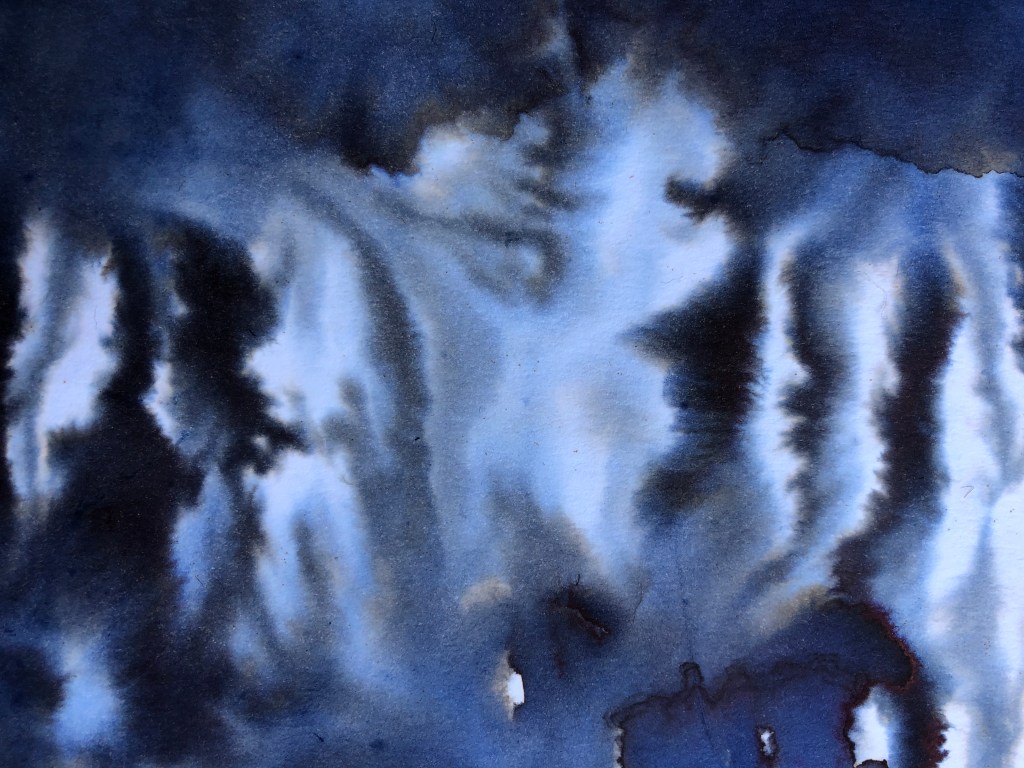
31st March 2020
I was invited with others from the Masters Fine Art cohort to join a Visual Research Group run by Hayley Berman and this second meeting, open to all from our course took place on the 31st March.
We were invited by Hayley to read an article:
Christopher Bollas (2015) Psychoanalysis in the age of bewilderment: On the return of the oppressed, The International Journal of Psychoanalysis, 96:3, 535-551, DOI:
To link to this article: https://doi.org/10.1111/1745-8315.12352
I read this the day before, it was really hard going and left me feeling quite bereft halfway through, I had a chat with Ian Gibbon and after speaking to him decided to push on and read the whole article. The stand out statements in the article for me are;
To think about the future is to form a crucial mental structure that gathers unconscious visions (‘bearings’) of possible futures and orients the self in the temporal existentially of the life span. To think about the future is to exercise an important mental function vital to the survival of the self and the species.(p538)
We therefore ‘induce a protective social blindness'(p538)
The concept that oppressed within this article refers ‘to the suspension or distortion of human thinking. The represses returns through the rerouting of ideas. Bollas goes on to explain that the ‘cumulative effect of thousands upon thousands of such failed possibilities forms a mental network of the mangled – of ideas half formed but left disabled.’ This is very much where my thinking feels like it has been mangled by the global pandemic and its effect on my thinking.
Sightophilia is when a person is drawn to looking but avoids insight, using refractive thinking which sends the core information in a communication to a place that is difficult to access it and reflect on. Reflective thinking is bypassed by result and viable alternatives to deep thinking and resolution are used instead. The lack of ability to think about oneself, and enter a state of ‘mentalization'(Fonagy & Target, 1998) a state where one cannot think about their internal world. So in this pandemic state, this is where I feel I am, unable to think deeply about my internal space, made illiterate emotionally and my mind seems to bypass my intellection reflective process. Academic tasks have been very difficult.
So I approached this invitation to make in response in a very formulaic way. I have used this in my practice in my serial work, both drawings, painting and sculpture. However this time, I used contaminated material. I used mouldy spotted paper from the recycling in my studio.
I dampened the paper under the tap and let it dry slightly. I then had a rule, I would draw on quink black ink with a small paint brush the entire length of the paper, the lines could not touch. I could draw them from either end.
I started on one piece see below:
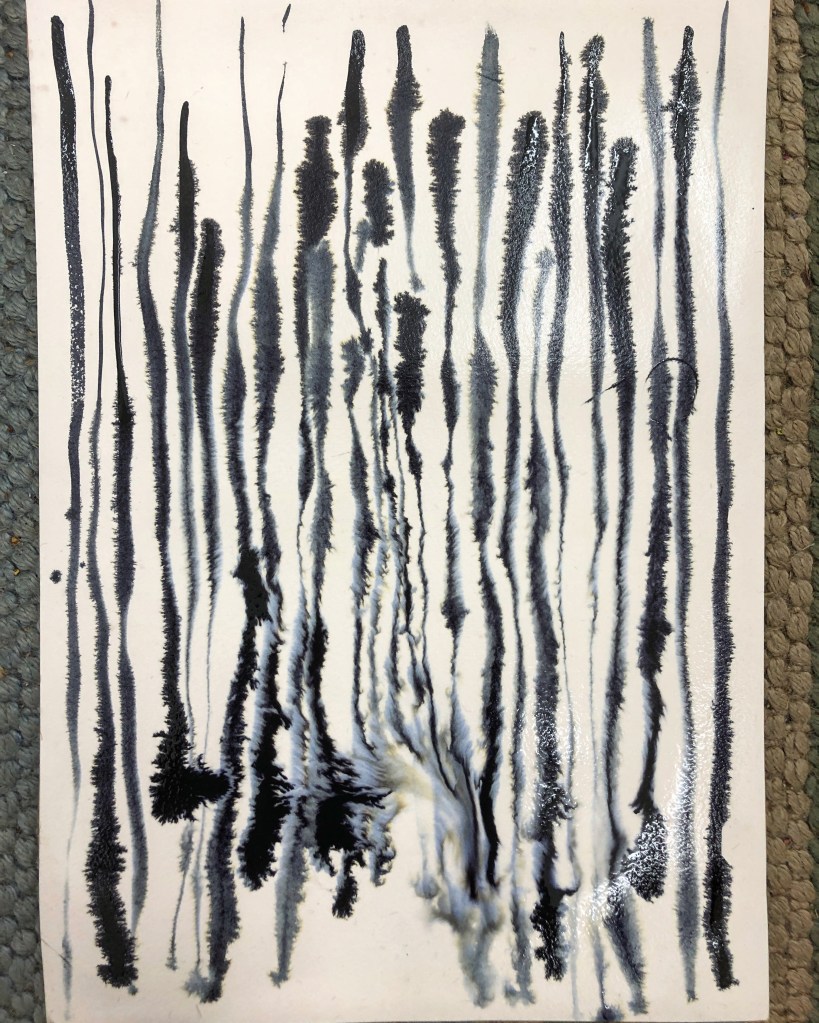
the wet paper with lines painted on 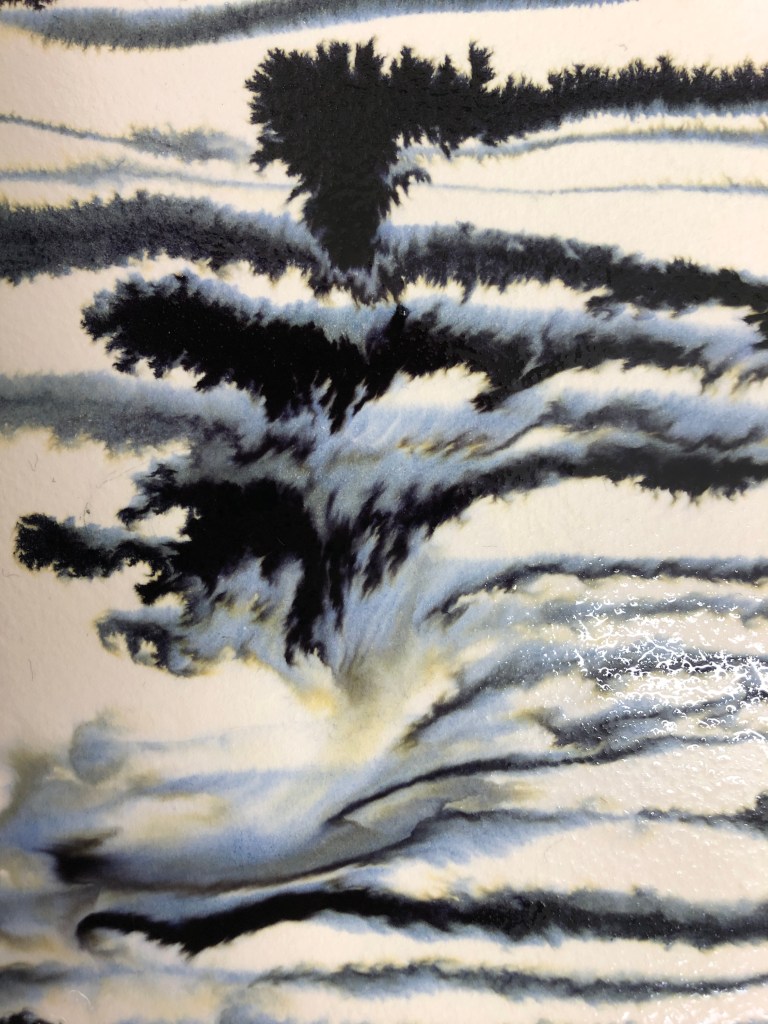
the paint bleeds 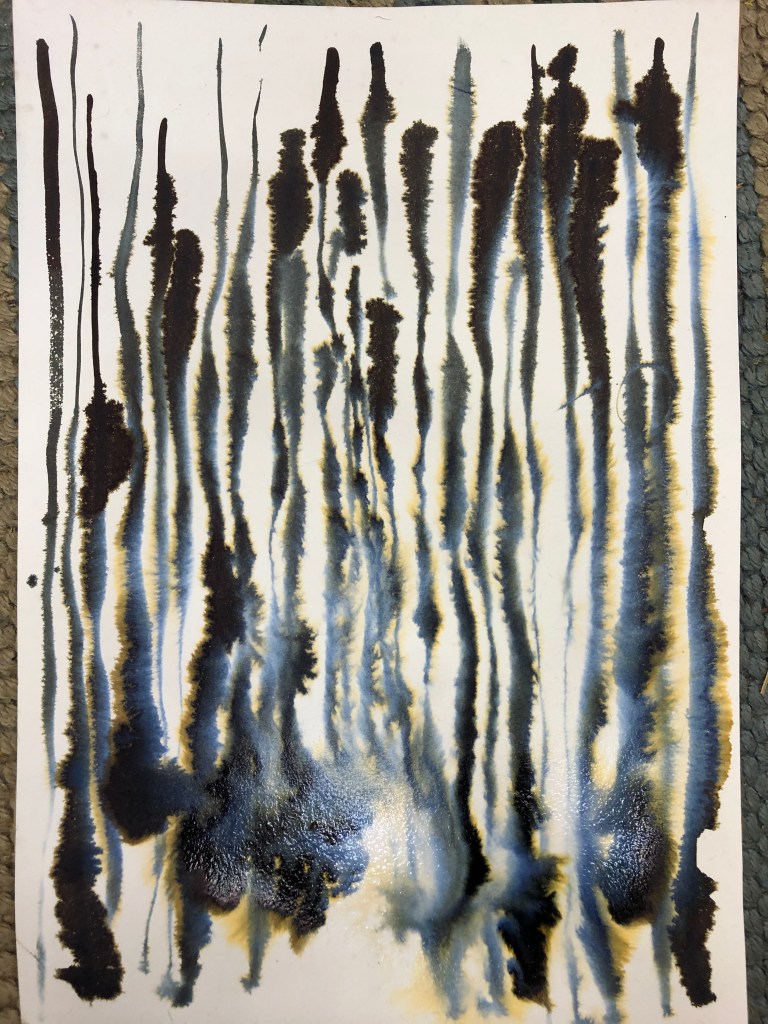
the wet paper as the paint bleeds 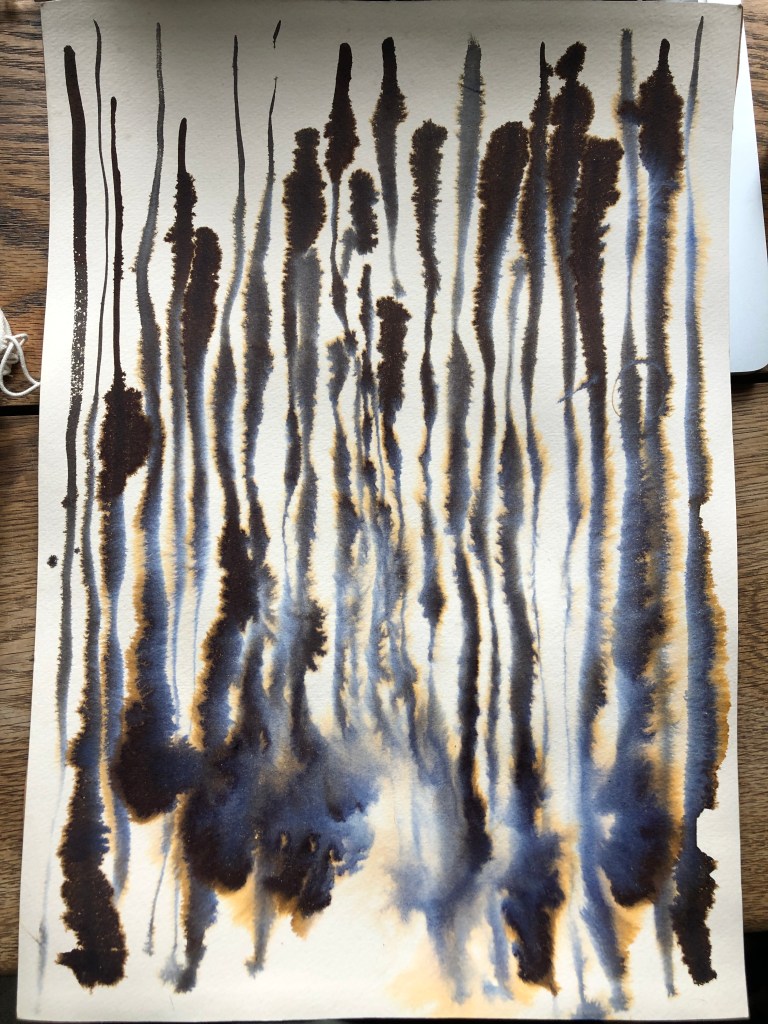
the dried and finished piece
I went onto work on a this piece see below;
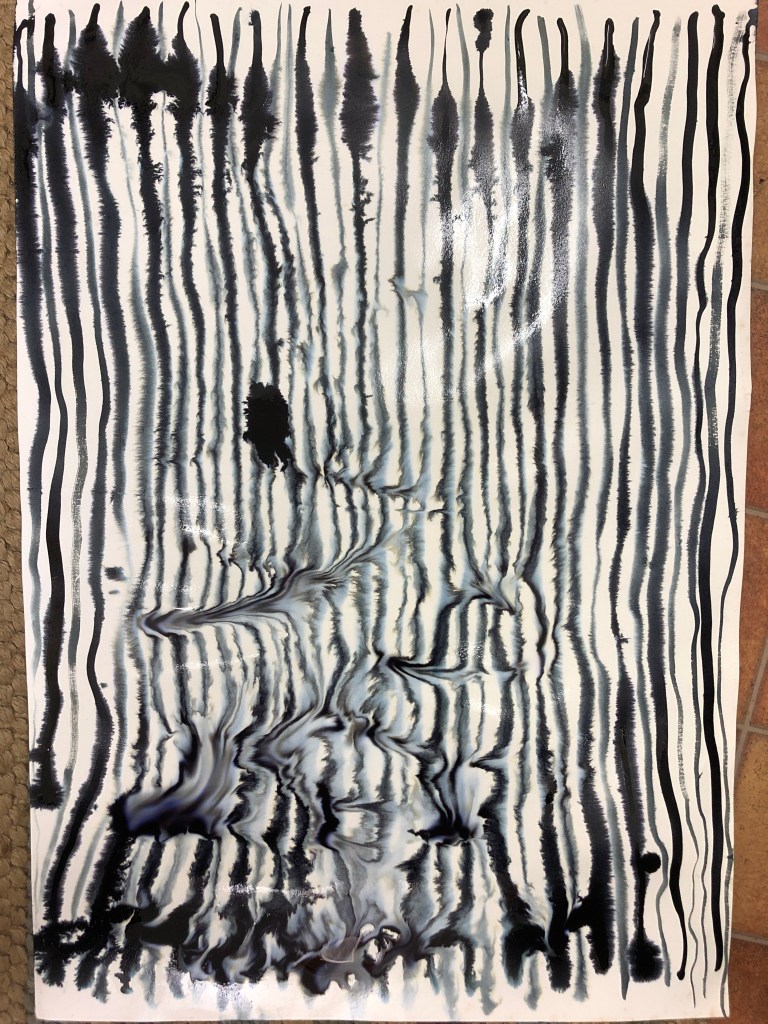
the wet paper with lines painted 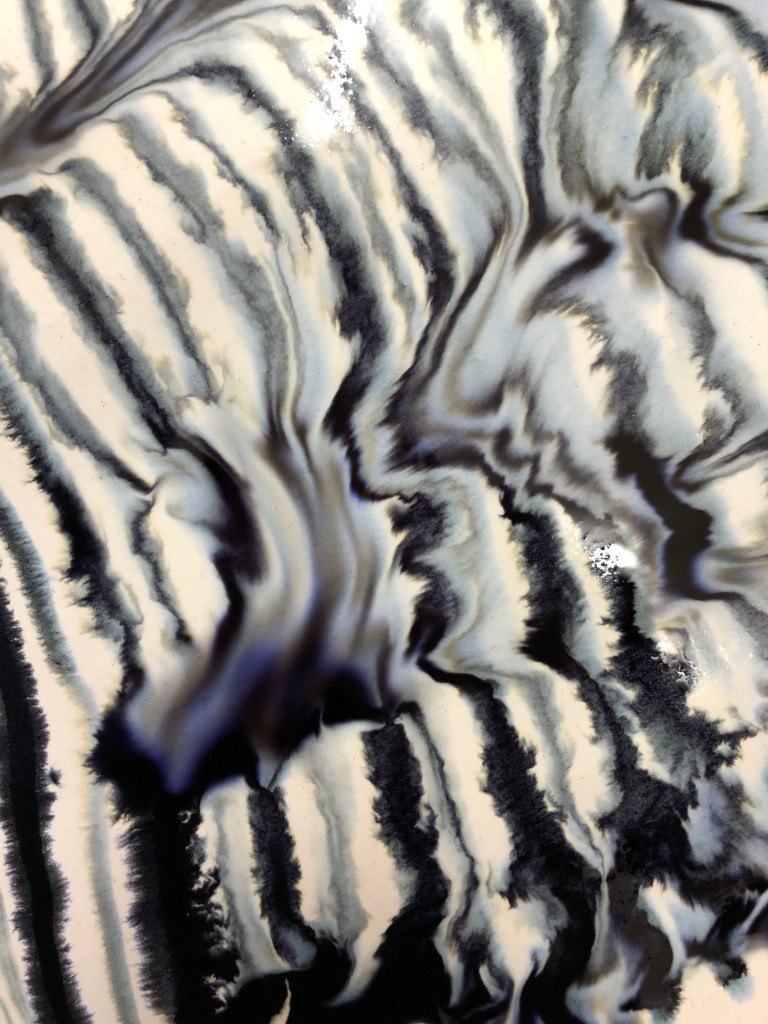
the paint starts to bleed 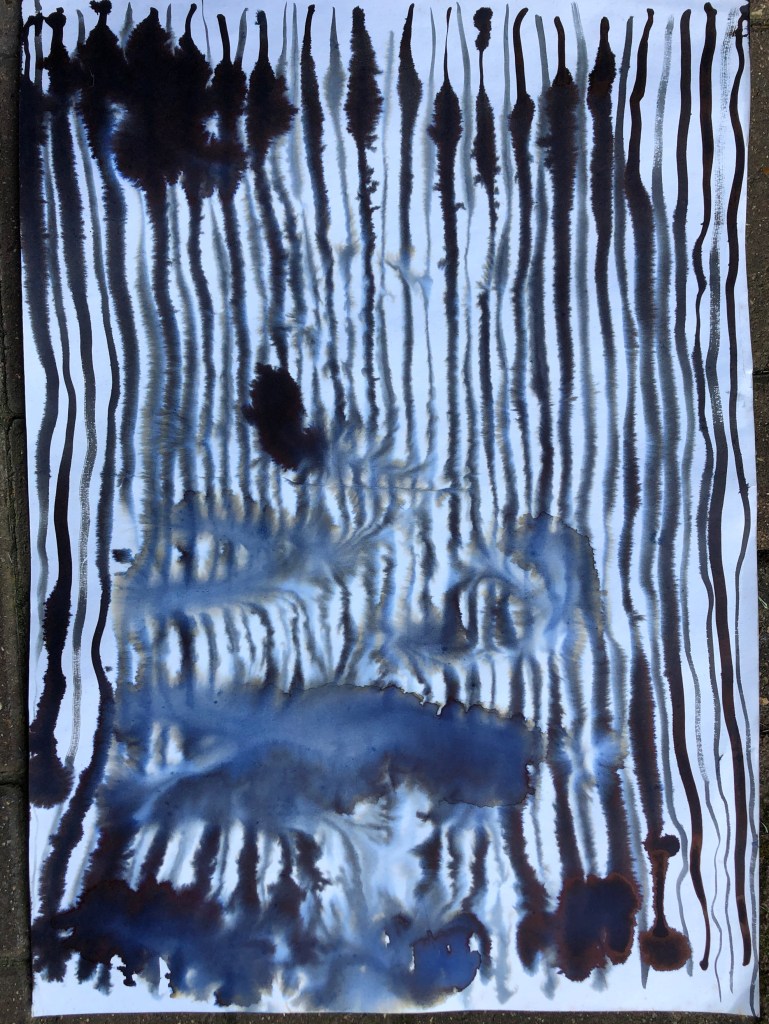
the dried and finished piece
I worked on this piece;
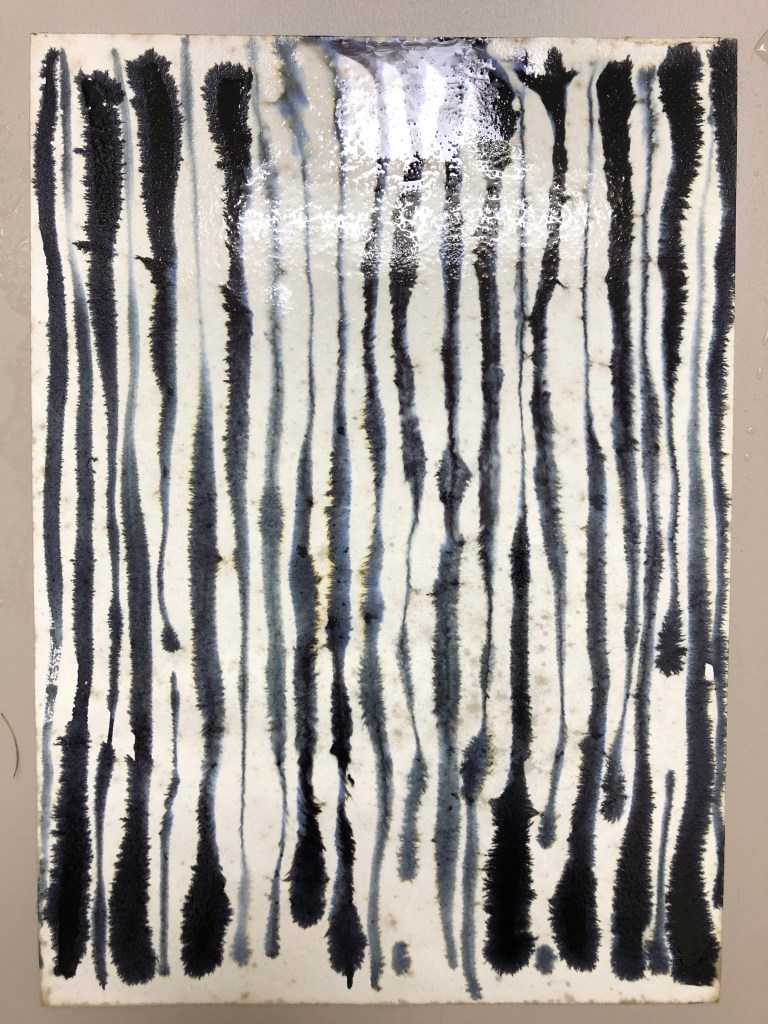
the wet paper after the lines have been painted 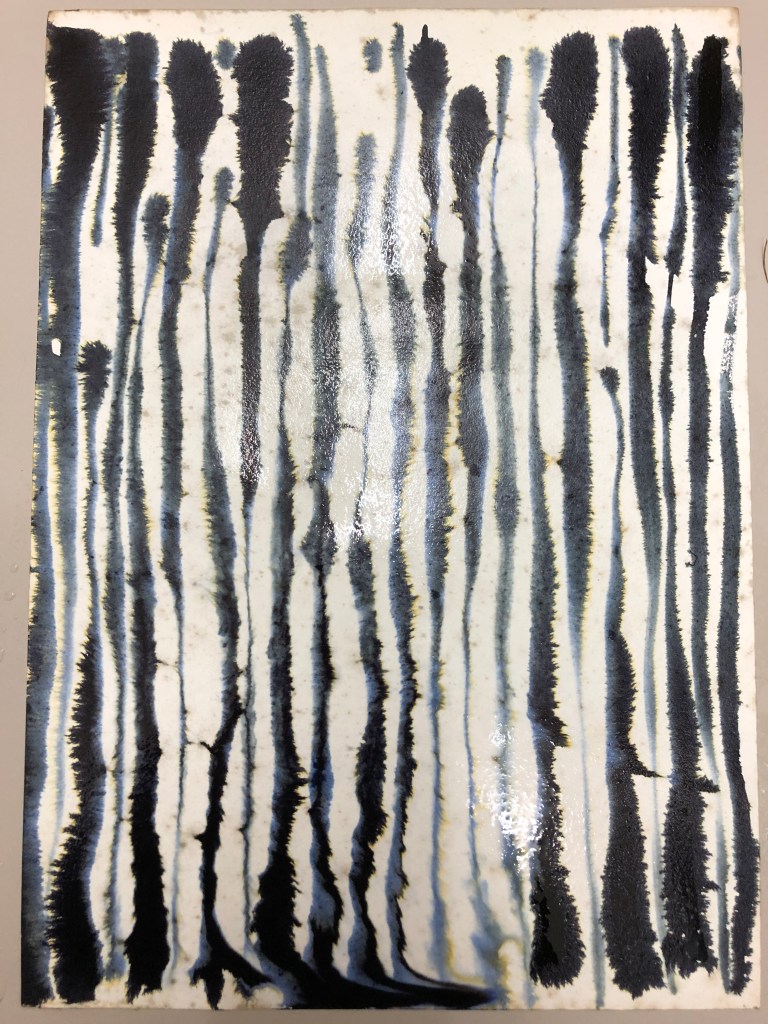
the paint starts to bleed 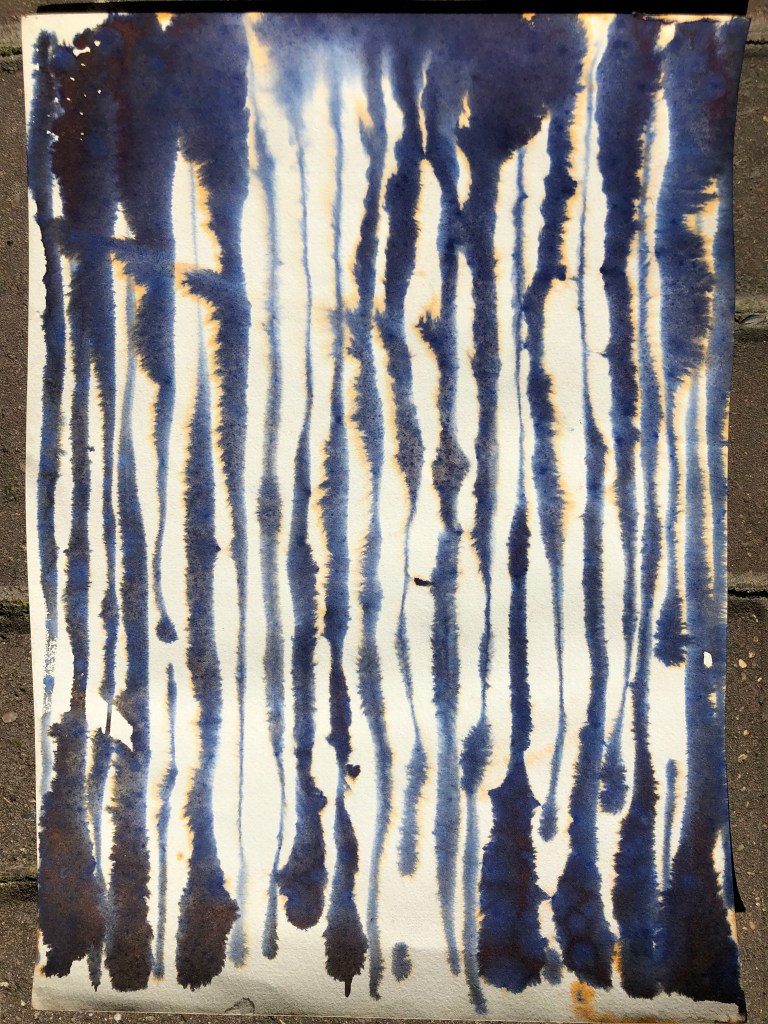
the dried and finished piece
This almost automatic work takes me back in time to my practice a few years ago where I used a lot of graphic ink marks to make work. However, I had never made work with lines quite like this. Using paper that I would have thrown out of the studio felt quite radical. Although I have used found materials, sourced from scrap stores and old stock, I’ve never used soiled materials before. These pieces of paper were from a portfolio found on the Hitchin Flea Market, from an artist who had stretched this paper and drawn on some of it and erased the pencil lines. There were mould bloom spots. The lines in work recently made have been clean and clear. To find this work emerge from the subconscious through these three pieces of work was, upon reflection, quite a shock for me. Letting the materials and conditions control the final outcome is a real divergence from my usual practice. It feels very much like this virus, I cannot change its path except for keeping within my own boundaries. I cannot control what happens outside of my own lines and where they are drawn. Where they end up is up to chance, the materials and conditions. The outcome is actually in detail quite beautiful but not intentionally so or by design.
 Tina Culverhouse