During my studio practice I have been developing three dimensional work that uses folds. A recurring theme throughout my practice, I have returned to this during my postgraduate studio work.
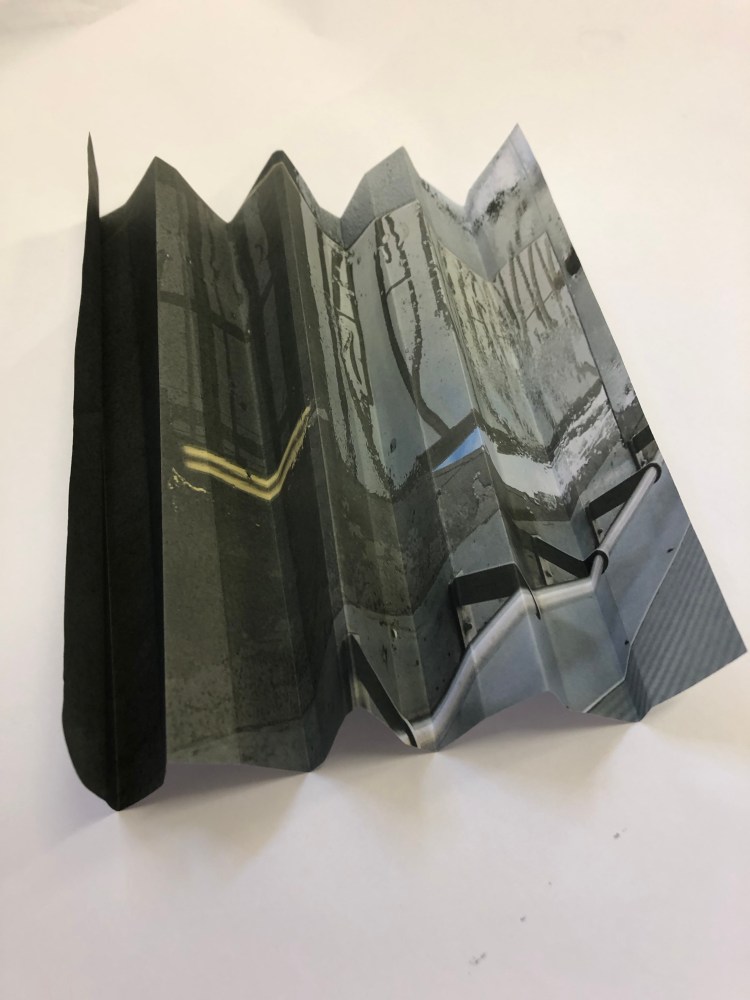
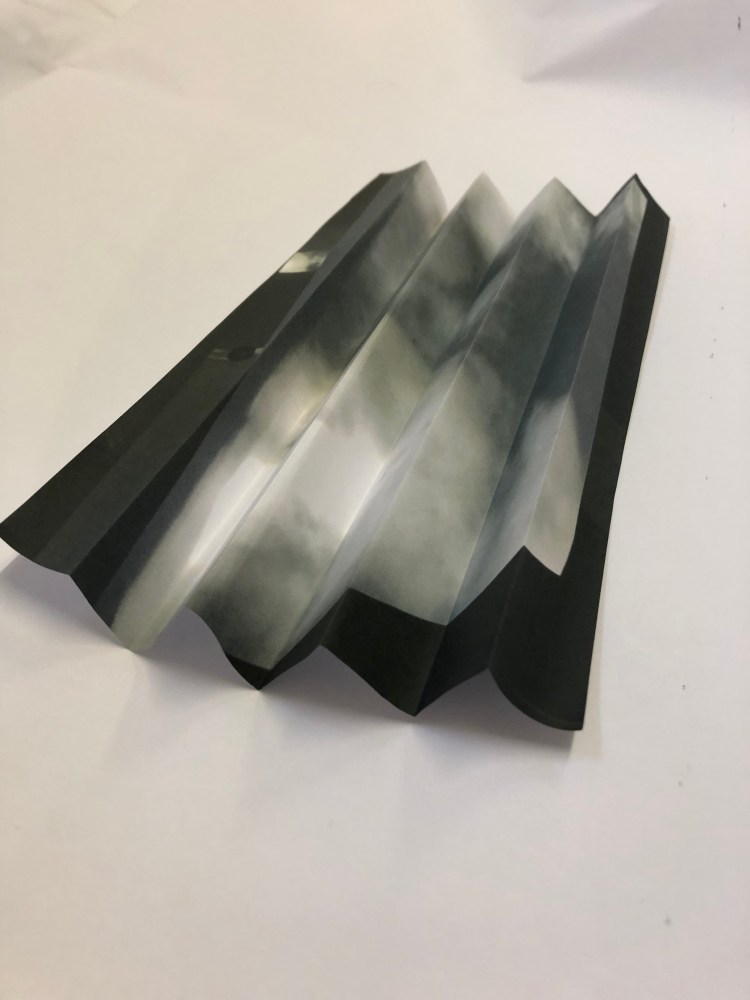
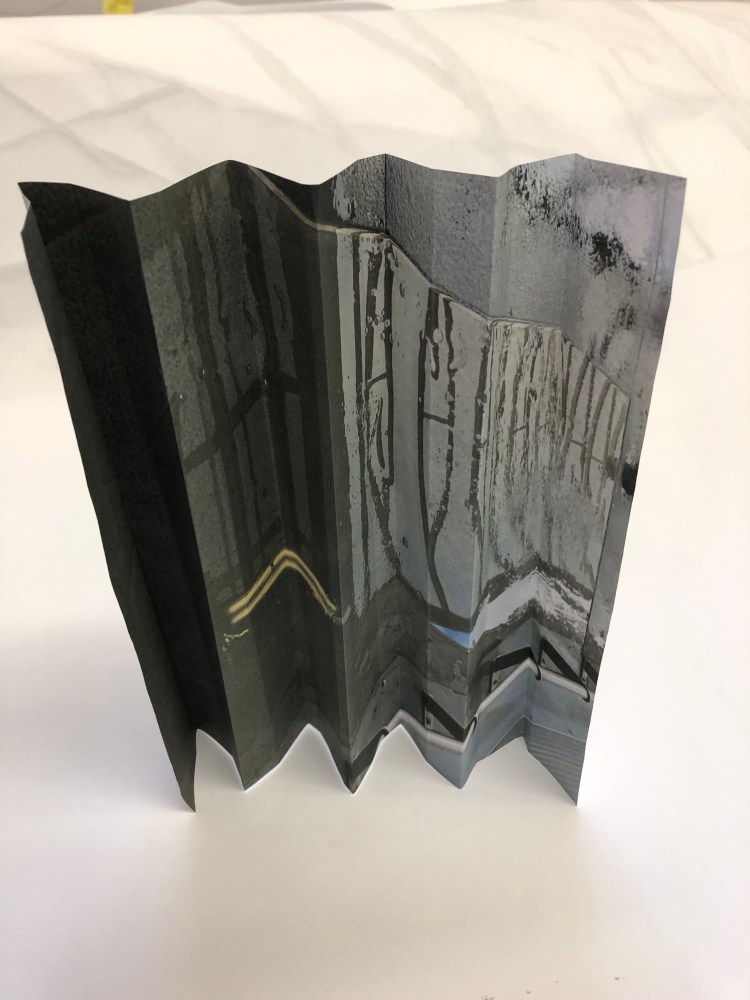
I have been folding printed photographs, and I have been researching other artists who use folds and have been expanding my understanding of why other artists also do this action. During my research I found the work of Tom Hackney.
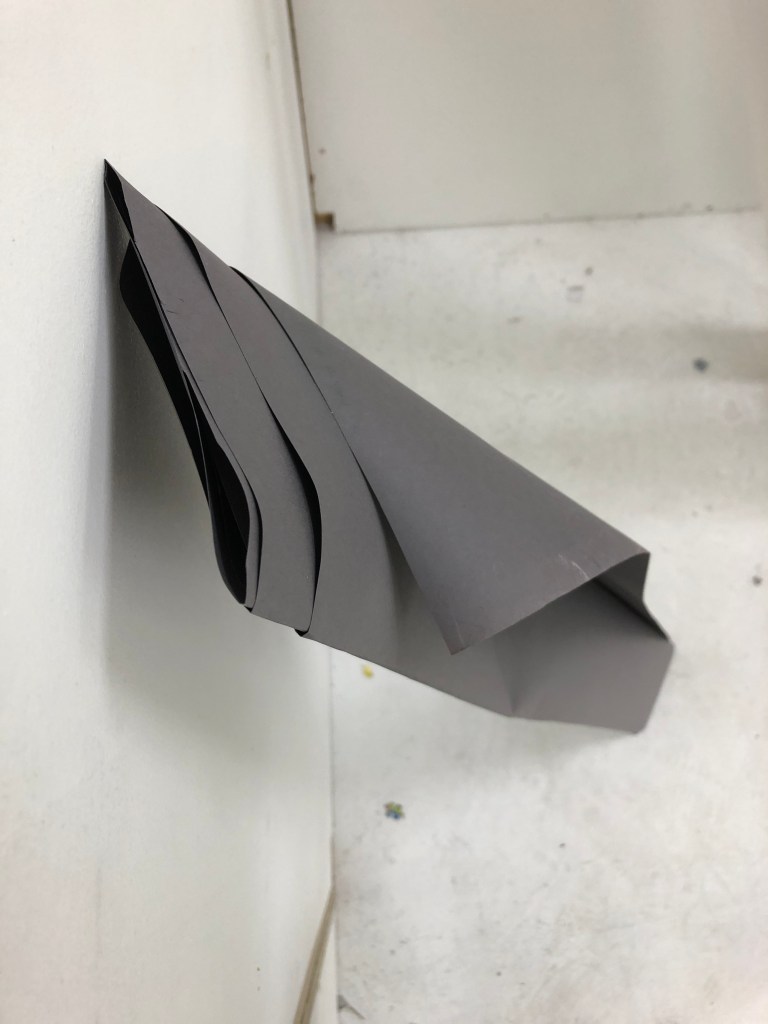
In my studio practice last week, I decided to start taking some large scale pieces of paper and folding them to see what happens. In the second year of undergraduate study at Middlesex Polytechnic I did some installations using large scale pieces of paper folded and I wanted to revisit this in my postgraduate degree practice. I started to make this work and below you can see the beginning of this process of folding.
When I found the work of Tom Hackney online I contacted the artist to discuss his practice and see if there were any similarities in our practices. The link to his instagram account is:https://www.instagram.com/p/Bbl4AVMBmDj/?igshid=hsrhg1ia0nd9
Hackney’s work is conceptual and he uses cast concrete and plaster and constructed sculptures Marcel Duchamp references. This work shown made with hinged mirrors was originally called Hinged Mirror by Hackney retitled the piece to Folding Mirror. The dimensions of the piece are the exact size of Manet’s A Bar at the Folies-Bergere. Hackney made this work with the painting in mind with its beautiful, refracted space.
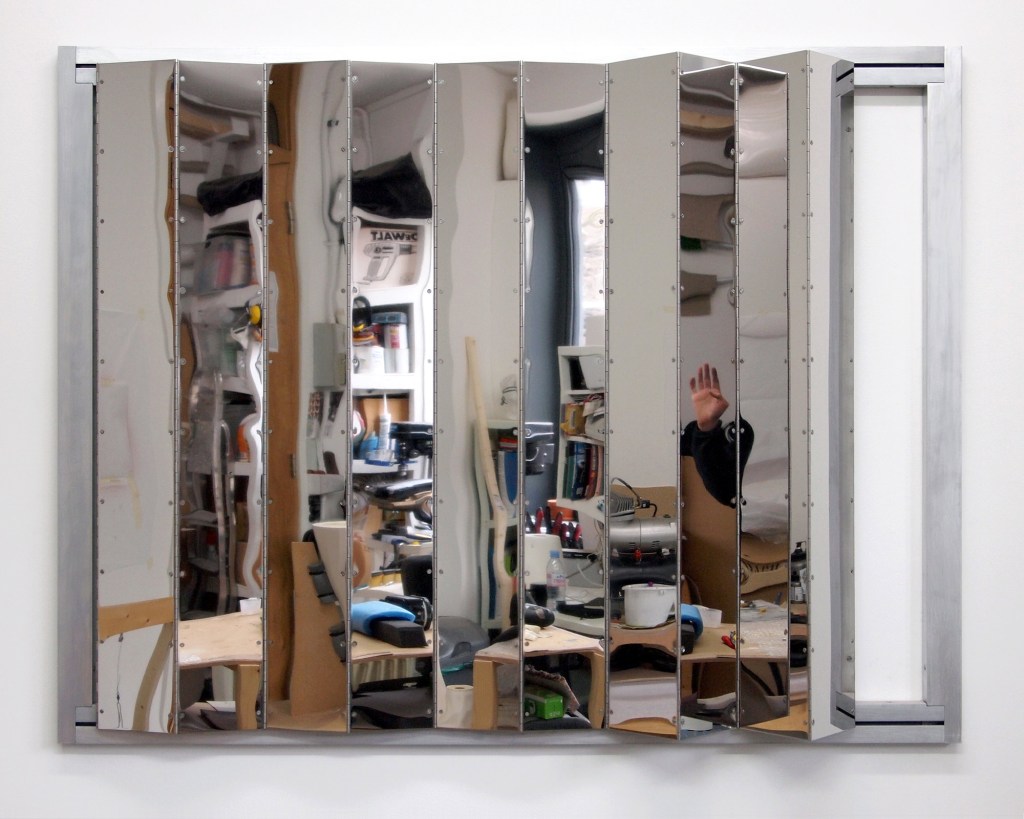
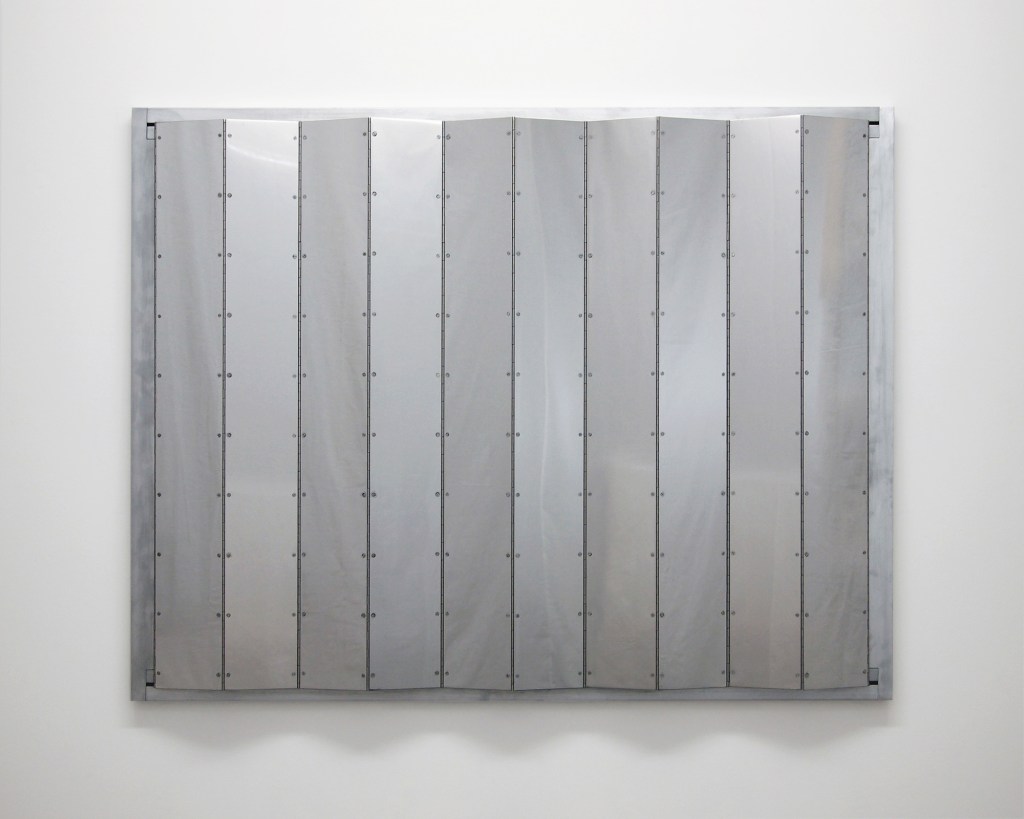
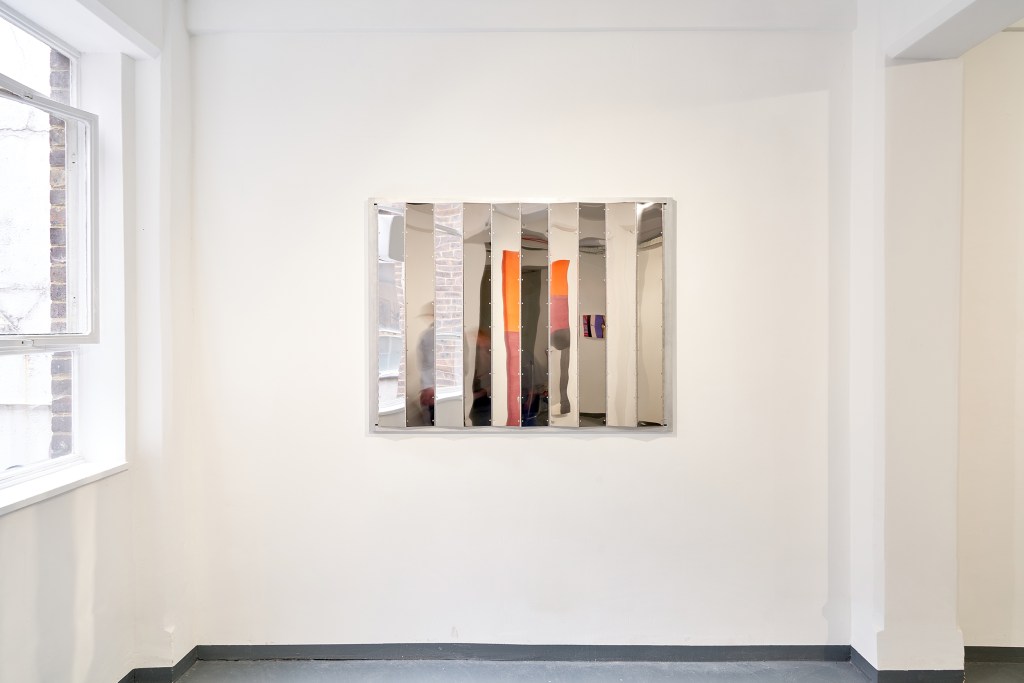
Fig 1, Folding Mirror, Hackney, T (2017) 96 x 130 cm aluminium, mirror steel & fixings by kind permission of the artist
I sent Hackney some questions about his practice and over a few weeks of conversing he sent me this explanation;
‘My interest in the folds stems from a small drawing I saw included in Duchamp’s notes for the Large Glass. He refers to the ‘Wilson Lincoln’ system, an optical curiosity whereby two portraits were spliced and presented on this kind of folded form, so as one image was readable from the left, and one from the right. Viewed frontally, the two portraits are jumbled. I first used this idea in Lincoln Wilson a concrete sculpture I made a while ago.
https://tomhackney.com/work/lincoln-wilson#1
The Folding Mirror followed, thinking about Manet, painting and frontality. I find the visual complexity of A Bar at the Folies-Bergère continually striking, despite being very familiar with the painting. The space I’m most interested in here is the rupture created by the mirror hanging parallel to the bar, the maid’s displaced reflection and directness of her gaze that activates the space so cleverly opened up by Manet.’ (HACKNEY, T. (2019) Re: Why do you fold? [Email], Message to Culverhouse, T. 3 December 2019)
So in reflection and evaluation, in our research Hackney and I are very different in methodological approach. However we are both using folds as a commonality of language, albeit to convey very different meanings. My intention is to utilise this research to further inform a more focused methodology in my own practice and continue to develop the method of folds in my studio practice.
Fig 1, Folded Mirror, Hackney, T (2017)96 x 130 cm aluminium, mirror steel & fixings
 Tina Culverhouse