During October I went to many galleries and found this all fed into my work in differing ways.
MONA HARTOUM
I saw Mona Hartoum’s ‘Remains to be Seen at the White Cube. The works from this show that affected me the most, were not the most popular pieces from the show which ended up in the press, but the more intimate, if that’s possible with Hartoum’s work, which stayed with me. What happens when I am with one of these works is that I am making it, I am in the work, I am there with Hartoum weaving the hair, touching the paper, lighting the fires that burn the work. I am transported through time and the work is both inside me and in another time and place. The work remains in me as part of my soul. This is a very powerful experience. The larger pieces left me feeling nothing however, but those I show below are the pieces I felt transported by.
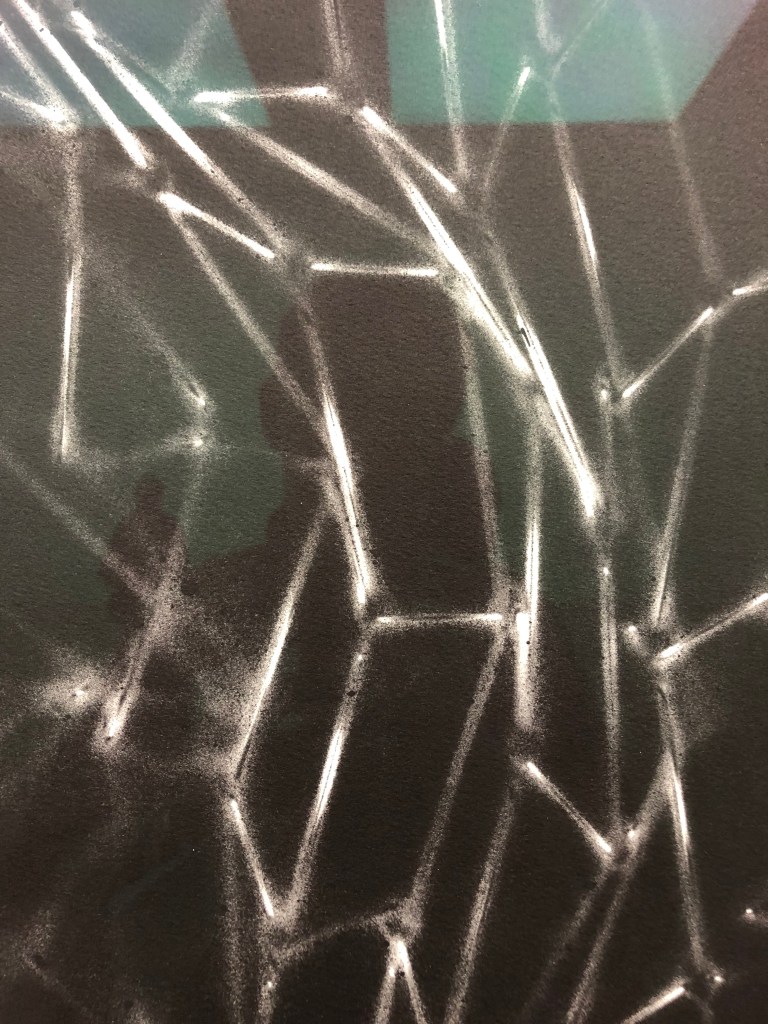
Detail, Untitled (bed springs) II, 2018, Lithograph on Velin D’Arches paper 
Hot Spot (stand) 2018, Stainless steel, neon, rubber 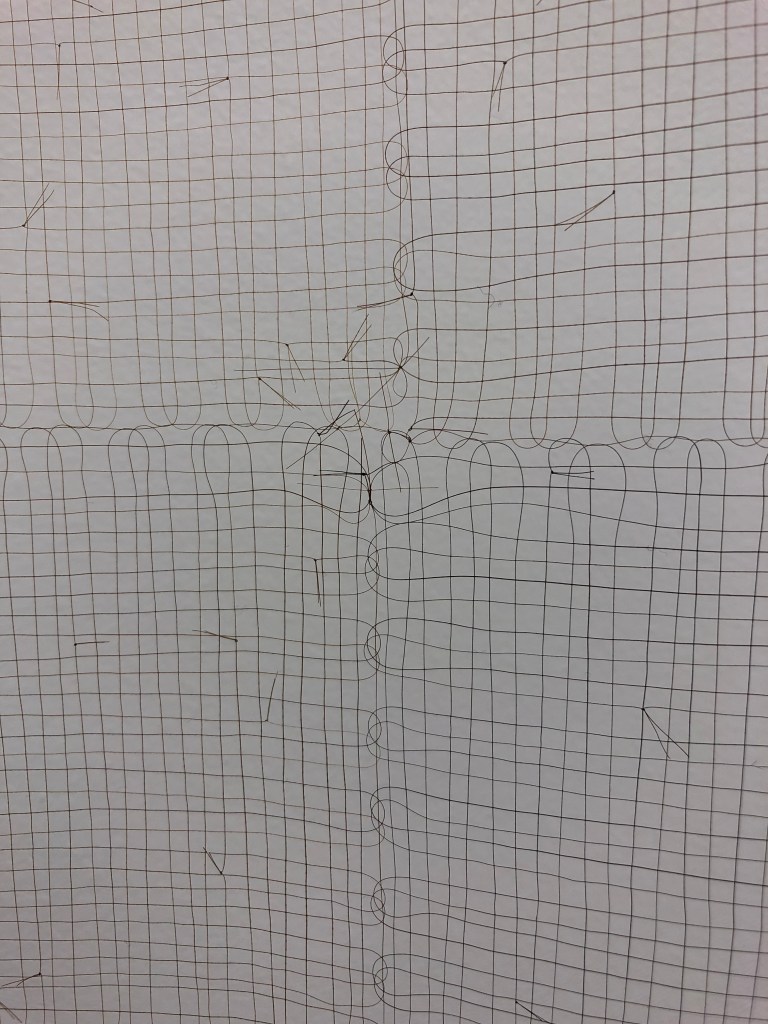
Hair mesh, 2013, Hair and mild steel 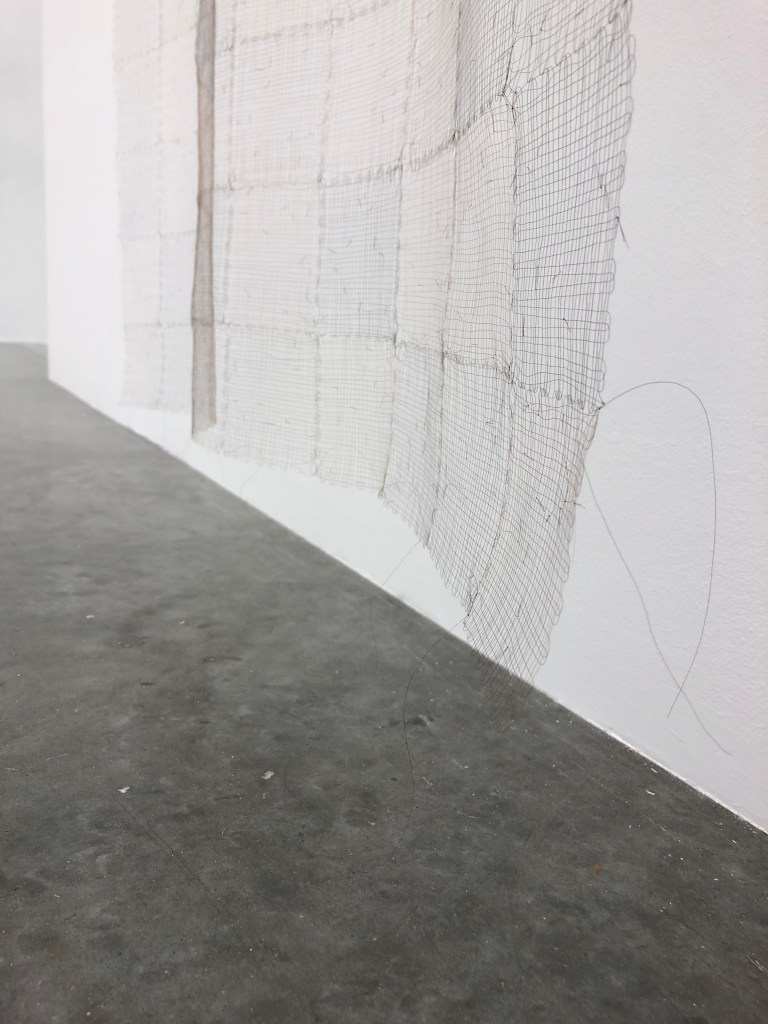
Hair mesh, 2013, Hair and mild steel 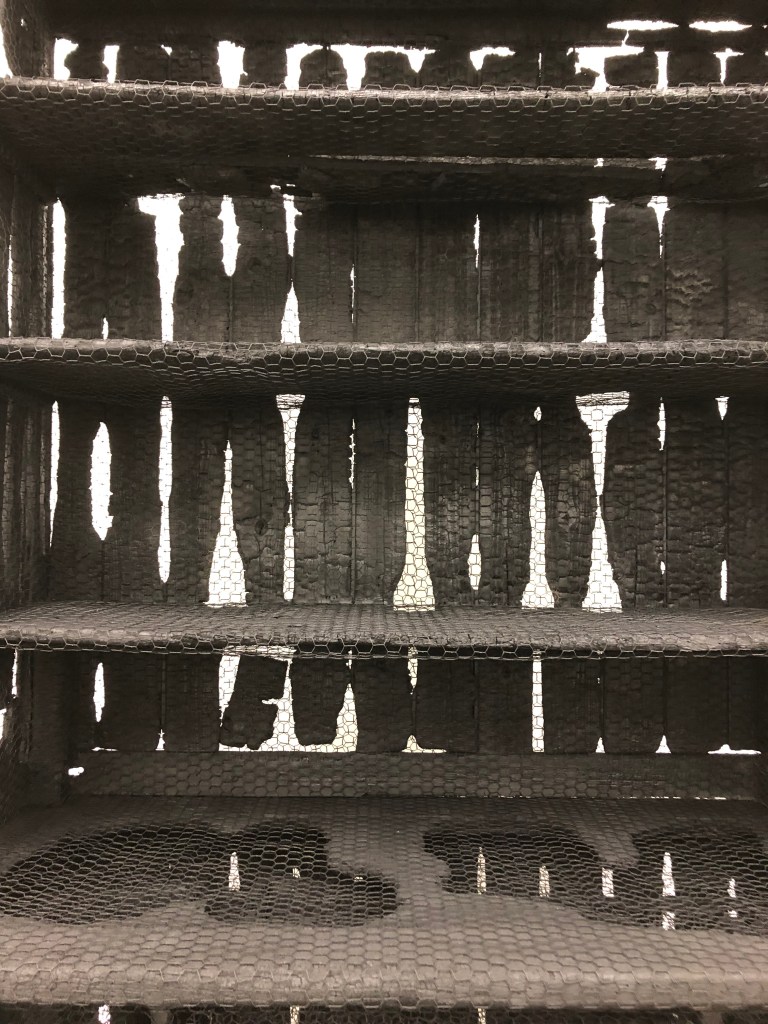
detail, remains (cabinet), 2019, wire, mesh and wood 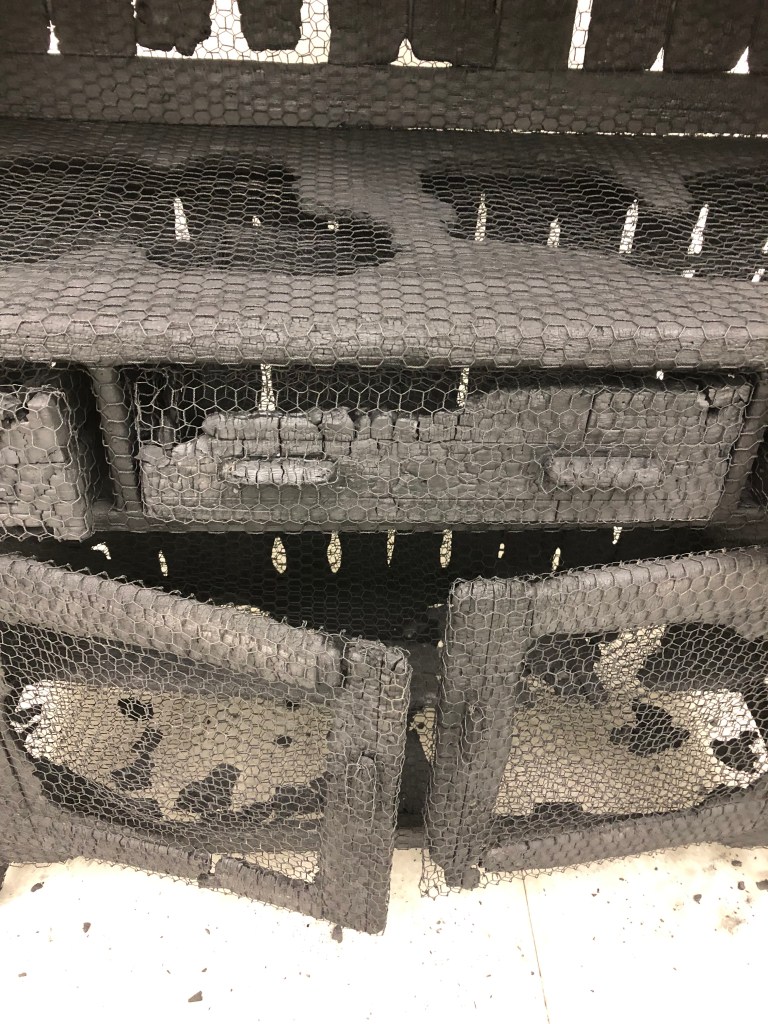
detail, remains (cabinet), 2019, wire, mesh and wood 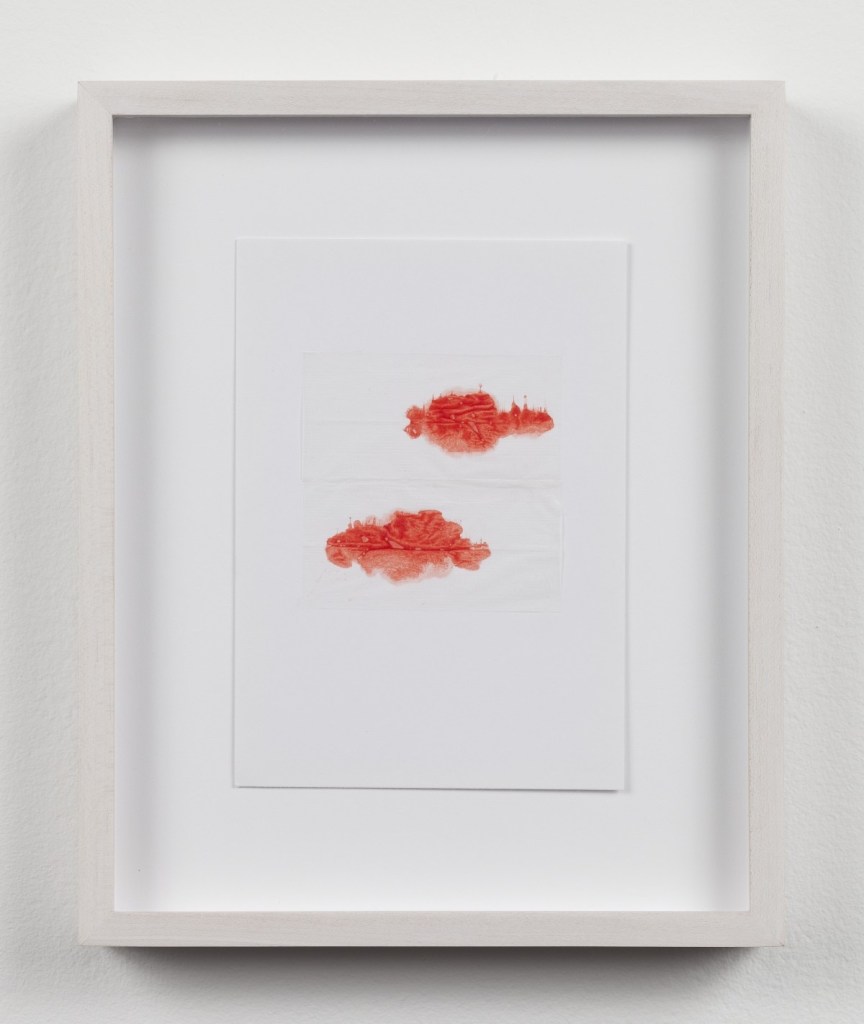
Stains 8, 2014, Acrylic on paper 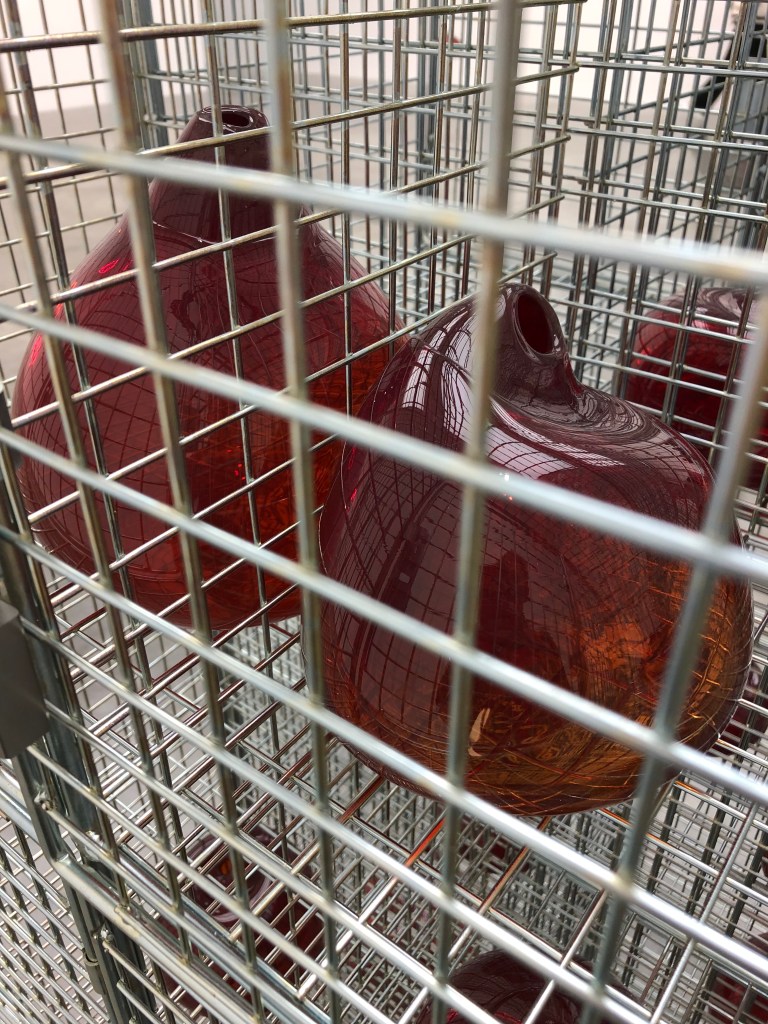
Cells, 2014, Zinc plated steel and glass
I know my use of materials have been similar to Hartoum’s and I look forward during the masters programme to be able to explore more three dimensional elements to my work. Hartoum’s work has explored the grid and her colour palette is very minimal and indeed restricted to natural materials, red and blue. Again, these colour palette concerns are very much at the fore of my research for my own work and how to apply colour, if at all. Seeing these works in the flesh is informing my practice.
SUSAN HILLER
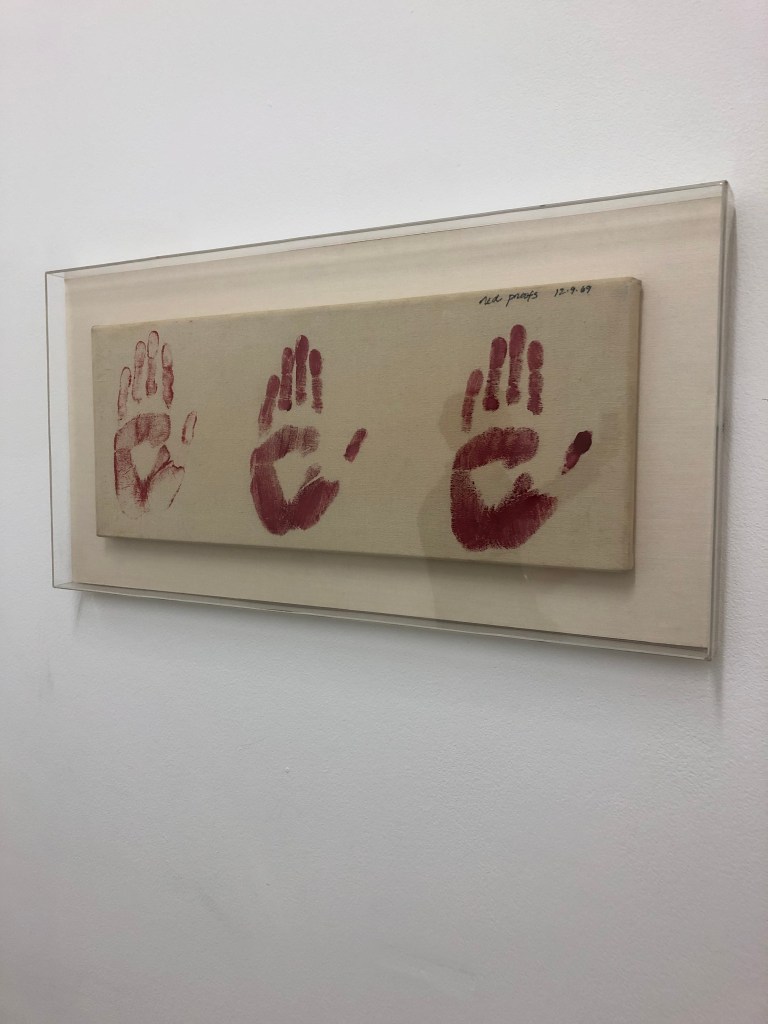
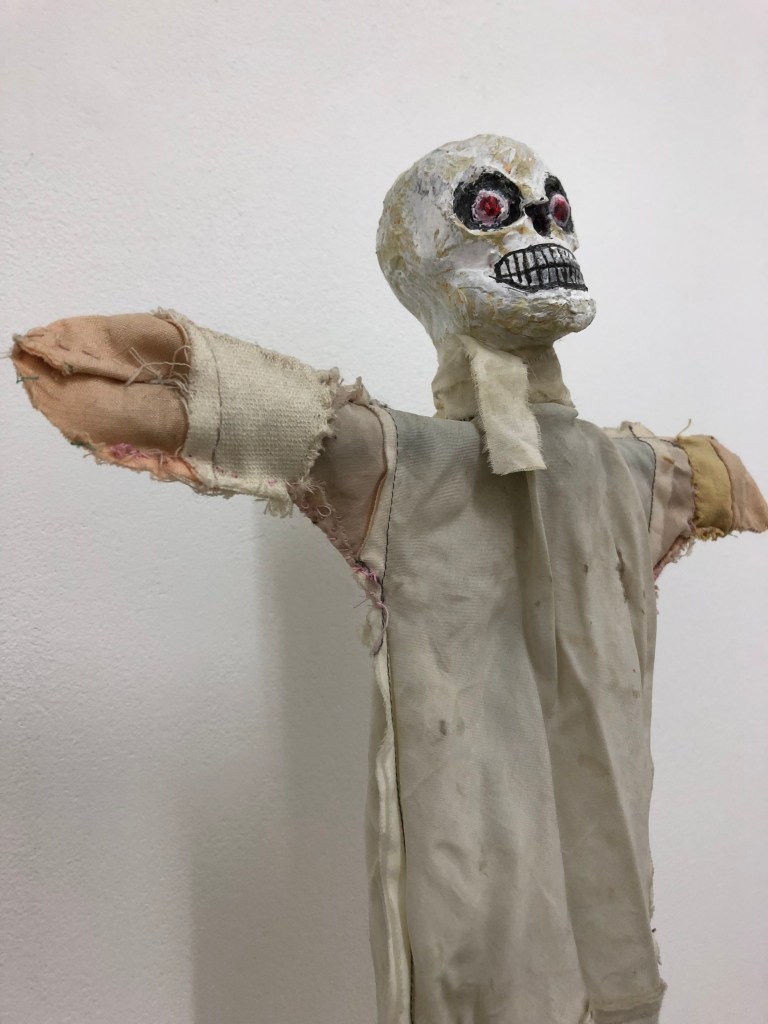
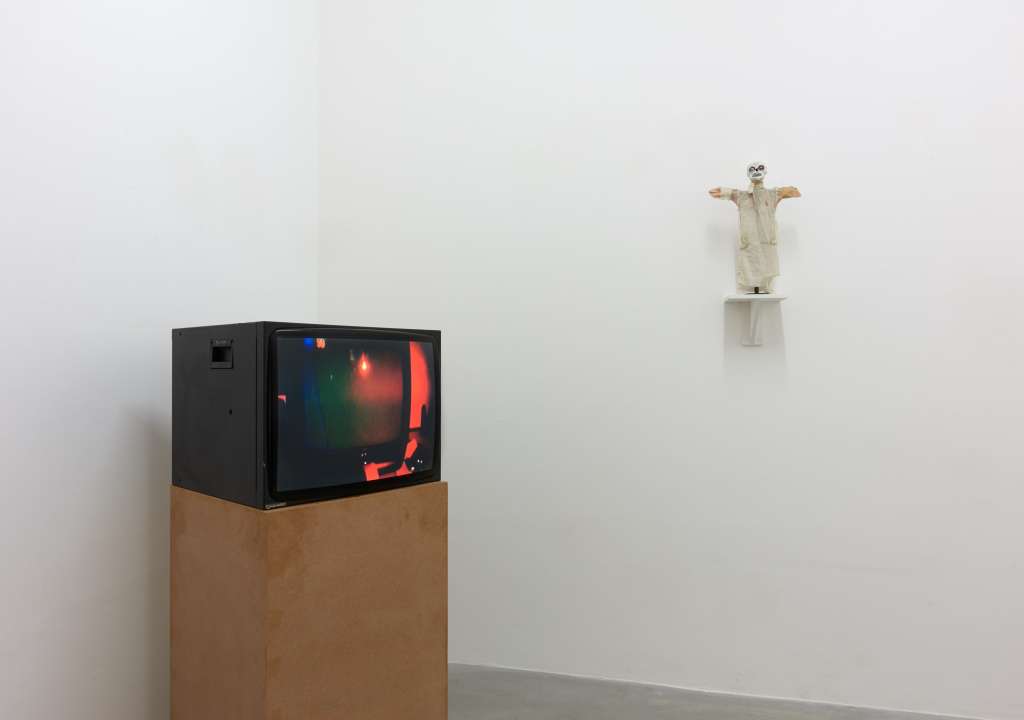
I went to Matt’s Gallery to see Susan Hiller’s ‘Ghost/TV’. The piece consisted of a TV with video ‘Running on empty'(2017) and relics of a 2000’s video installation ‘An Entertainment’ shown below. Hiller is a for me incredibly influential and has shaped my practice over the recent years. Paying homage to her and seeing this show felt important. Remembering her works and making sure her place in art history is maintained now she is no longer there in the thick of it is important. I intend to do further research into her work over the coming months.
GORMLEY
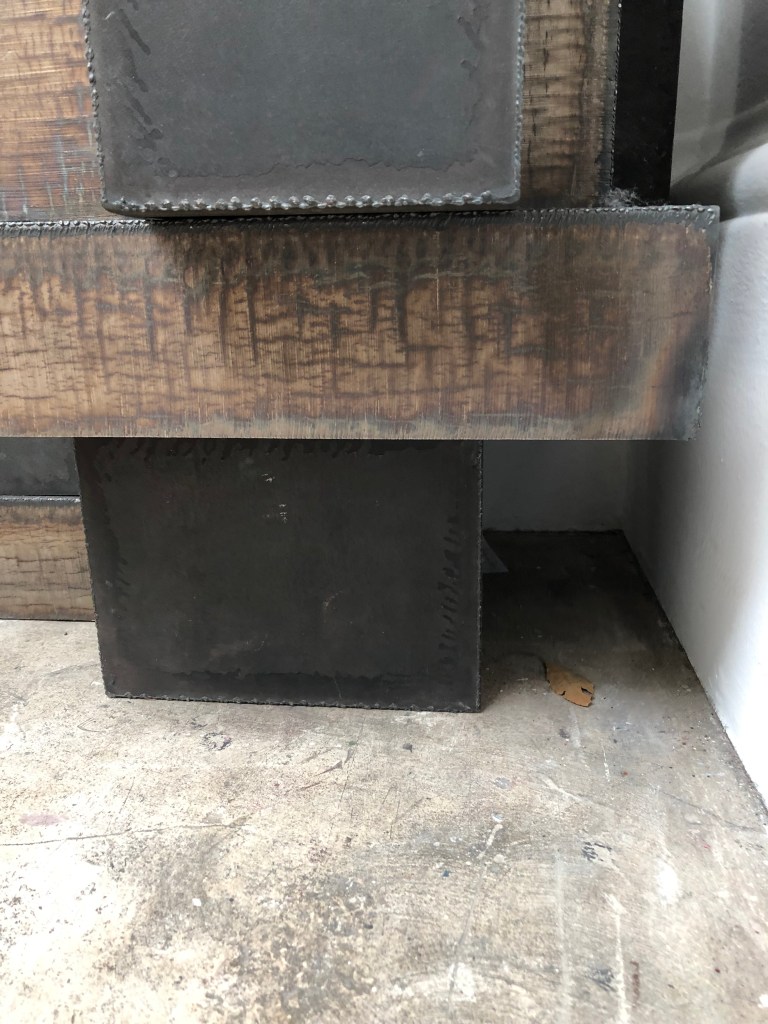
I don’t always experience art work in the typical way most people consume it. For instance something like the Gormley show at the Royal Academy could be a slow shuffle around the work and most people are just buying into the concepts of Gormley. He has become a kind of icon or brand. You know it’s a Gormley from one glance. I first engaged with Gormley with his Field for the British Ilse’s in 1993, and seeing his personal body casts. When I studied at BA level he was unpopular and using his body was considered weak. Once he won the Turner Prize in 1994 his popularity as a public figure was firm. I found his work engaging, much like Frink’s work is, but his less popular work is more interesting, as was Frink’s. What I looked for in this show was the placement of the earlier pieces and the materiality of the drawings. Below is a selection of these connections and materials I took photographs of
Slabworks, Royal Academy 2019 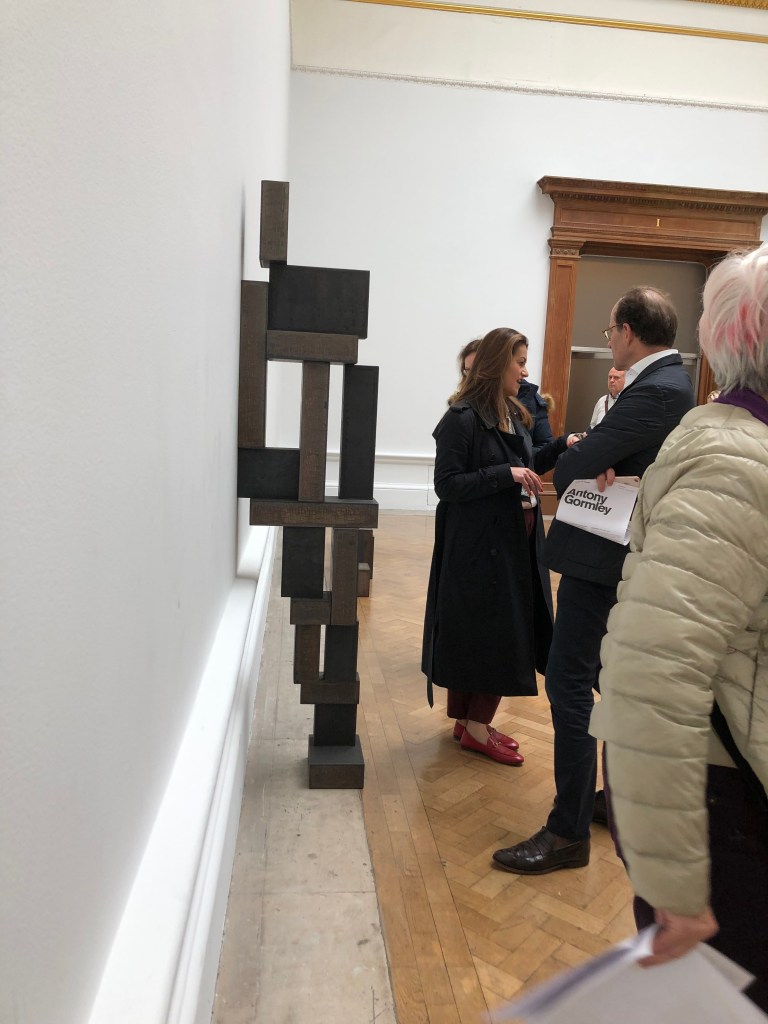
Slabworks, Royal Academy 2019 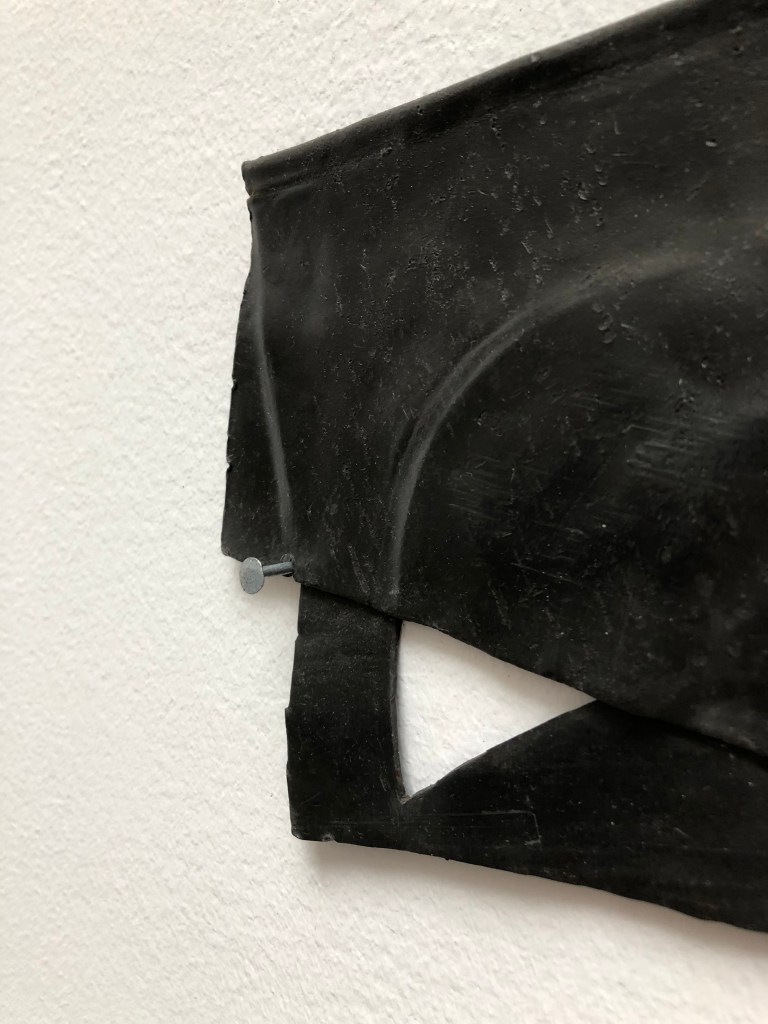
Mask, 1978, lead 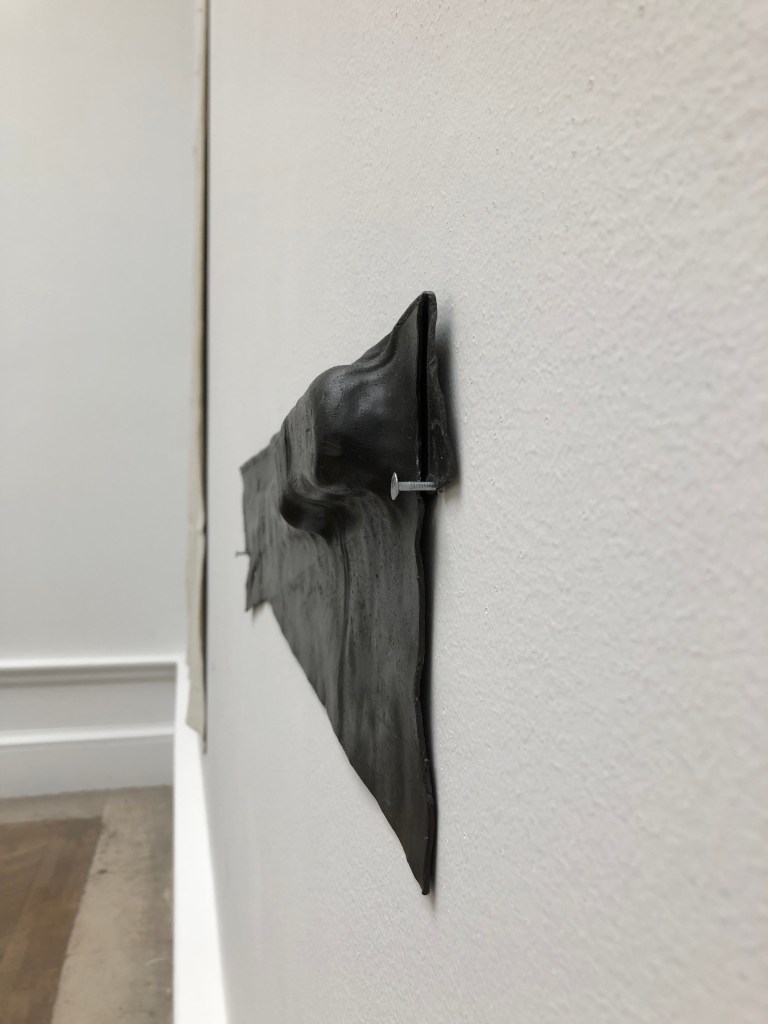
Mask, 1978, lead 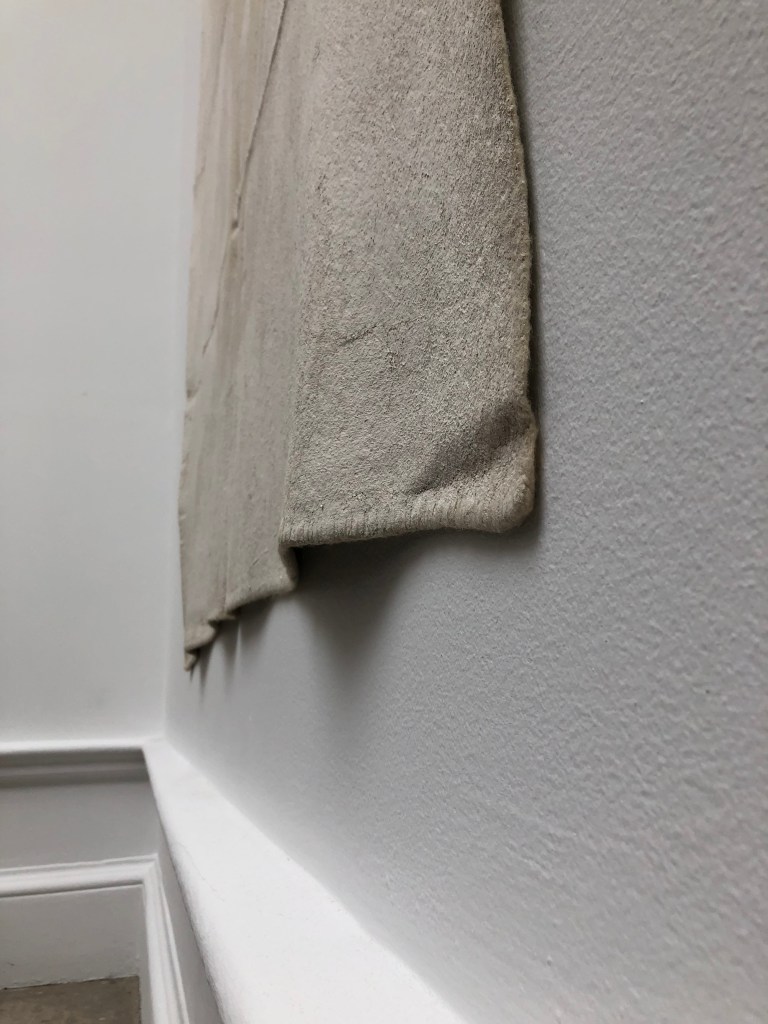
Blanket Drawing V(detail), 1983 clay and blanket 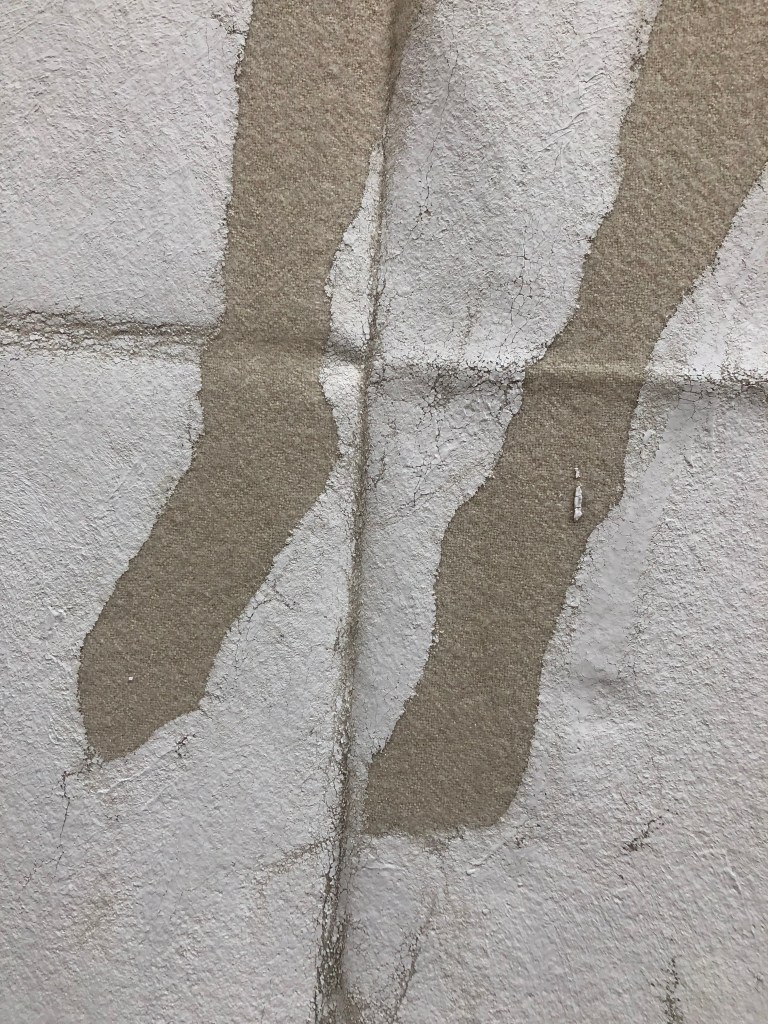
Blanket Drawing V(detail), 1983 clay and blanket 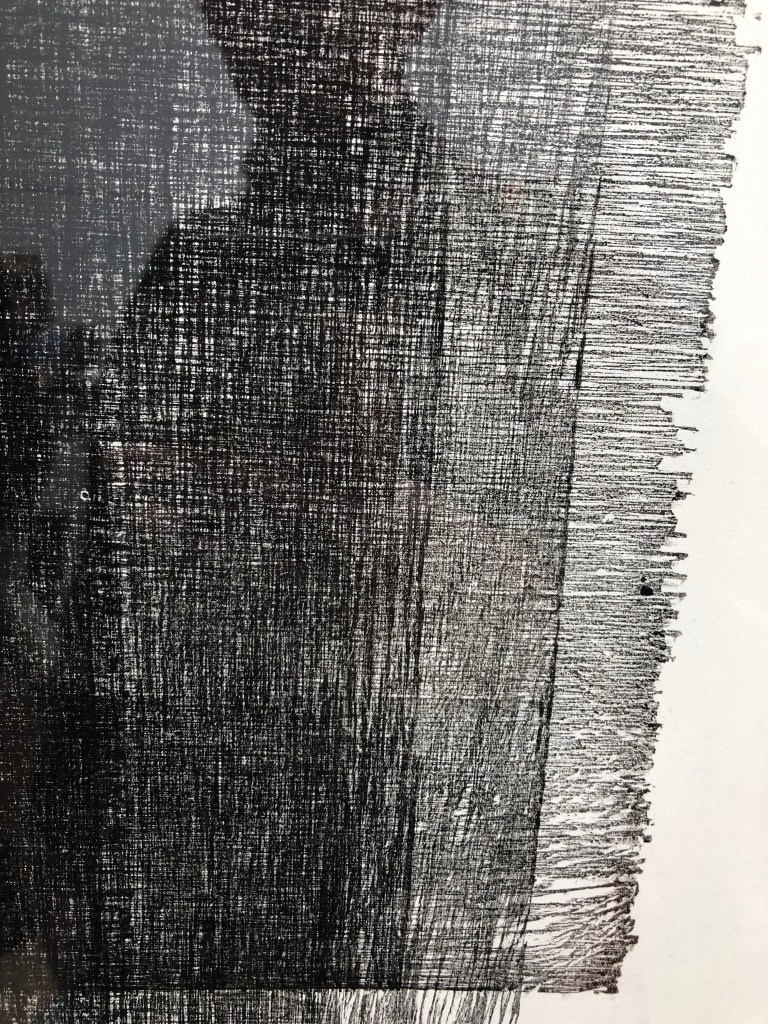
detail of drawing, 1980’s 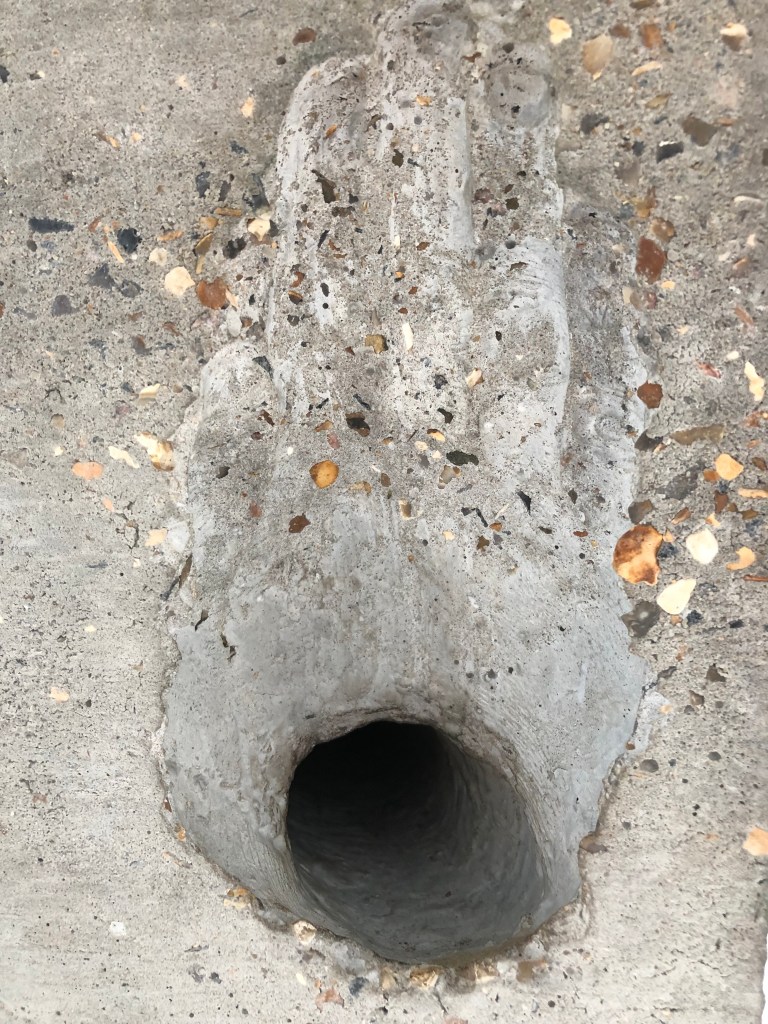
Press, 1993, Concrete 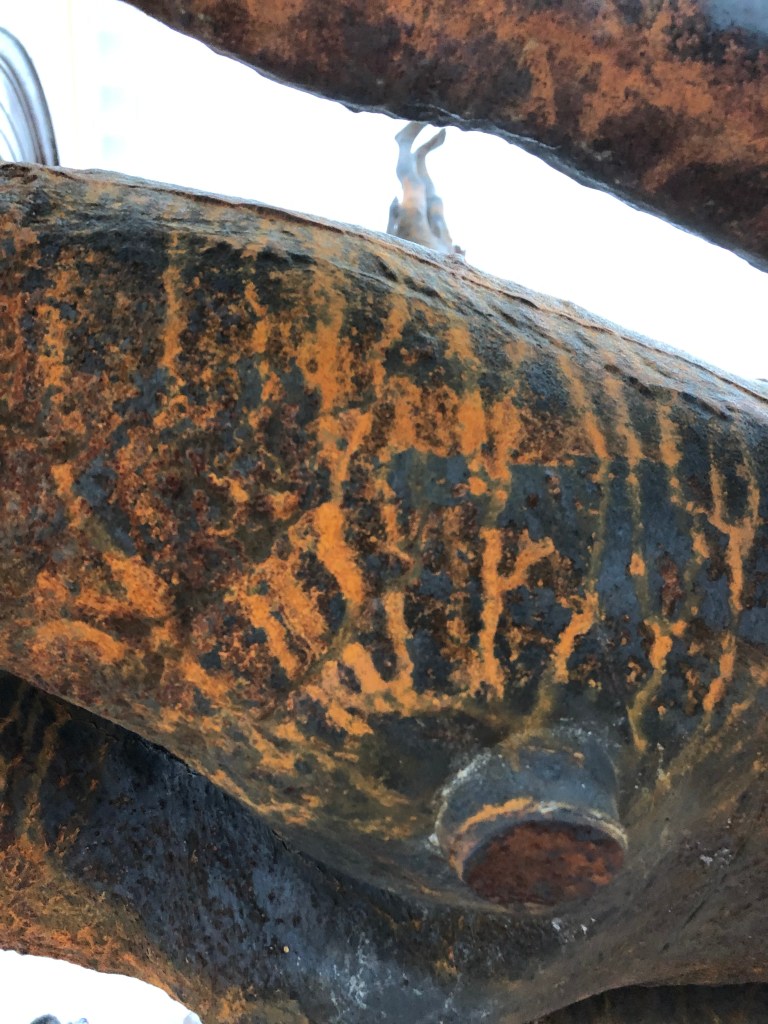
Lost Horizon I (detail) 2008 cast iron
I was intrigued with Gormley’s use of sketchbooks, something that I have always found very helpful in my own development. A couple of pieces I found a bit of theatre rather than serious work. Cave, and Host were in my opinion a waste of resources and vanity of either the artist, or the RA or both. However what I took away personally for my work, is that Gormley’s use of connection, between his body, us and the world, is what came out very clearly from this show, despite the crowds. His use of the grid was overwhelming in his drawing. The use of the false ceiling and grid in the installation of Lost Horizon was actually subtle and could have been missed. The grid is clearly intentional rather than just a method of hanging the works. The seriality of the drawing is something that I hadn’t previously seen with Gormley, so seeing how his process of thought works was quite a key thing for me to see how his drawings then translate into a definite form. This is something that I have wrestled with in my own work, often keeping the work in the two dimensions possibly through fear of making three dimensional work. I need to dig deep to find out where this strong feeling comes from.
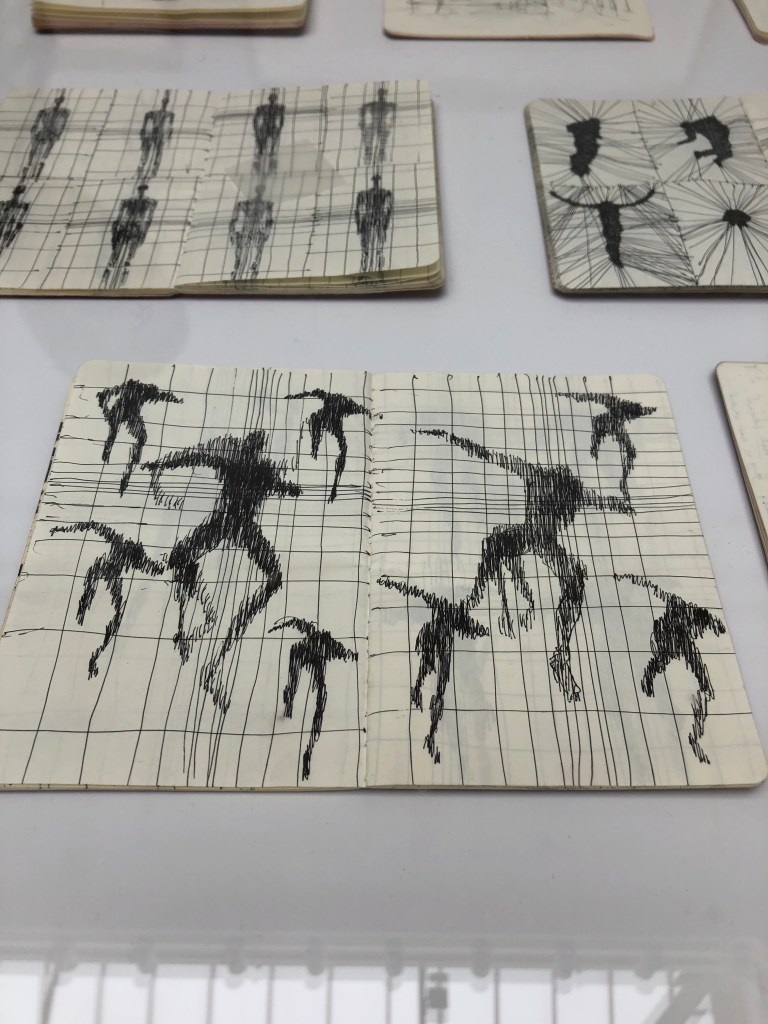
workbooks 2010-2019 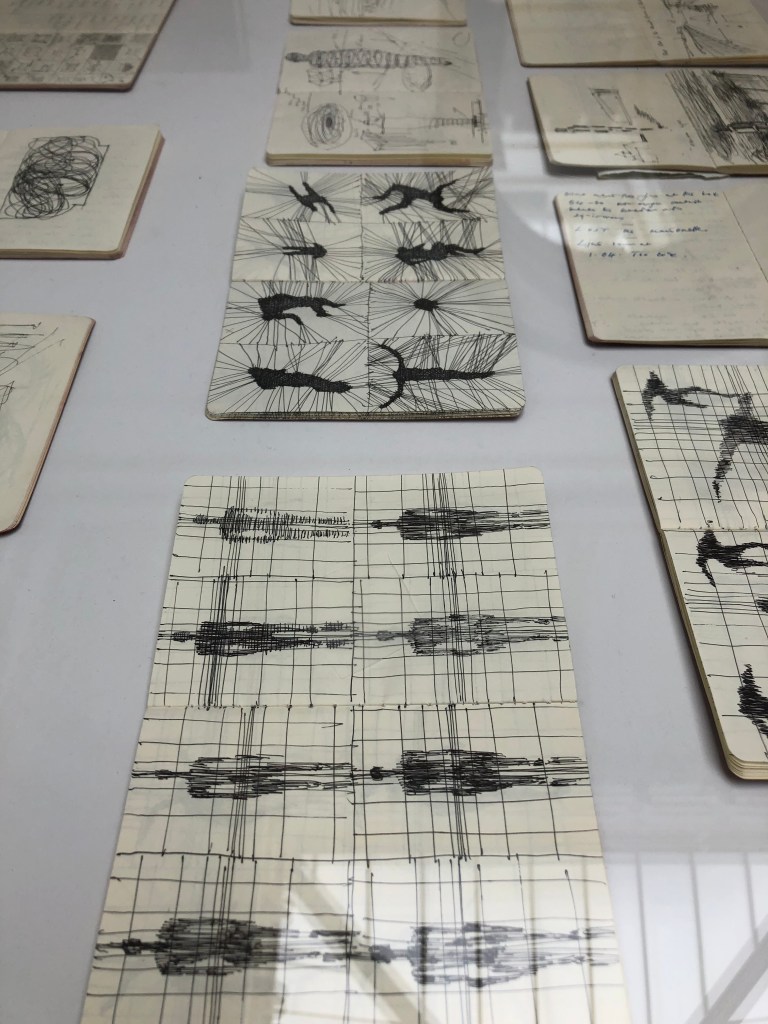
workbooks 2010-2019 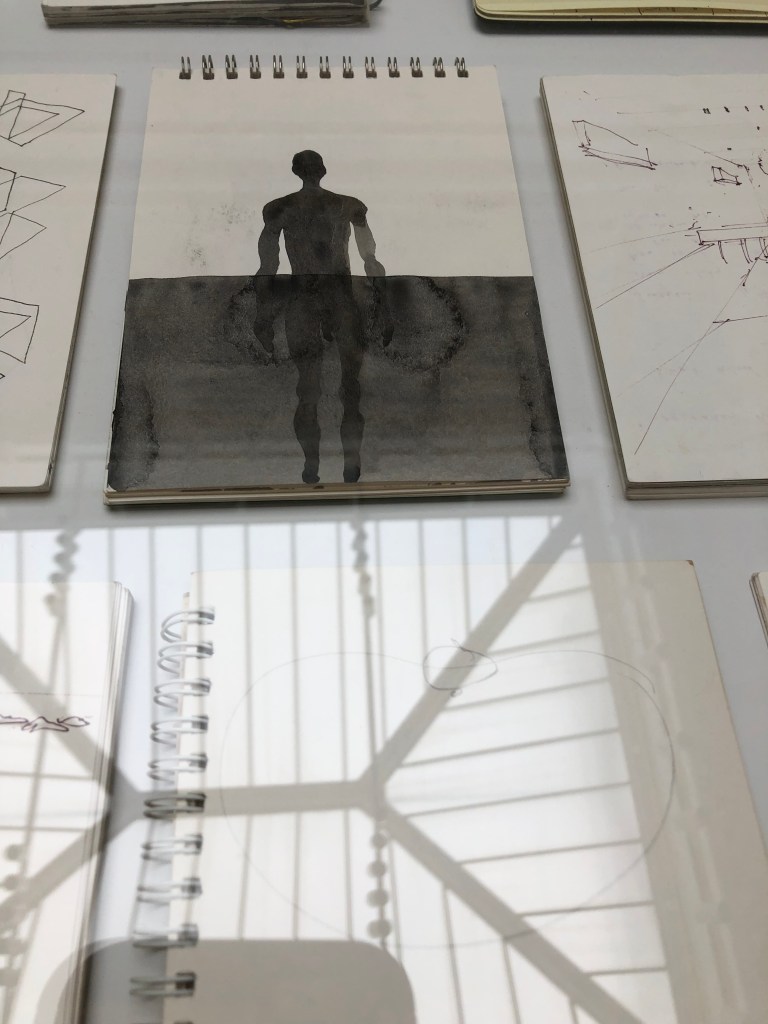
workbooks 1977-1988 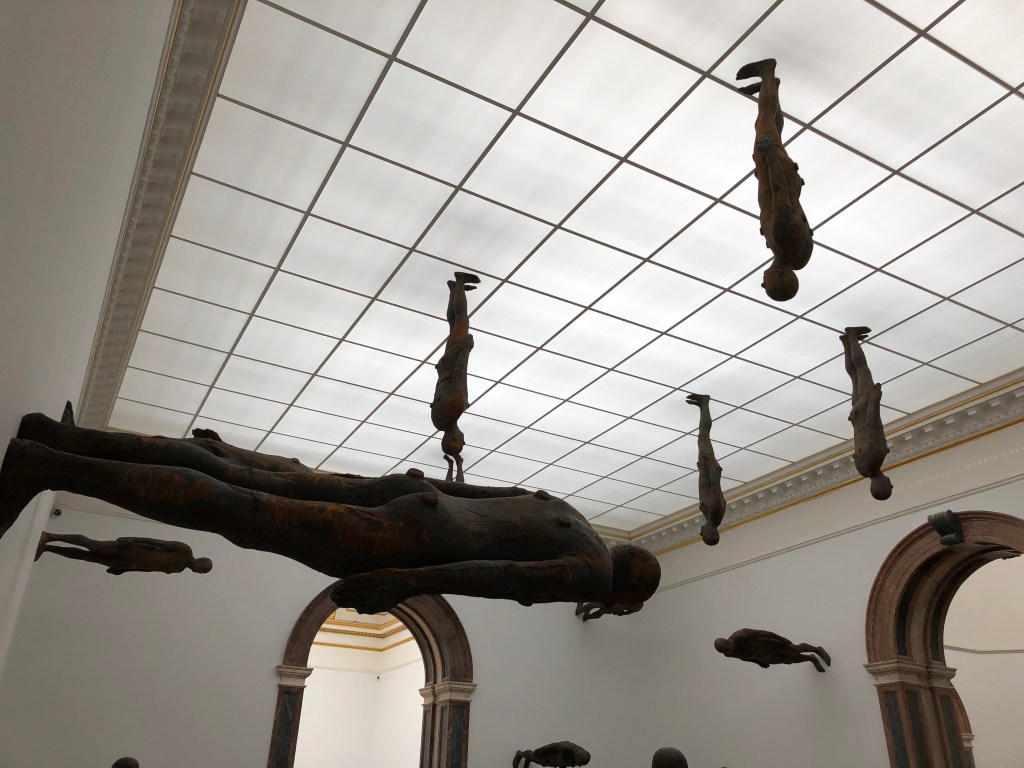
Lost Horizon I, 2008, cast iron
Another really important display I saw this month was the ‘The Ancestors’ by Alison Wilding and Cathie Pilkington. A project they didn’t get paid to do. I found the installation very engaging and it held me for some time despite its small setting in the McAulay Gallery, a corridor which joins the Galleries with the RA school.
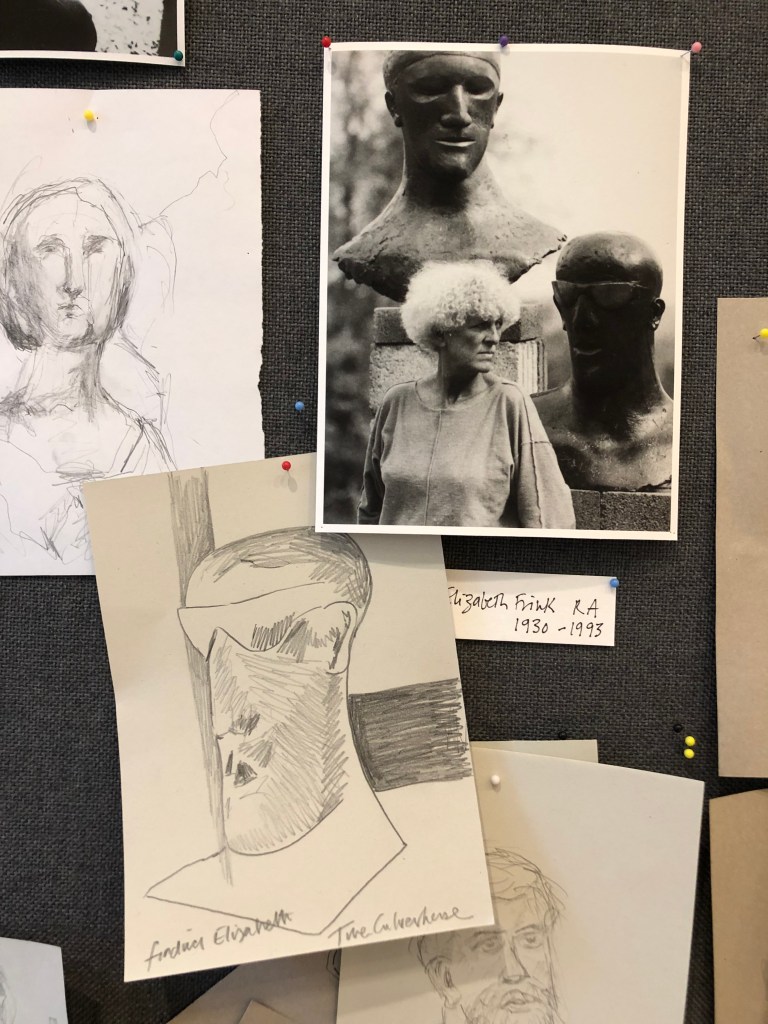
My drawing in response to ‘The Ancestors’, RA 2019 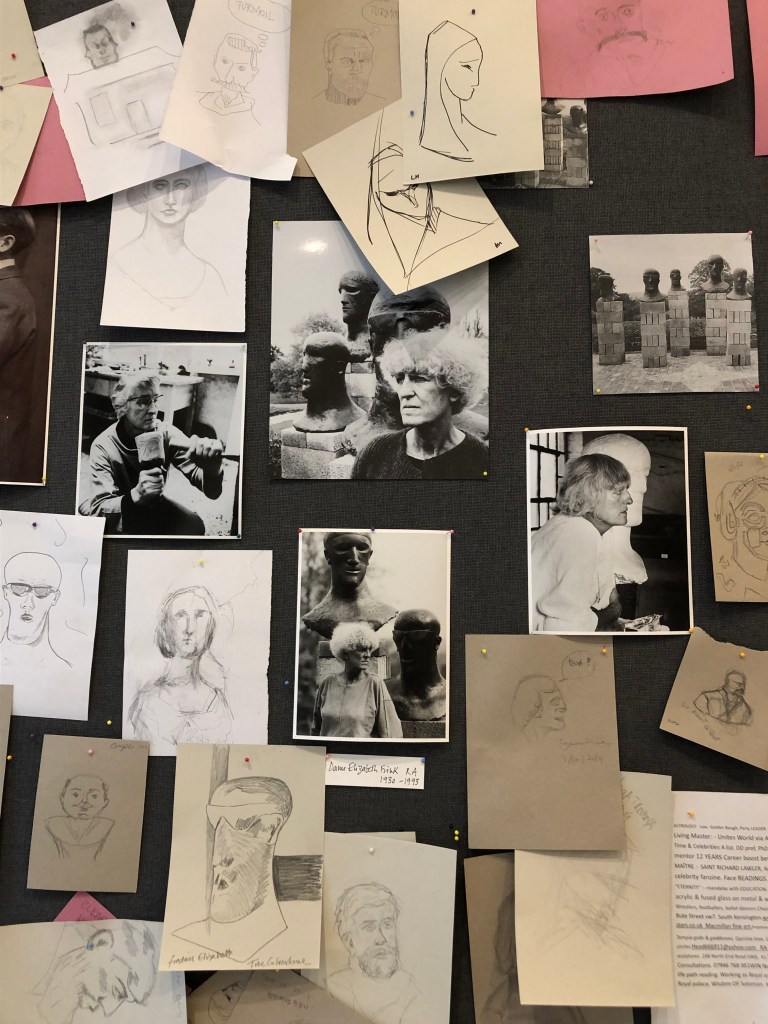
The display around ‘The Ancestors’ 2019 Royal Academy showing Elizabeth Frink 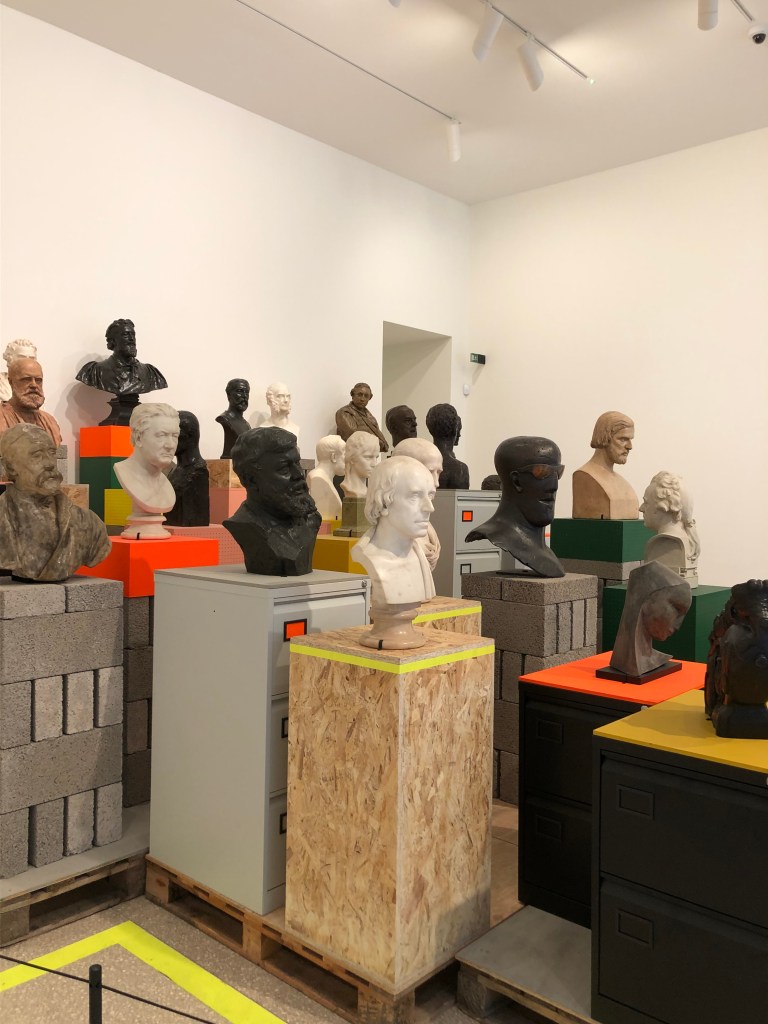
The Ancestors, 2019 Alison Wilding & Cathie Pilkington, McAulay Gallery, Royal Academy 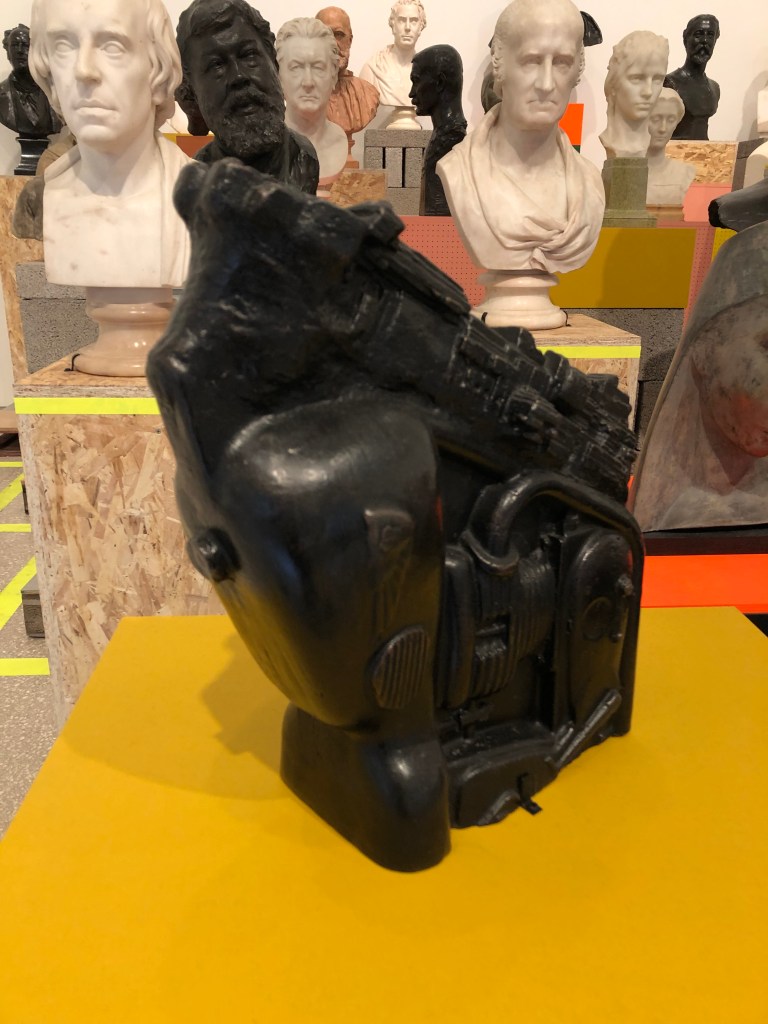
Eduardo Paolozzi,
For my research, the use of the fluorescent tape, natural materials in the sculptures and the office furniture and plinths was of interest. I have been looking at use of colour in my own work and this was another nod to using found colour and natural colour in my work.
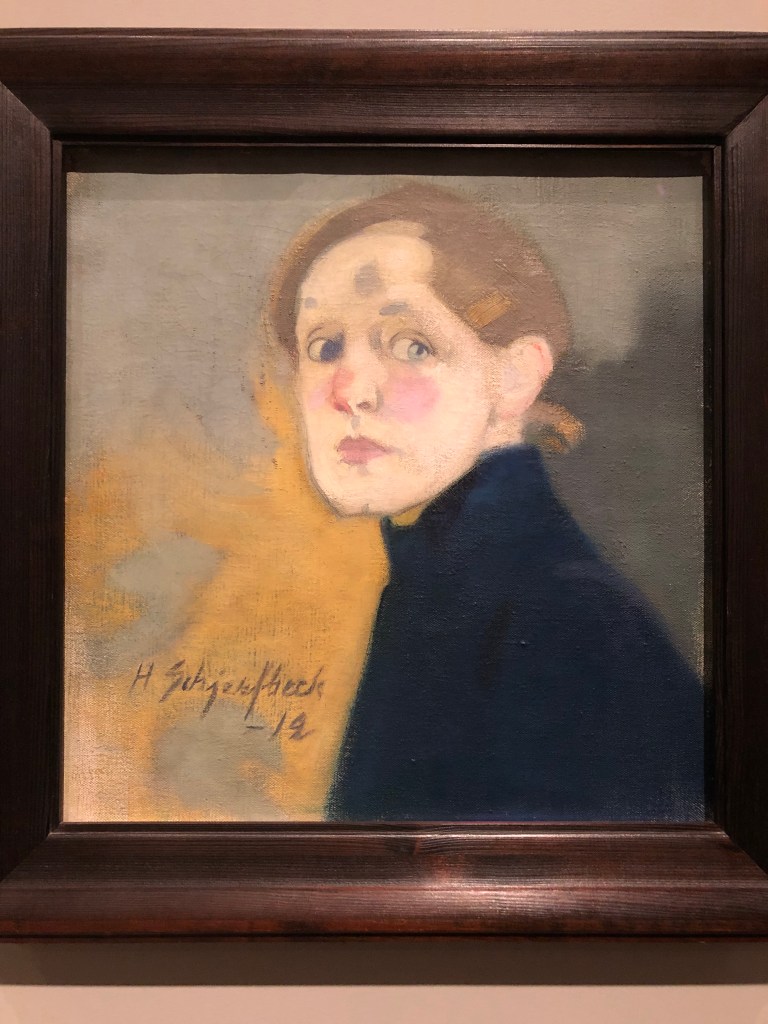
SCHJERFBECK
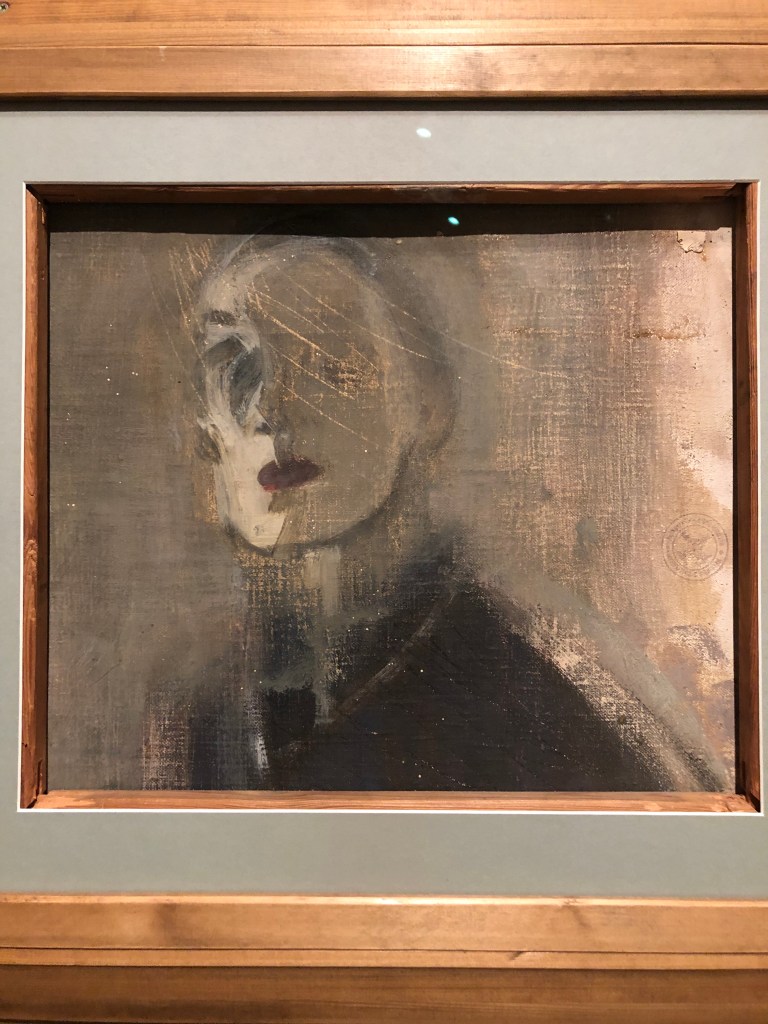
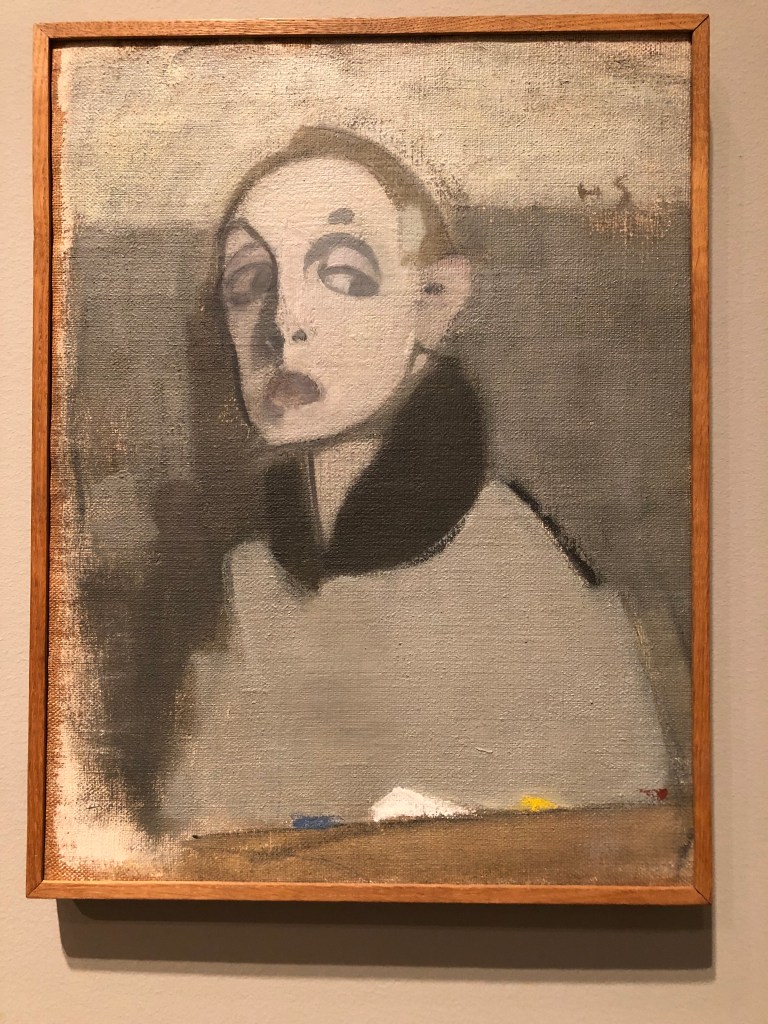
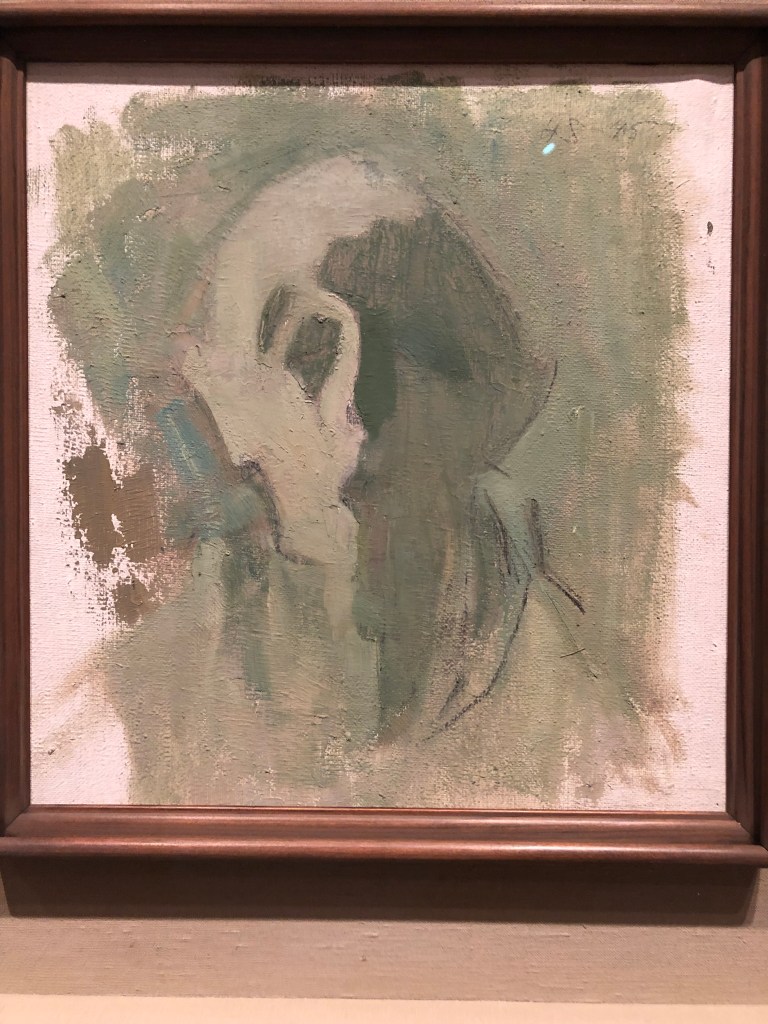
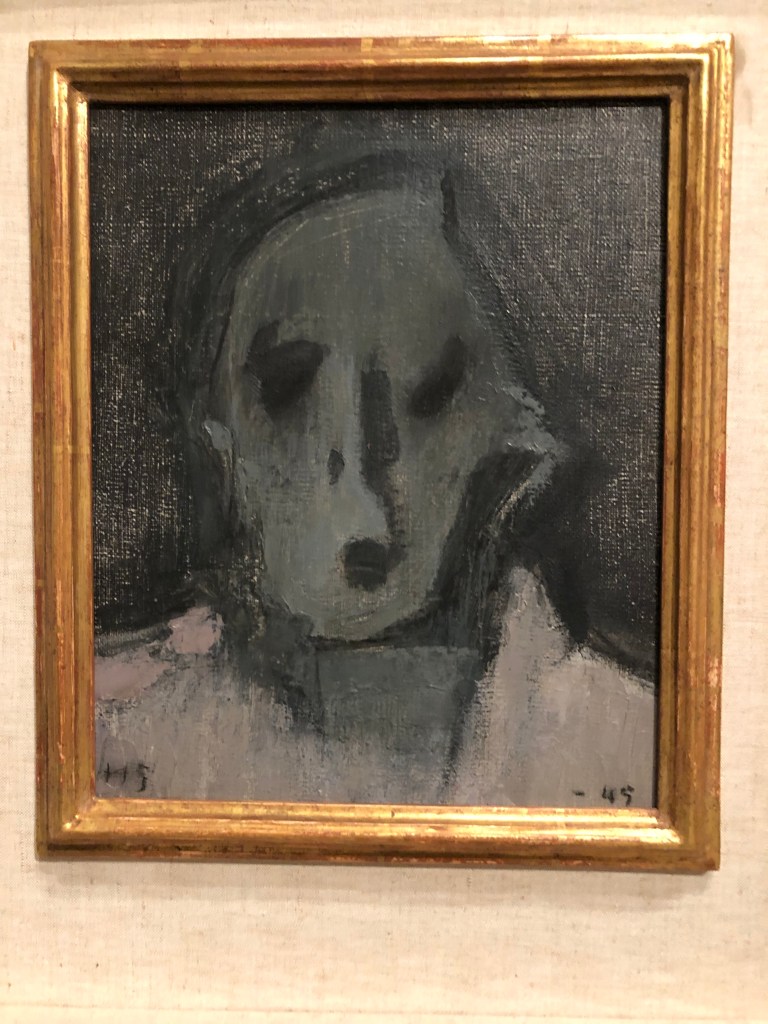
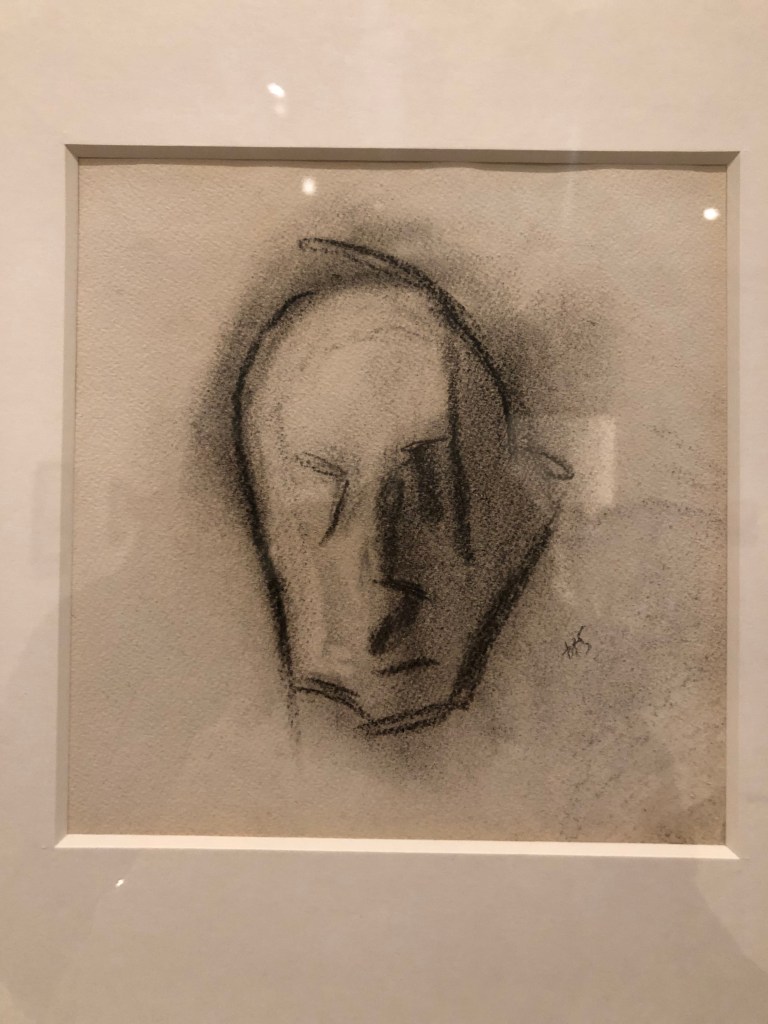
I went to see Helene Schjerfbeck as I had heard that it was really important to see. Having painted for many years, I wanted to see this very little known artist. The artists use of paint as a way of erasure was very interesting, she scraped her painting back and used many layers to achiever the results that are left. The self portraits over time showing her disappearing from the world I found just incredible. I have used my own portrait in some older painting work and the idea of disappearing into the painted plane really spoke to me. I have not used myself in my work for some time, except for photographing my shadow, so to see how someone like Schjerfbeck has worked with the self image was very important for me to see at this time.
DONG SONG
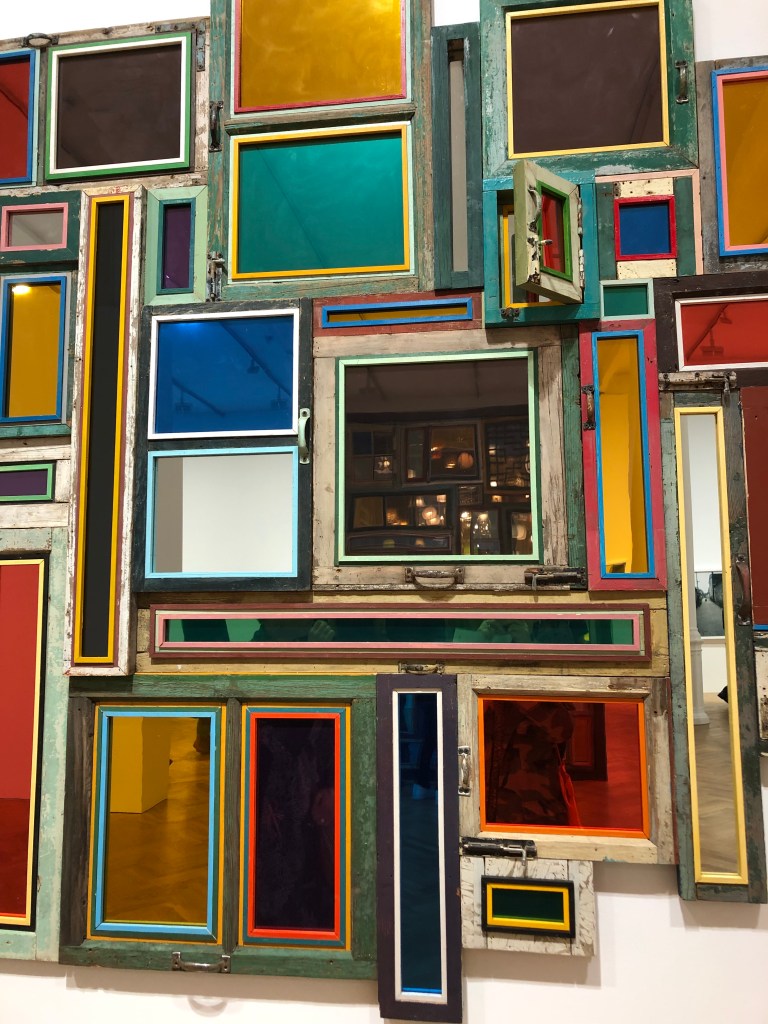
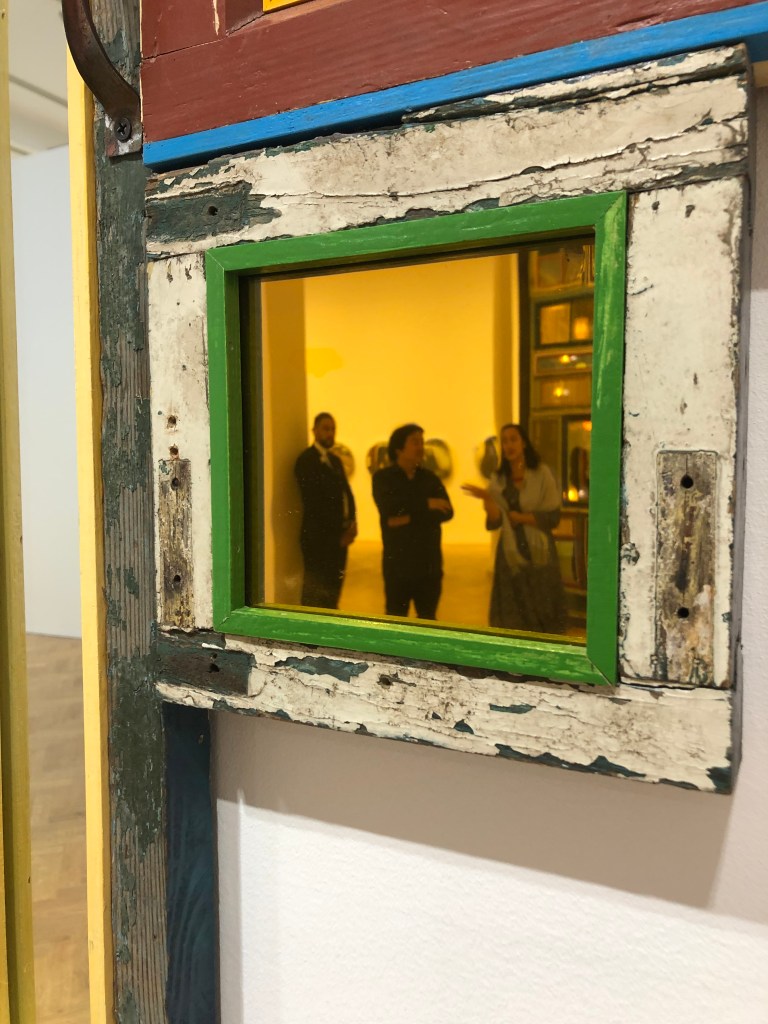
Dong Song seen in the reflection of one of his pieces for Same Bed Different Dreams 2019, Pace Gallery 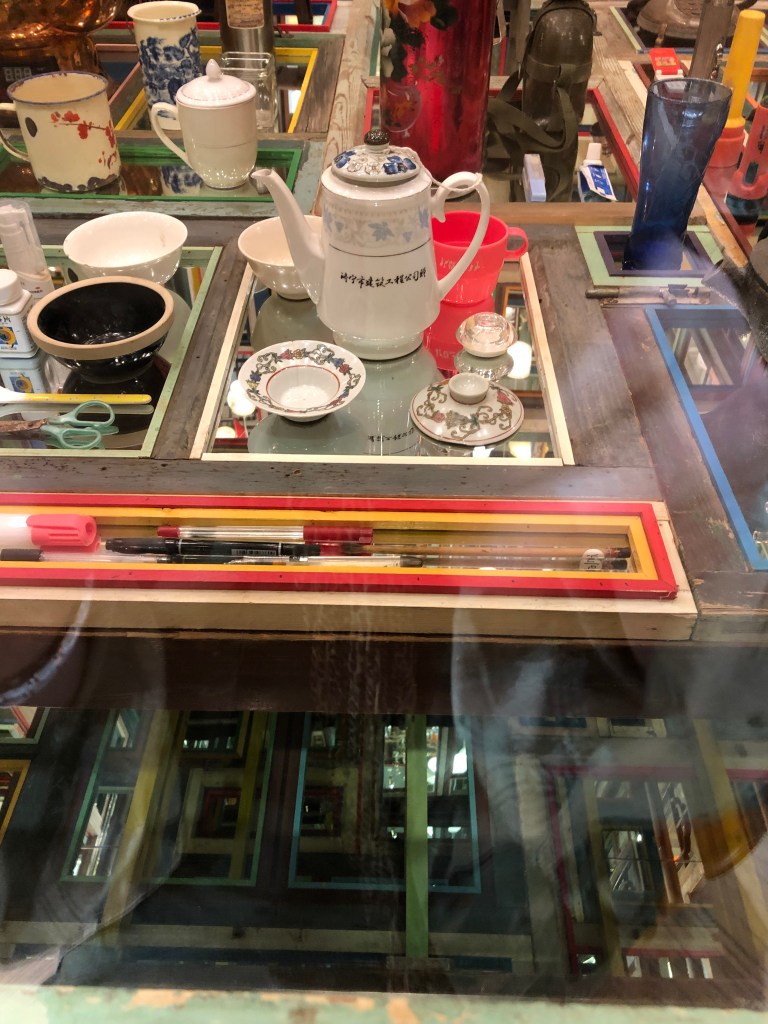
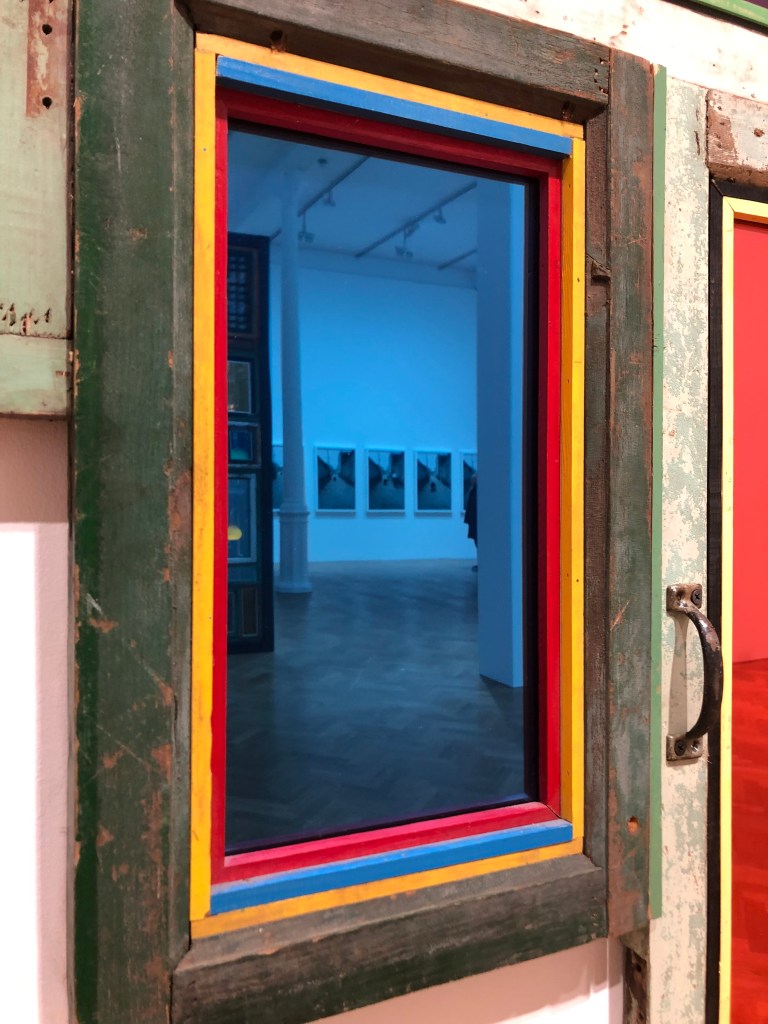
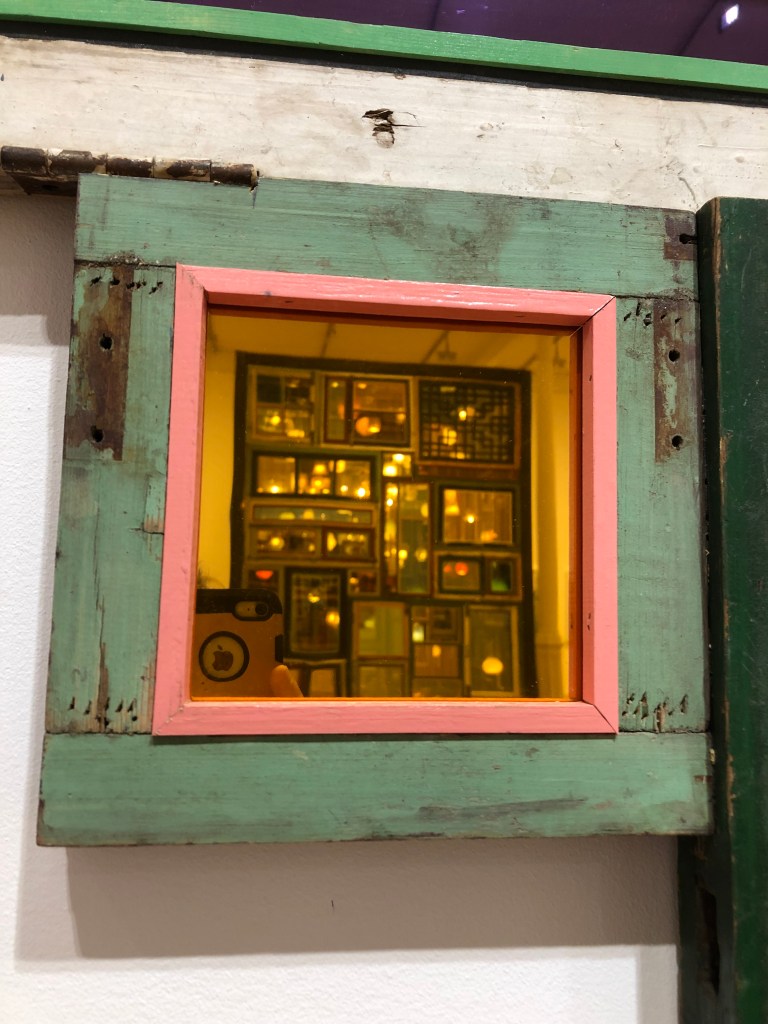
The press release from Pace reads “Song’s radical approach blurs the lines of past and present, fact and memory, humor and trauma.” I found in the works the use of colour and the window frames, very powerful. His use of ready made objects and household items very impactful for the remembrance of the lived experience. The film pieces Broken Mirror (1999) and Crumpling Shanghai (2000), he had paper being folded up and mirrors being smashed really reminiscent of film works I was making I the same decade. Song is a similar age to myself and I found this very reassuring that the work I was producing then was from a shared human experience and gave me a sense that I need to pursue the ideas that were at the core of my work then and allow them to re-emerge. Song’s intention in his work is to try to capture in his work a moment in time of a China, and a world in flux. The intention of my work is to recall, recount, perceive and construct from that act something of some worth. Something for me to think about deeply in my research in the coming months.
BRION GYSIN
Brion Gysin is an important figure in my development, since discovering his work whilst studying my undergraduate degree in 1990. At that time he was an unknown artist with little acknowledgement within the artworld. My research was based on artists who had made a significant contribution to modern art and culture but who had been overlooked and had stayed on the fringes. I was also researching sensory art for my practice and installations.
Brion Gysin had both these qualities so my research focused on him. He’d had an experience whilst in France, in the 1960’s where he had flicker from travelling along a tree lined avenue which instigated vivid mental activity and images. He endeavoured to recreate this experience and worked with Ian Sommerville to create a “dream machine”. It was a series of revolving machines with black and white images around a light source making art that was to be viewed with the eyes closed. As a painter he had used trance state to get into his painting and said he could disappear into them. For this he was named Il Hombre Invisible as I discovered whilst researching my original thesis in 1991. In a recent publication William S Burroughs essay on Gysin describes his painting saying his words, it ‘deals directly with the magical roots of art . . . His paintings may be called space art.’1 (Perez, 2003, p.29)
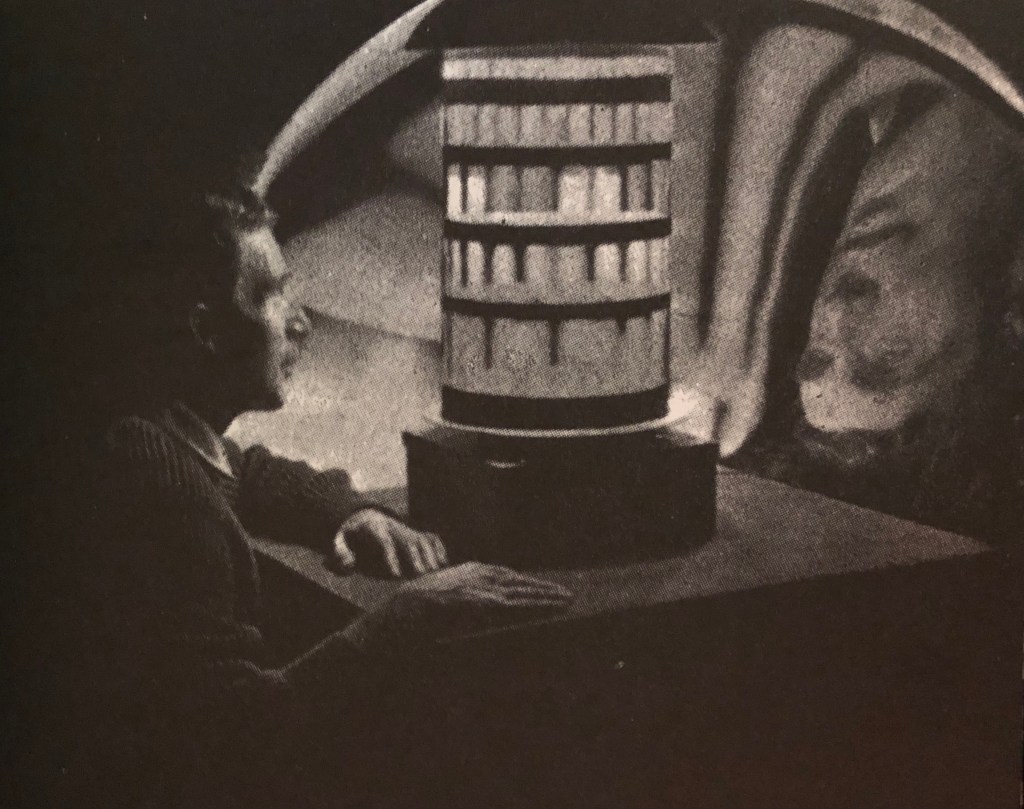
Fig 1 Dream Machine, Gyson, B & Sommerville, I 1960
Gysin’s poetry and light machines had a profound effect on Lilian Ljin who I met in 1989. Through researching her further I discovered she met Bryon Gysin in 1959 and his cutups and work had inspired her first text pieces. In her article in Frieze magazine in speaking of her influences, she said of Gysin “It took a painter, Gysin, to invent the cut-up technique, which moved surrealist automatic writing one step further, creating pure text collages and treating words like ready-made images. Unconsciously undertaking this inspired my original juxtaposition of text with machine.”(Lijn, 2014, p. 10-11).
When writing about Gysin in 1990-91 there were few references to his work and only a handful of exhibition catalogues. The only person I could find who had met him was Genesis P-Orridge of The Temple of Psychic Youth and I conducted a telephone interview with him. Queer culture at this time in the late nineteen-eighties was still an underground, suppressed and under-reported cultural identity. Genesis P-Orridge were not fully out as transgender at this time and did not speak of Gysin’s homosexuality in his interview.
Jumping on from 1990 to 2019, I am looking at the work of Susan Hiller. I came to Hiller’s work late, having discovered her automatic writing only recently and decided to get some books after visiting Matt’s Gallery and discussing her work with Robin Klassnik the gallery’s curator. He spoke of her automatic writing and that she had made wallpaper with it and some really large pieces. I got some exhibition catalogues and in my reading discovered she had met Bryon Gysin too and had been greatly influenced by him. He like Hiller had lived in New York and Europe.
The knowledge from my former research was that Gysin had largely missed accreditation for his cut-ups technique, which had been wrongly attributed to William S. Burroughs. What I was finding in my new research that William Burroughs was still being quoted as the author of cut-up and the cornerstone of the Beat Poets who were influenced and crossed over in parts with the Concrete Poets of the 1950’s and 60’s. I still have more research to do in this area, as within my practice I am looking at ways to incorporate text, sound and visual art.
On evaluating and reflecting upon this research and its relevance to my own practice I realise there are many threads to pull together that will take some time to deconstruct fully. Gysin’s influence on my own development, along with Ljin’s and Hiller’s will take time to evaluate and involve further and in-depth research. I am looking forward to this deconstruction through research in the complex relationship these artists all have to my practice.
Bryon Gysin notes
1 Perez, J (ed.) Burroughs, W. (2003) Brion Gysin Tuning in to the Multimedia Age Ports of Entry, Here is space-time painting. London: Kuri
2 Ljin, L (2014). Liliane Lijn – My Influences Frieze Magazine[Available online]: https://frieze.com/article/liliane-lijn-my-influences Accessed 29 October 2019
Fig 1 Dream Machine, Gysin, Sommerville, (1960). Dream Machines, selected by Susan Hiller: London: South Bank Centre
 Tina Culverhouse