Tutorial
Kerry Andrews and I discuss that being lost is an important part of the process. There is a peculiar transition from making into drawing its a translation from one form of thinking into another. There are forms of translation and reference of translation.
So, the transformation between states within my drawing mean I am not inventing the story, it’s there I am drawing what is there, even though it sometimes feels invented. It’s from the subconscious or semi-conscious like the Bourgeois insomnia drawings, or Susan Hiller’s automatic drawings.
Kerry acknowledged I am doing lots of different things and he said to realise it is all one piece. He described it as an orchestration of a much bigger piece and the question is ‘how do I bring them altogether?’ So within the concept of the installation, I need to ask myself ‘what is a piece?’
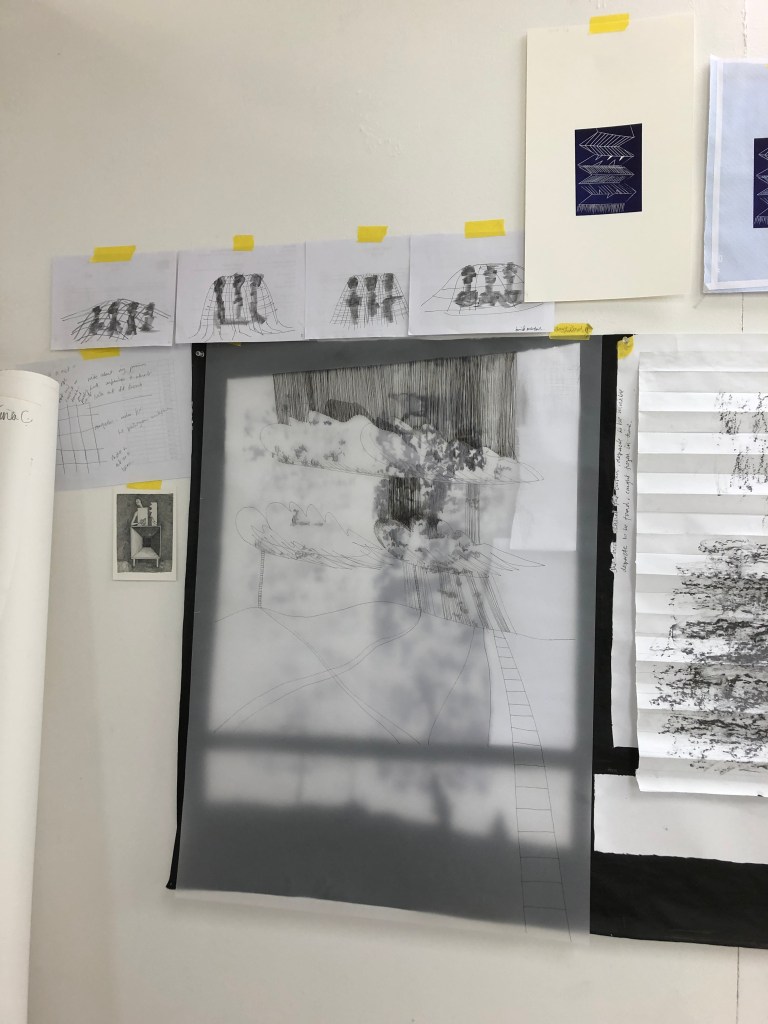
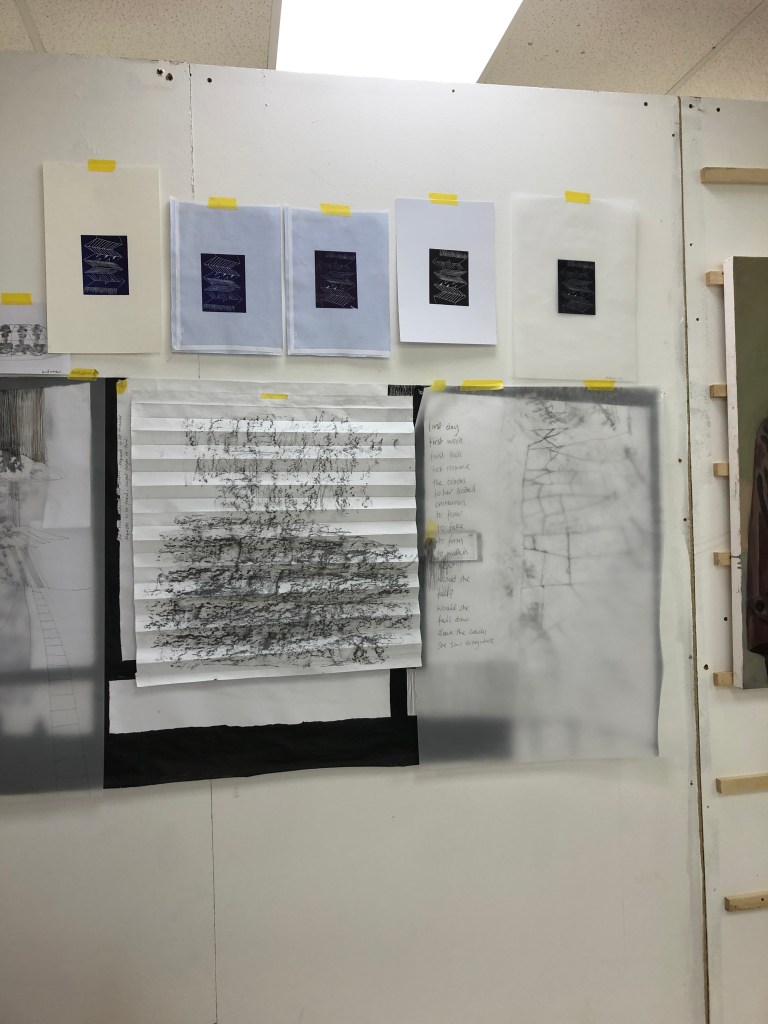

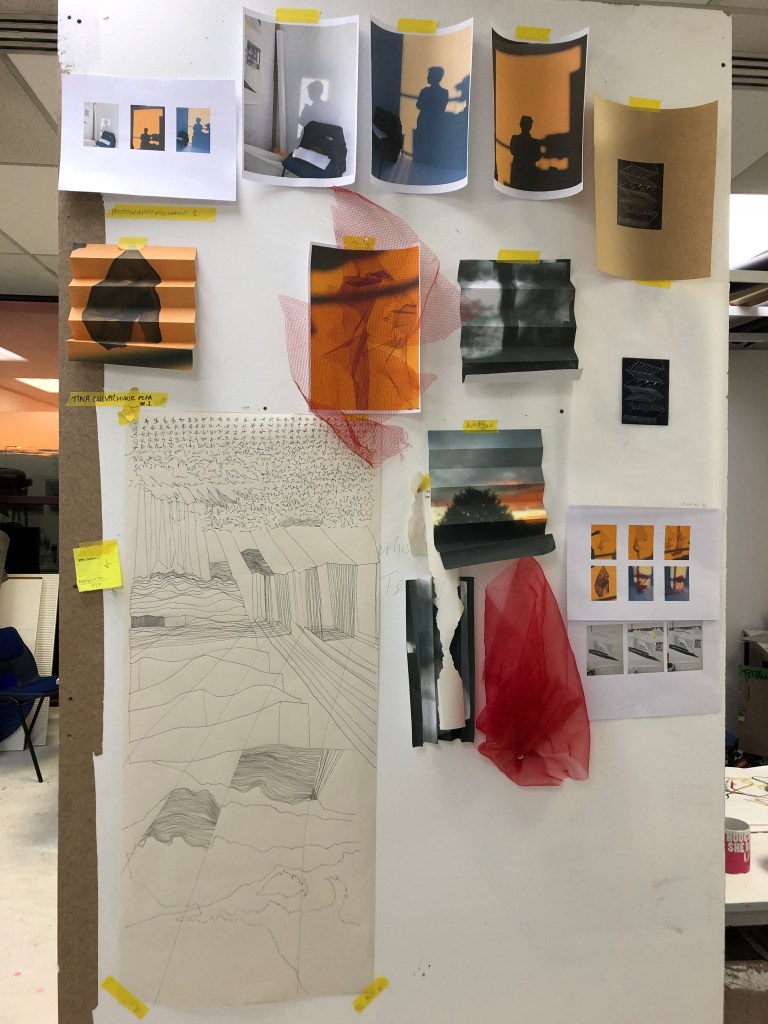
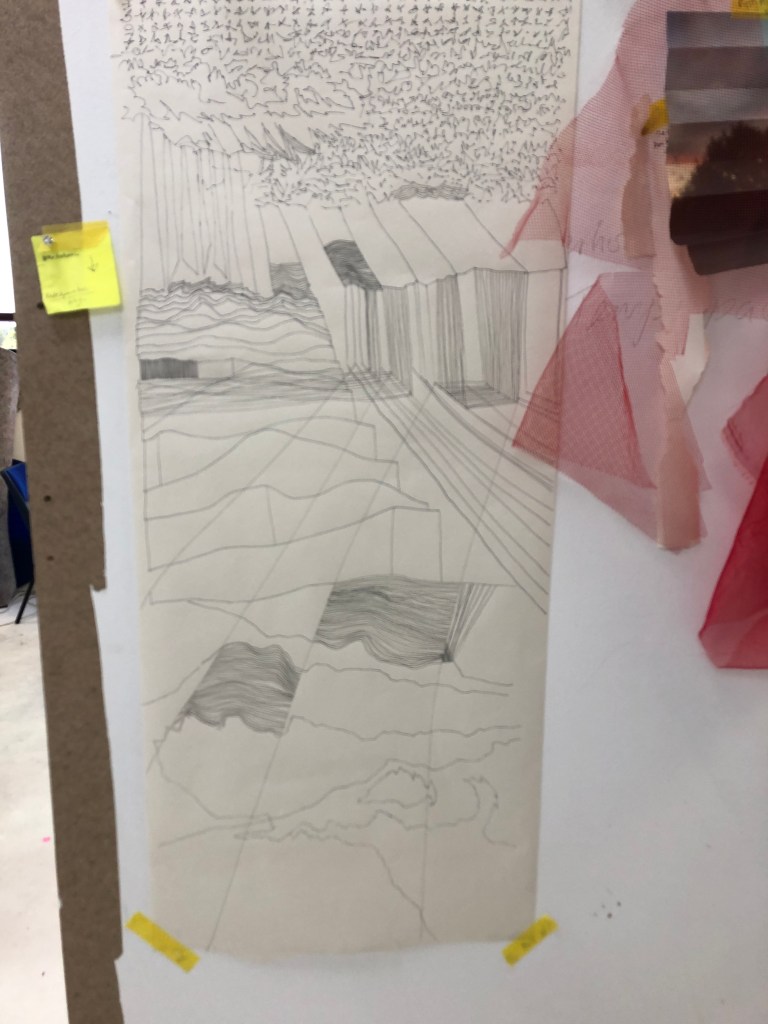
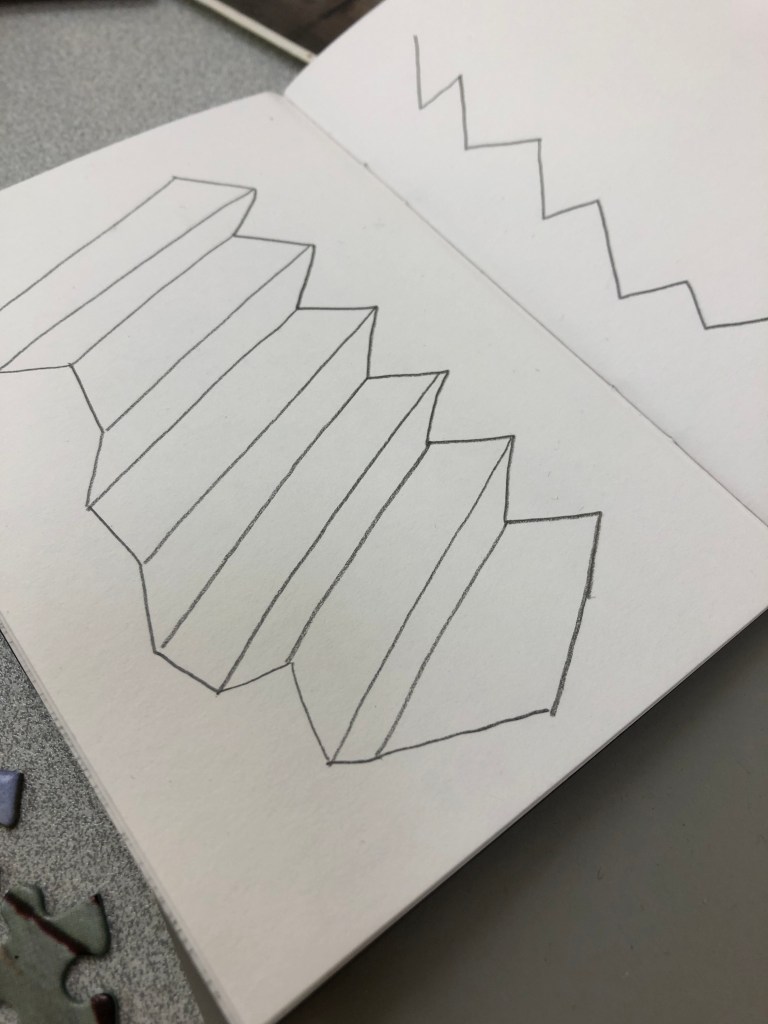
My undergraduate installations were discussed and we agreed this new work is more about installing a set of current work and objects and showing transitions between those made and found objects, drawings and photographic work.
We discussed articulation and how this can be a way out of not fitting into a frame, so the artworks are a set off points and how I could manipulate them those points
We talked about what is the language system and how do I develop my own language system? Kerry suggested I think about how music is written, sometimes it is a repetition, but each repetition has a different feel. Sometimes it layers upon another layer in the music and the composer allows every now and then for one layer to emerge above the others. We talked about transcognition and the transference of ideas across at set of things, we talked about Anne Wilson who uses performance and fibre art extending them across mediums to create installation spaces.
Kerry pointed to a relationship between the things in the studio, very much like an installation. He encouraged me in the following weeks to keep adding to that and to make the studio the installation. He suggested looking at Anne Wilson’s work.
I found Anne Wilson’s website and looked at how she had translated the drawing into object by making topographies. However when looking at her more recent work I found that she has been making material drawings from found materials shown below.
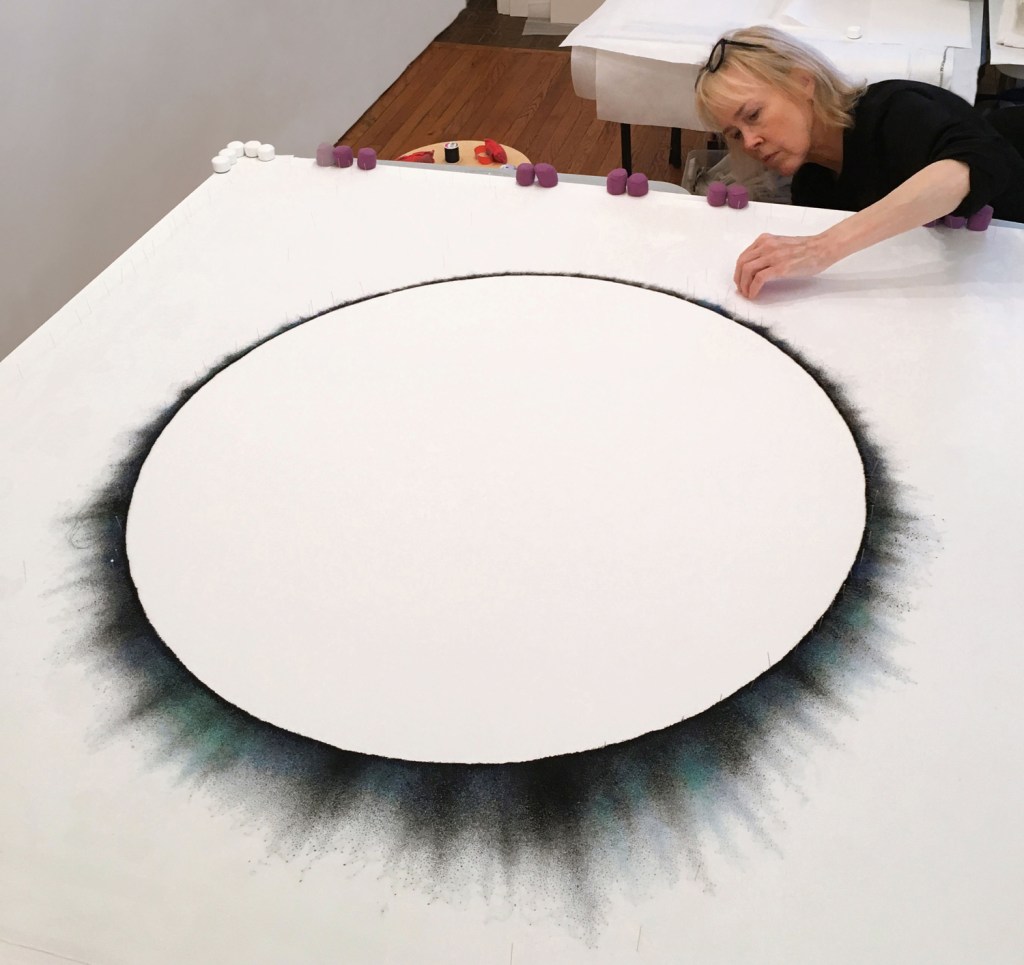
Fig 1 Vanish ( Wilson, 2016) damask cloth, hair and thread, 58” x 58” x 2 ¼” (framed)
These materials are cloth, thread and human hair so, there is a very strong connection between found materials I use, those Hartoum uses (although not necessarily found) and Wilson’s. In Wilson’s words in an online interview on the Phaidon website she points out ‘I use Lace, bed sheets, table linen, human hair – bring material culture studies into the conceptual arena of contemporary art, acknowledging the embedded histories of these materials and ways of making as critical frames for artwork’ 1 (Wilson 2019).
ANALYSIS
Upon reflection, this tutorial of my ongoing practice, with the research I have undertaken since, I can see that within a wider cultural context the neon and textile work I have undertaken just prior to entry on the postgraduate programme and the work I am exploring currently have a place and currency amongst these artists. These artworks, with further research and a greater understanding of my contextual language and methodology means I can hope to develop my practice further on the postgraduate course.
Fig 1 Vanish (Wilson, A. 2016) damask cloth, hair and thread, 58” x 58” x 2 ¼” (framed)[Available online]:https://www.annewilsonartist.com/vanish-images-text-credits.html Accessed 22 October 2019
1 Anne Wilson page on Phaidon website (2019)[Available online]:https://uk.phaidon.com/agenda/art/articles/2019/march/13/talking-textiles-with-anne-wilson/ Accessed 22 October 2019
 Tina Culverhouse