Following from being set a piece of work to define our practice, there was a seminar with visiting lecturer, Helena McGrath, to establish what our research should be about. We analysed our own practice, what we are interested in and what we do. I found this process a bit alien and difficult at first as I had been on my own within my practice, working independently for such a long time.
I started this analysis by listing the artists who interest me in relation to my practice. The shortlist is Susan Hiller, Mona Hartoum, Louise Bourgeois, Eva Hesse and Tracy Emin. All these artists have been important to me over the years I have been a practicing artist for different reasons with a foundation of feminism.
My work is about bringing the internal subjective world, journeying, dreaming, translating the numinous into the external world onto objective drawing and making.
We discussed Dorothea Tanning during the seminar, whose work I do admire and recently went to her retrospective at the Tate. Surrealism like this, however, leaves me feeling uneasy in comparing it to my own practice. Tanner has a physicality of her numinous in a realistic form. My work feels very different from this, see below.
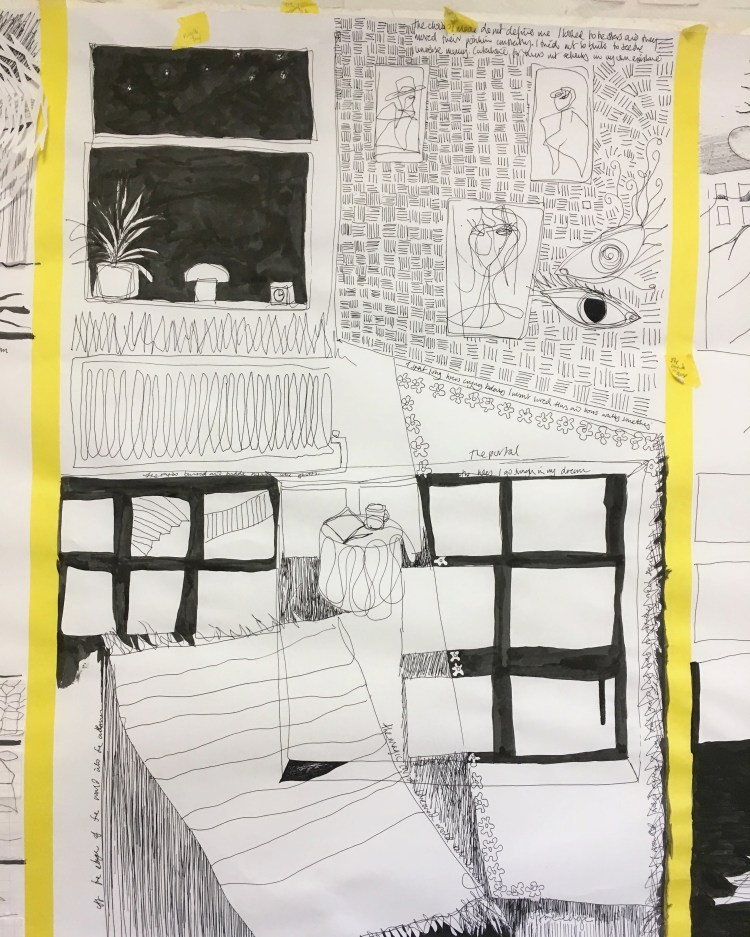
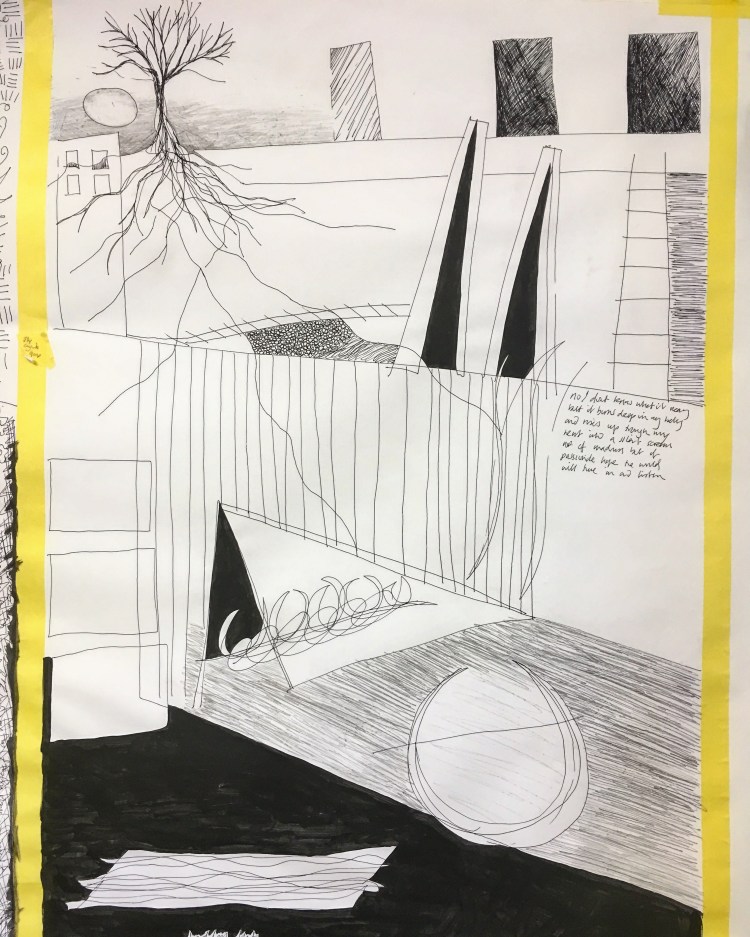
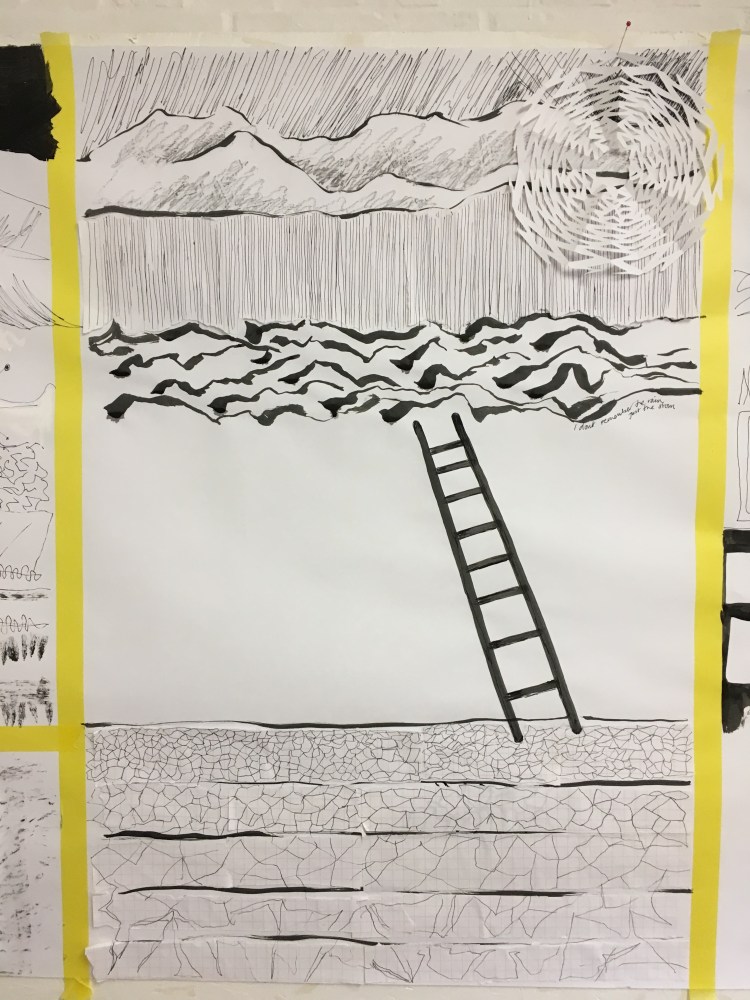
Fig 1 recent work exploring timelines, the numinous and ritual, (Culverhouse, T 2019)
Dreamtime with indigenous, ancestral journeys, was suggested as another research avenue. Kerry Andrews had mentioned the book Songlines by Bruce Chatwin in the course introduction crit in relation to the journey aspect of my practice, however, I felt that my despite my work relating in some way, it felt too sociologically and culturally different to pursue. My cultural and ancestral memory is a key component in my own ritual art work, rooted in this European landscape with the walking nature of trodden paths like the Ridgeway an important marker in my practice.
Land Artist, Richard Long was another suggestion again by Ian Gifford, from my cohort. So, I researched Long and found out that within Land Art, his walks are central to his work as an artist. The walk is fundamental to the generation of ideas in my own practice. This is something that we share in our practice so I will explore this further in my practice as I develop in Practice One.
The internal world meeting the external world is the key to my practice right now. I need to look at how other artists have met that. I also need to decide on the subjectivity of my work and what that means to me. Susan Hiller had an interesting view of surrealism. In the book the The Provisional Texture of Reality edited by Alexandra Kokoli, she talked in depth about this and said ‘I feel the basic impulse of the Surrealist experiment is what’s important, very, very, very, important, and I think that it’s misrepresented when it’s presented to people as a kind of painting.’ (Kokoli, 2008). This is exactly the problem I have faced in my own practice.
To reflect upon this initial research, I am going to pursue my practice with these concerns in mind. I realise that my practice stretches across many disciplines and that maybe I don’t need to specialise on one area, or think of surrealism or land art or any type of work specifically as an influence in my work. To develop my practice over the coming weeks I will assimilate this information.
KOKOLI, A. (ed.) (2008) Susan Hiller the provisional texture of reality Selected Talks and Texts, 1977-2007. Dijon: Les Presses du Réel.
 Tina Culverhouse