I visited the Kiki Smith show at Modern Art Oxford after postgraduate tutor Michael Wright had mentioned Smith in the taught seminar I attended on printmaking. Michael had explained how Smith was a cross discipline artist and had made very spiritual works. I was curious as I started to research Smith and discovered how she had a long and varied career but had refused to talk in depth about the content of her subject matter. I learnt that she made huge tapestries and as an artist who uses cloth and fibre in my practice I had to visit the show.
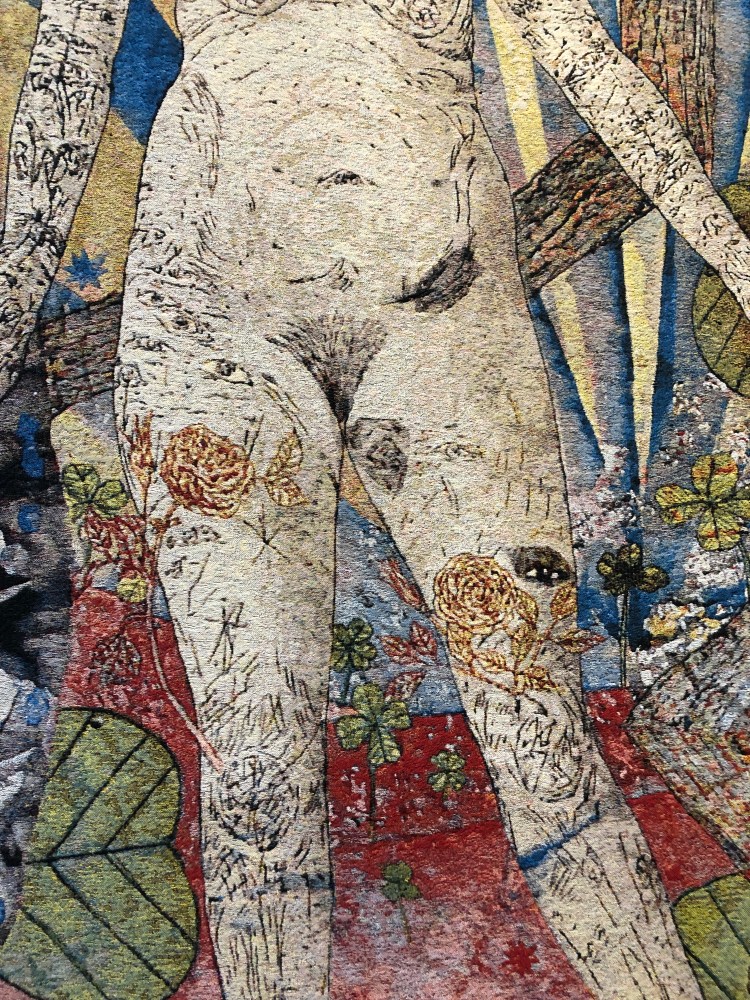
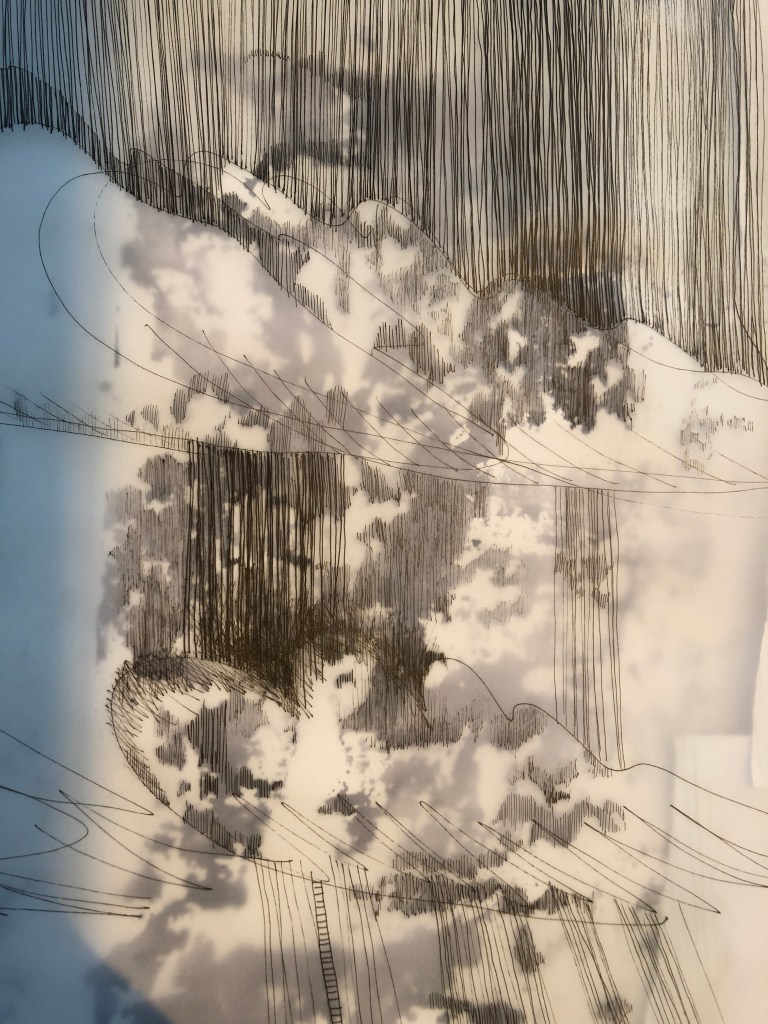
Detail of Parliament, 2016 cotton jacquard tapestry 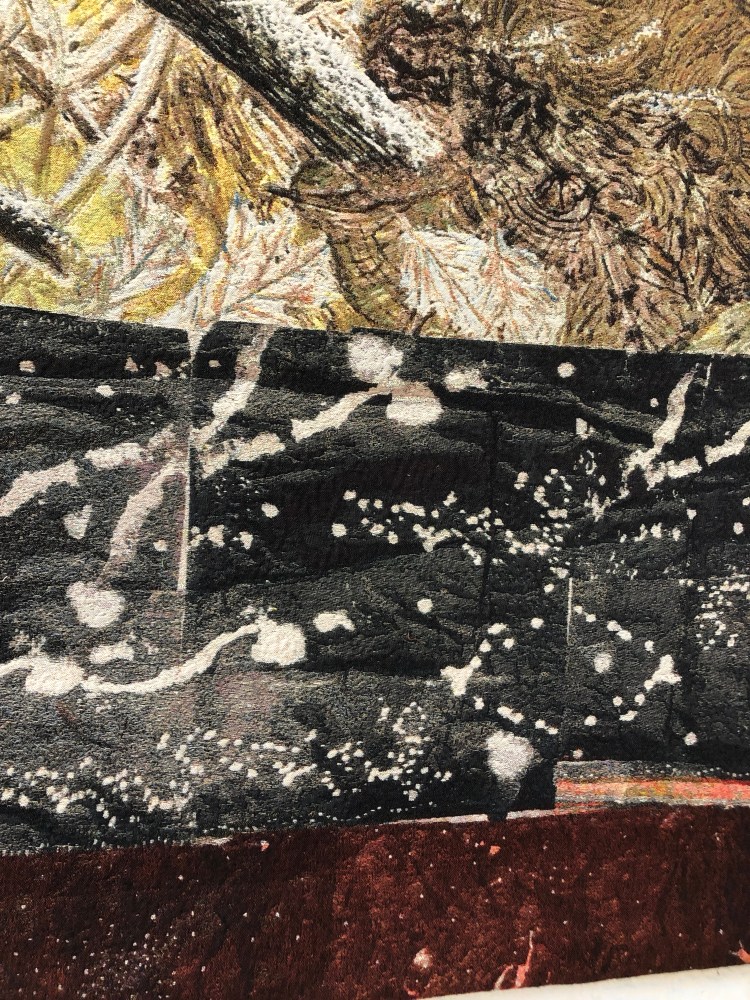
Detail of Fortune, 2016 cotton jacquard tapestry 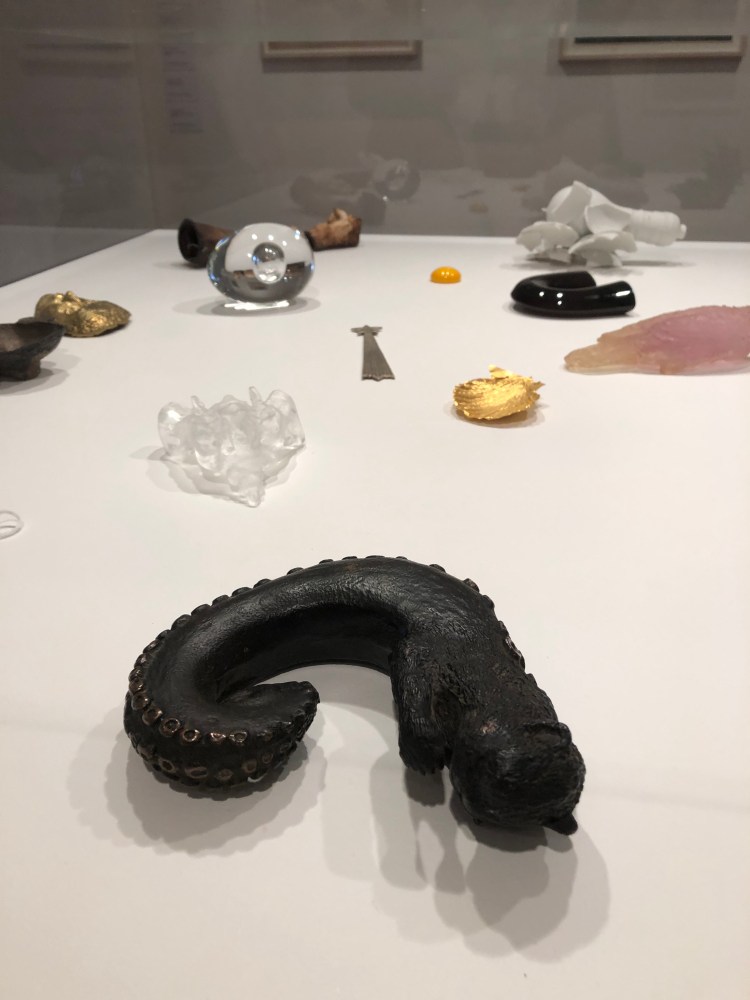
Foreground small sculpture no. 34 Tail bronze 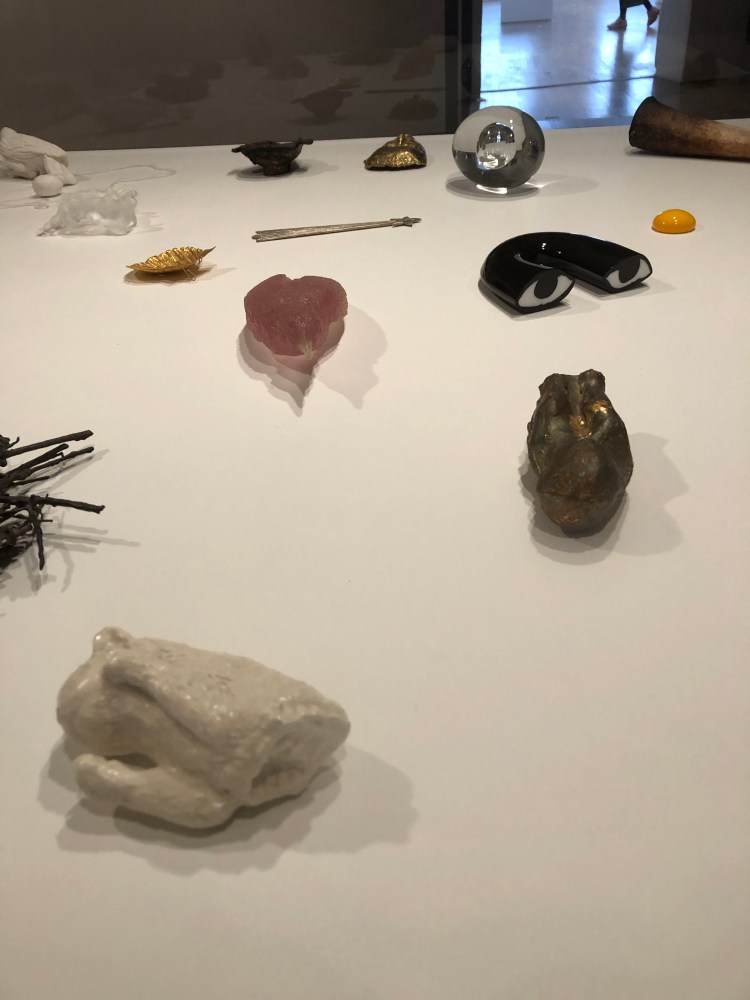
various small sculptures nos. 21-40 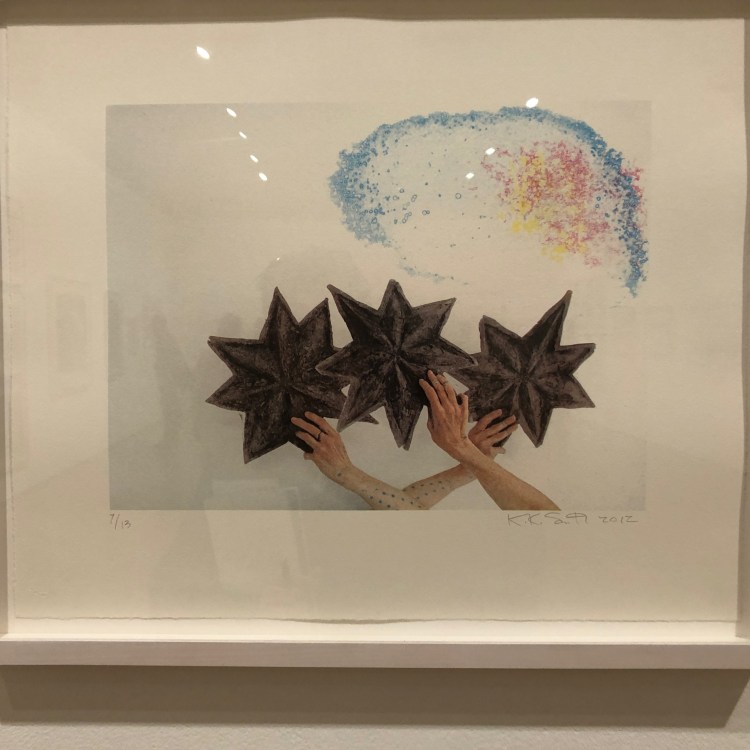
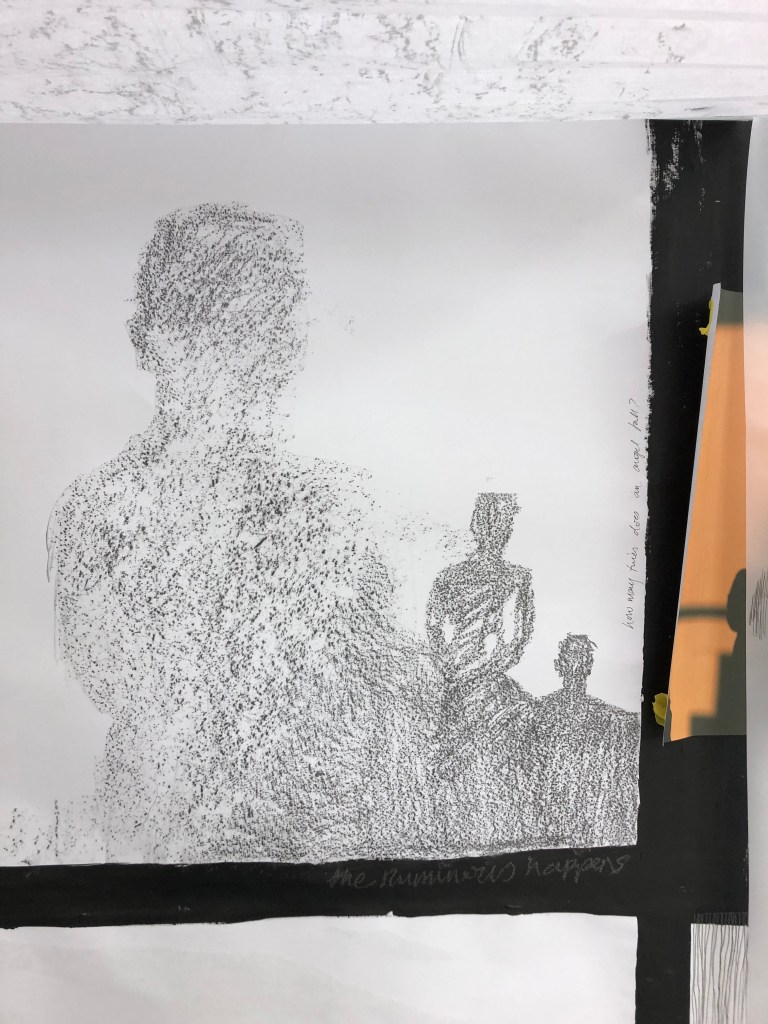
Puppetry, 2012 set of three prints 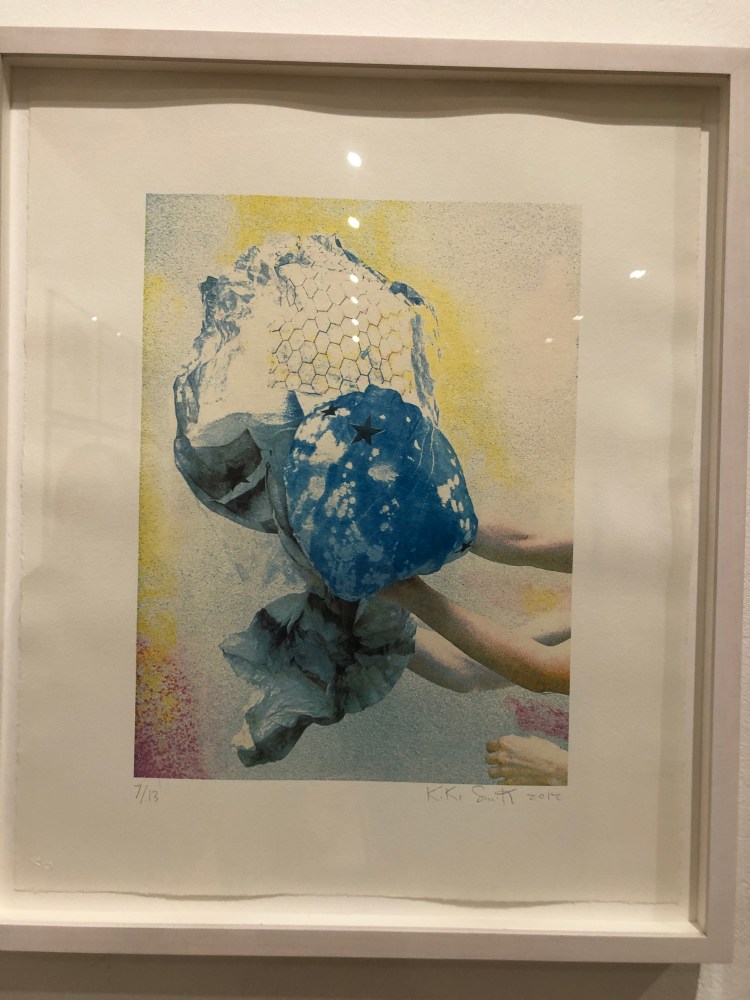
Puppetry, 2012 set of three prints 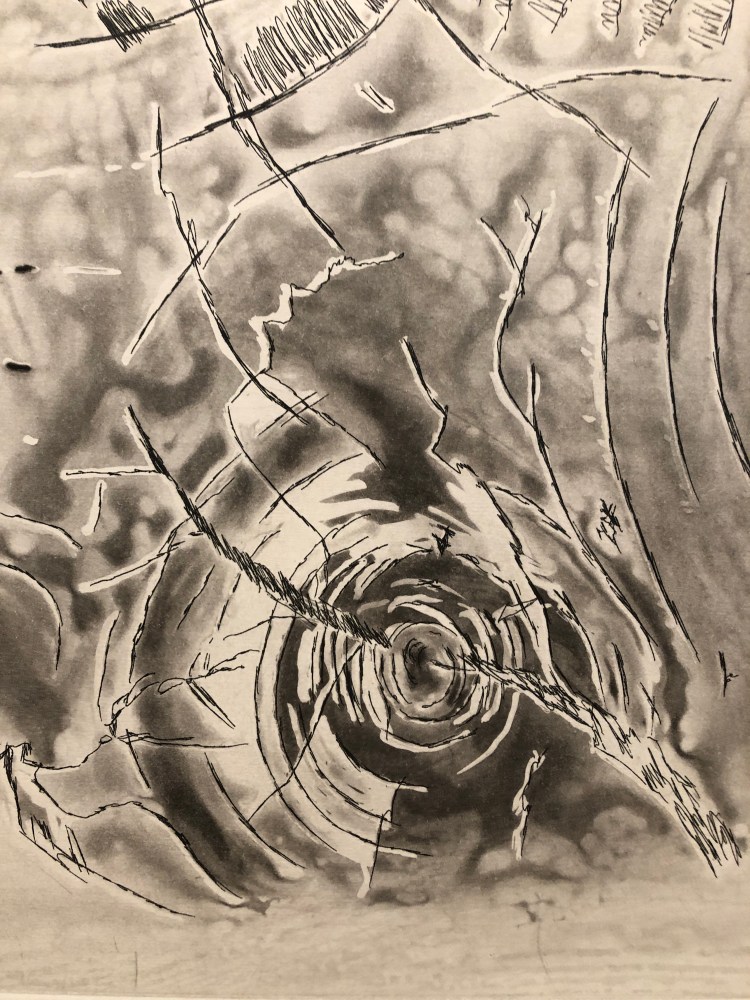
detail of Sorcery (3rd Hour), 2019
Intaglio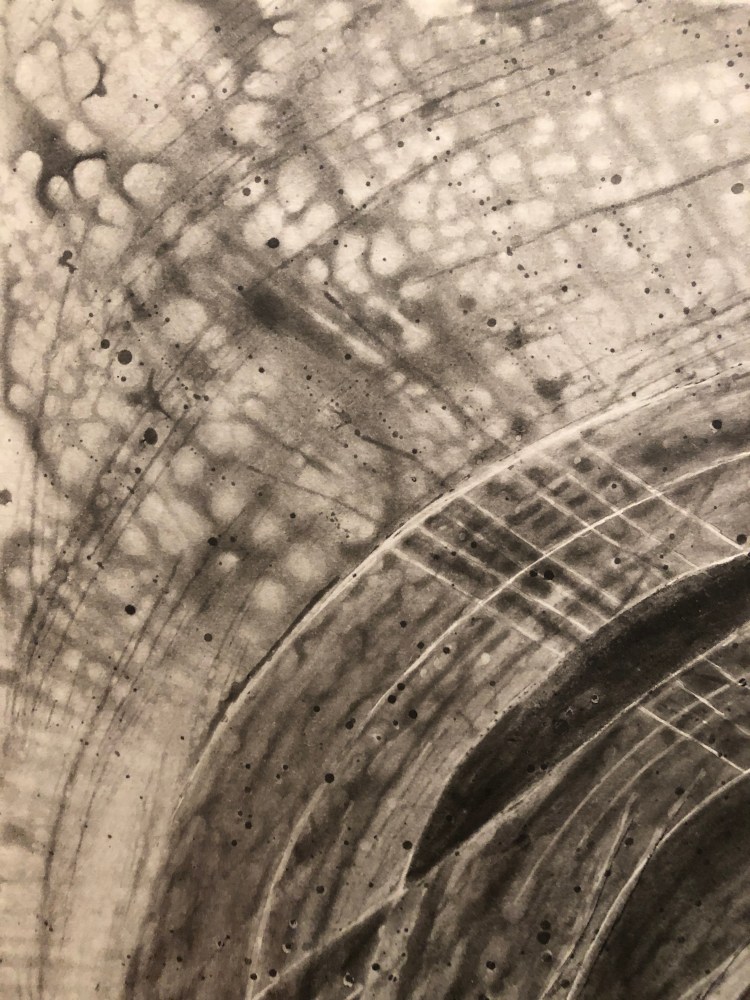
detail of Sorcery (3rd Hour), 2019
Intaglio
I was impressed by the cross discipline work that Smith had produced but mostly I was quite reassured by her experimentation and refusal to settle on one type of work, or indeed style. Her work had a real truth to it that showed from the smallest of glass sculptures to the largest of complex tapestry. The woven words and images on the skin of her subjects on the tapestries showed such incredible attention to that truth I found that I wanted to pursue this truth myself in my own work by similarly experimenting moving on from this experience. The final two images above are from some drypoint and monotype prints Smith made on a large scale format. I spent time looking at these and trying to read how she had made them.
What I found very relevant to my own work is her use of imagery. In my timeline ‘cartoons’ I have been very figurative in the broader sense and the narratives of the pieces obvious and drawn literally. I am struggling with some of the imagery and how it reads. In Smith’s work she moves freely from literal figurative imagery to more abstract. I need to find a way to get to the truth of what I am trying to portray or say whilst creating work I feel fits my narrative and story. Using this kind of imagery feels difficult. I switch between ways of working and I want to burrow into this and work hard at finding some questions to ask about my own process.
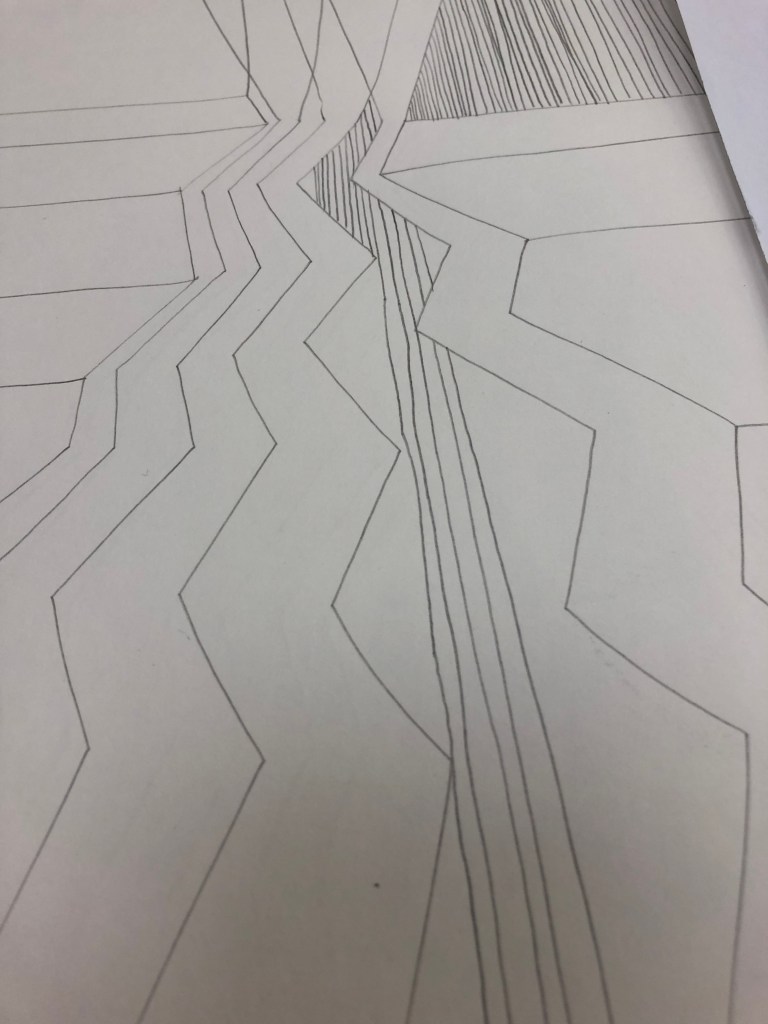

I went into the print room in the following weeks and decided to bring this sense of play and experimentation into the work I undertook. I have updated this post to include the work that came from the research on Smith.
UPDATE
Below you can see the prints I experimented with a few weeks later. I have been printmaking extensively throughout my art career, but this was a new way of working for me and looking to experiment with this monotype technique enabled a big shift in thinking.
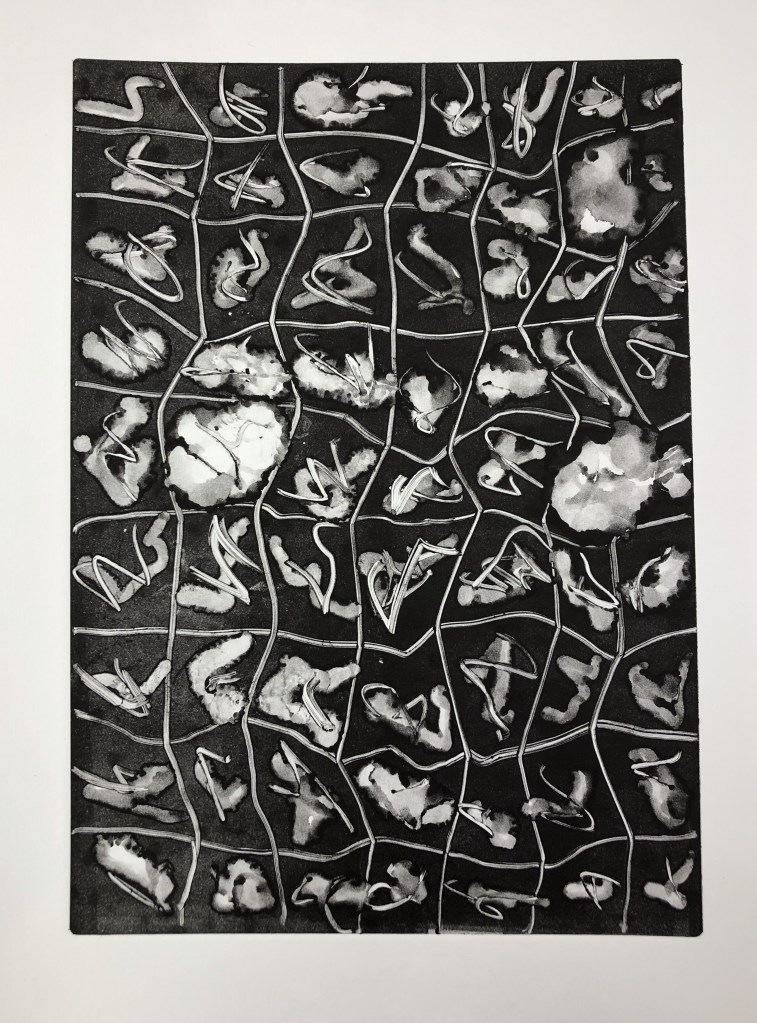
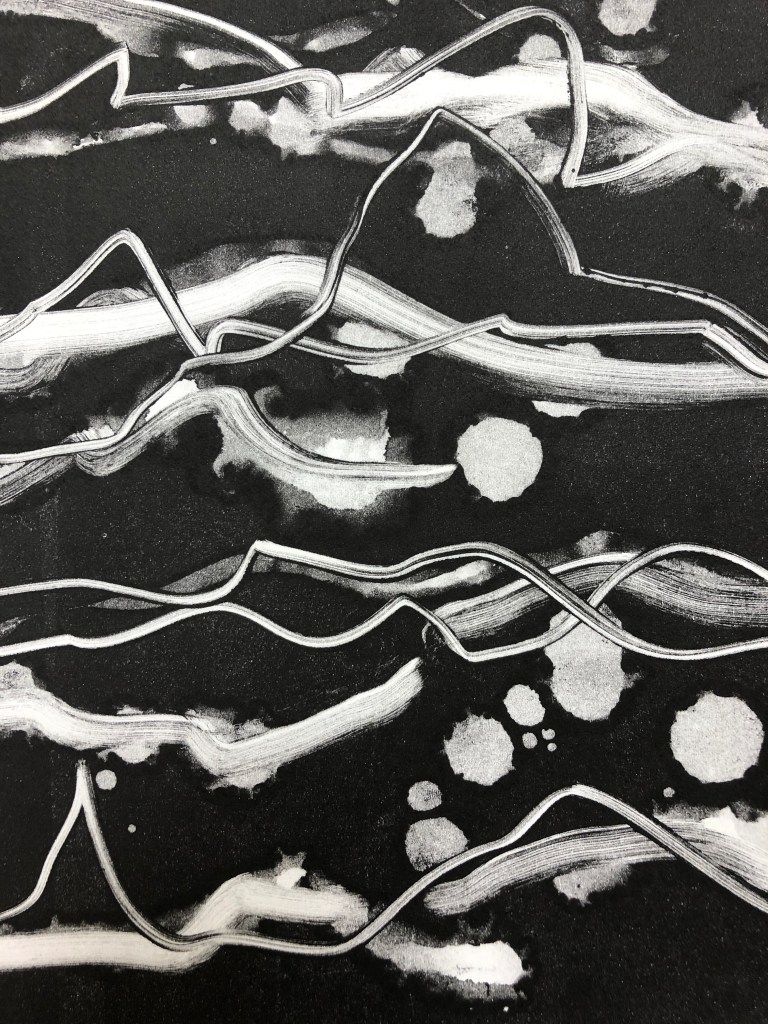
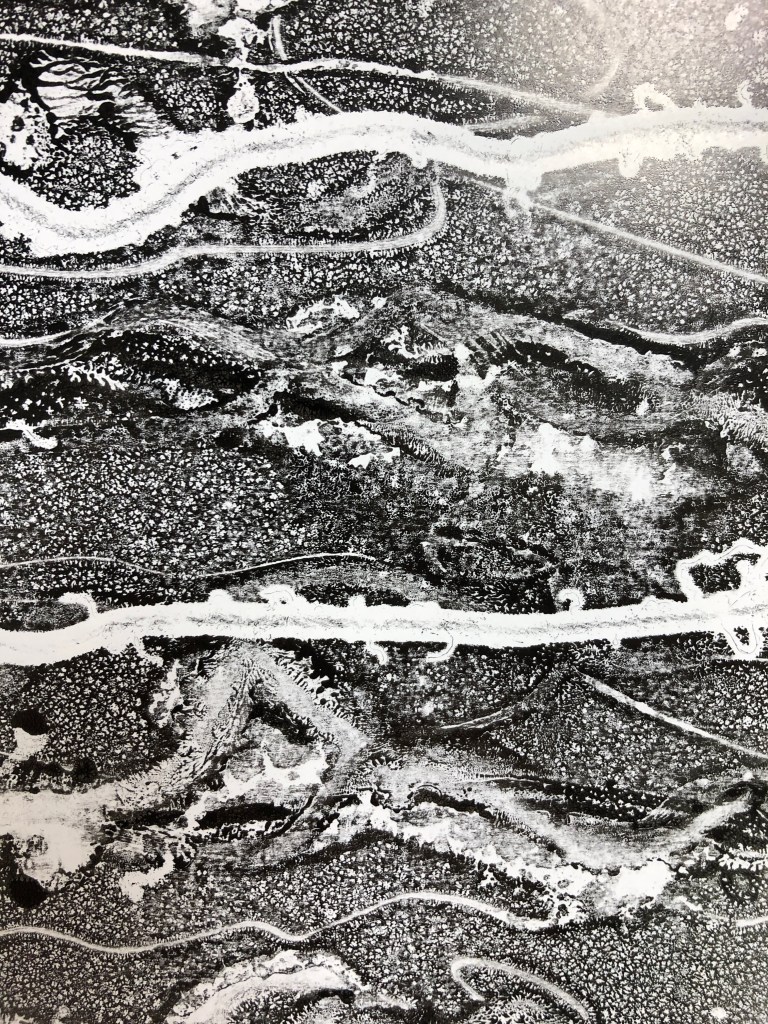
Upon reflection, experiencing Kiki Smith’s work directly after the seminar with Michael Wright, seeing this artwork close up and then having the opportunity to experiment in the print workshop so closely together has allowed my practice to develop in ways I couldn’t have had the opportunity to do outside of the postgraduate Fine Art course. Seeing Smith’s experimentation close up has given me license to expand my practice, not just in printmaking but in looking at the possibility of translating this research across many areas of my practice, especially three dimension and casting. I feel there is a clear shift in my image making and the way I feel the truth of the work as a result.
 Tina Culverhouse