THe Project Objective
On our first day in Practice One, Postgraduate Lead Tutor, Kerry Andrews gave an icebreaker project to deliver the following week. We were to go on a journey of some sort and produce and outcome from that journey.
In the next week focus on a walk, ride or trip that you make and either record it (draw, photograph, collage or anything) and/or respond to it in some way. This is not so much about objects, but your movement through a place.
Researching for the project
I gather material in the form of photographs, video clips and found objects as I journey around my space. I have a favourite walk to my Hitchin studio and I decided the journey would be one from the new studio space in the Postgraduate studio to my shared studio space in Hermitage Road, Hitchin. I have a large drawing board in my studio, so rolled a large piece of paper onto it and started to work. I took photographs and drawings from my sketchbook to make the initial drawings. I translated these images into words and back again. I had printed out lots of the photographs I had taken on my journeys since the project had been set. I concentrated on the ones of my walk between home and studio.

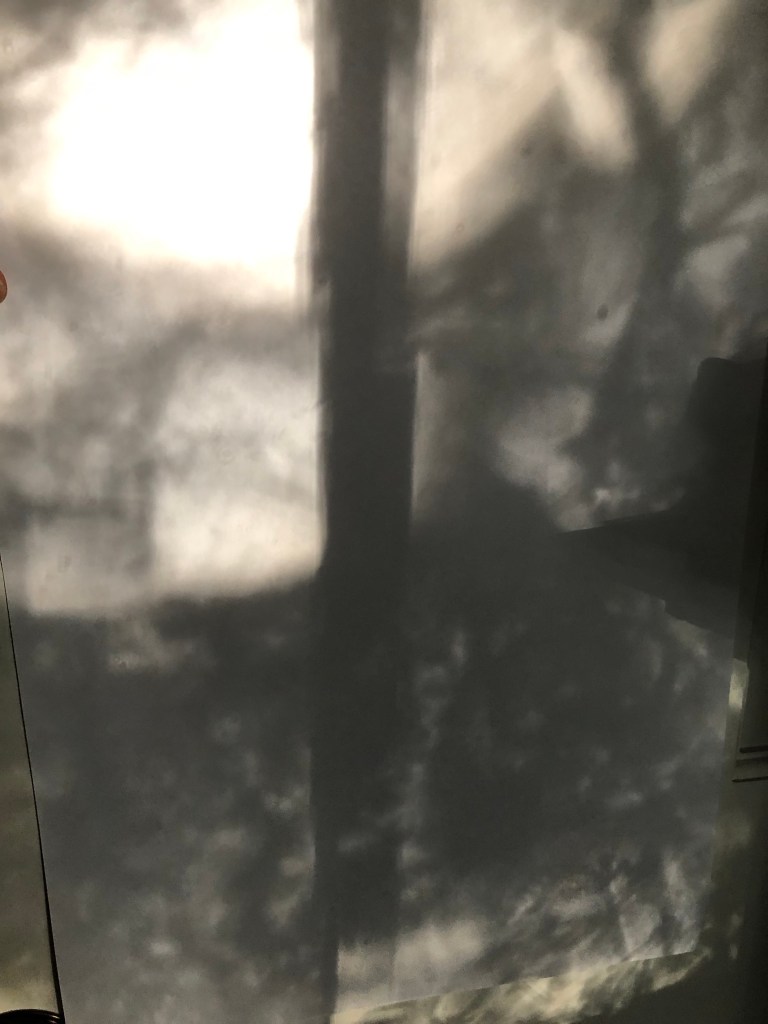
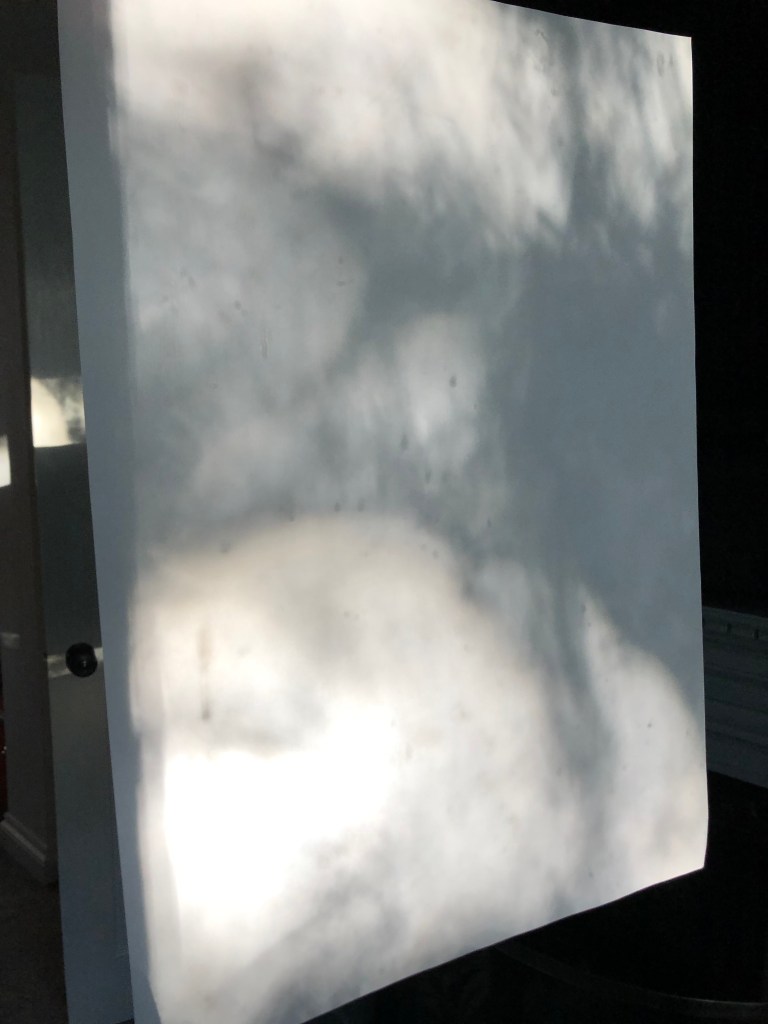
I also experimented with taking photographs of the shadows I find so fascinating in my front room at home. I used a plain piece of paper to catch the shadows and photograph them with my iPhone. I printed these out too and took them to the studio to help me piece together the icebreaker project.

I wrote the following poem in my sketchbook in response to the task:

Making the work
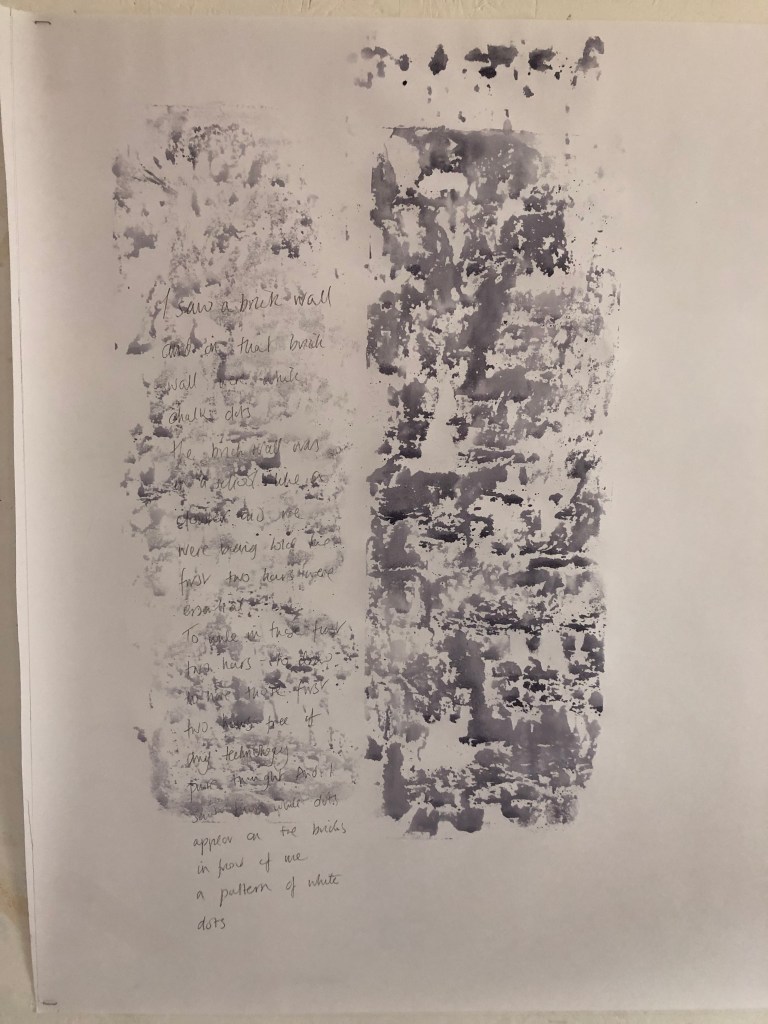
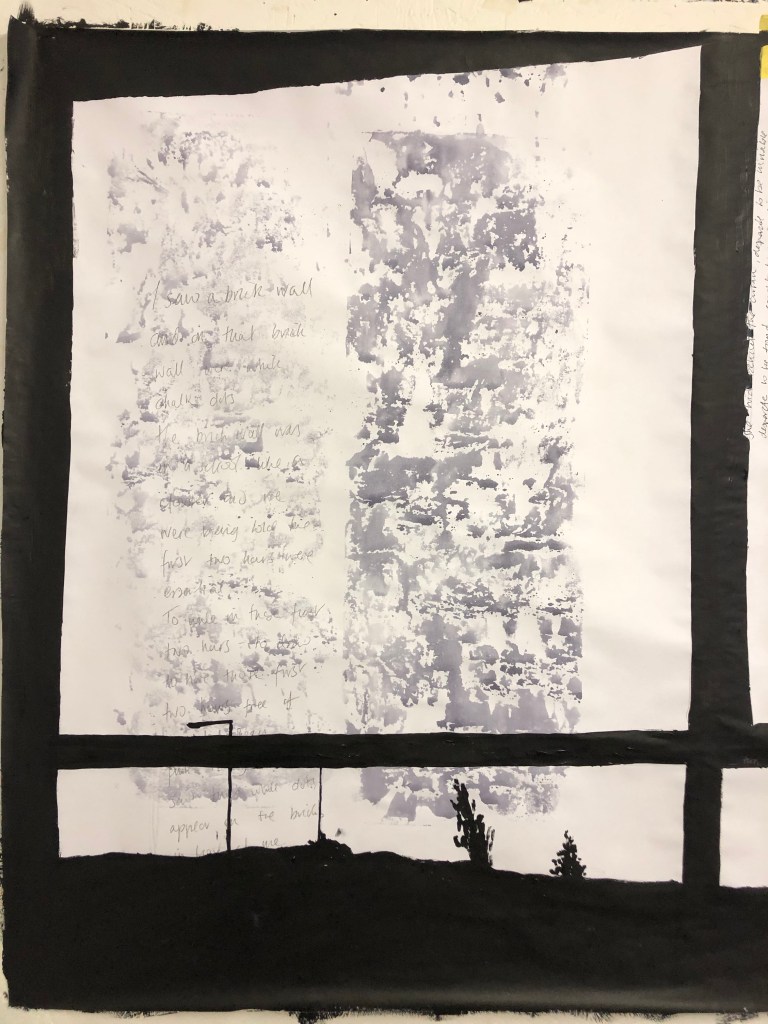
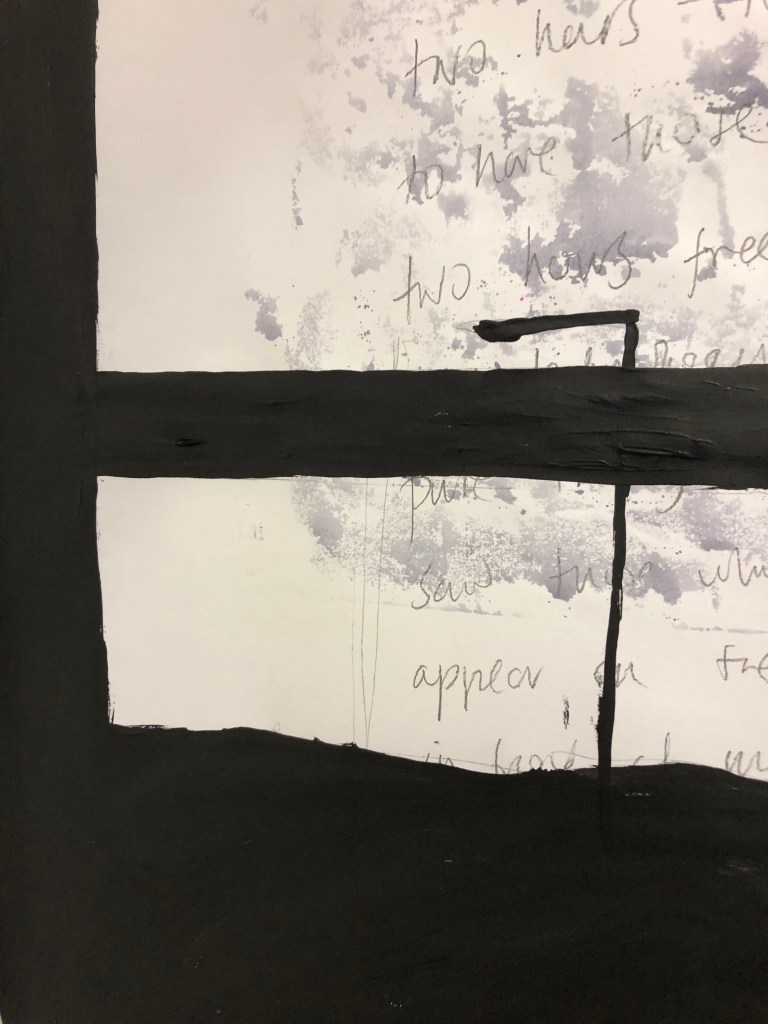
As I worked in my studio I brought many elements of the journey into the piece as I worked on it. I started with bringing the new studio into this one and drew out the window frame from the university studio on the left hand side. I had mentally divided the paper into three nearly equal sections. I worked on the left hand side, I started with some cut off paper and used wax to rub the wall onto the paper, I sprayed this with water and added some deeply pigmented Indian watercolour paint. I pressed this onto the main piece of paper and printed it twice over the words I had written.
I saw a brick wall
and on that brick
wall were white
chalk dots
the brick wall was
in a school like a
cloistering we
were being told the
first two hours were
essential
To write in the first
two hours to draw
to have those first
two hours free of
any technology
pure thought and I
saw those white dots
appear on the bricks
in front of me
a pattern of white
dots
I wanted this to mimic the cloud formations I had witnessed through the window just as some form of body. I painted in the frame and continued the frame onto the middle section.

I had another sheet of paper and rubbed this with graphite against the same piece of victorian brick wall. I had previously drawn lines on this piece of paper intending to trial some work for a commission but had discarded the drawn lines, here though they looked right. I then worked on the right hand section of the piece and drew with graphite one of the shadow photographs I had taken along my path.
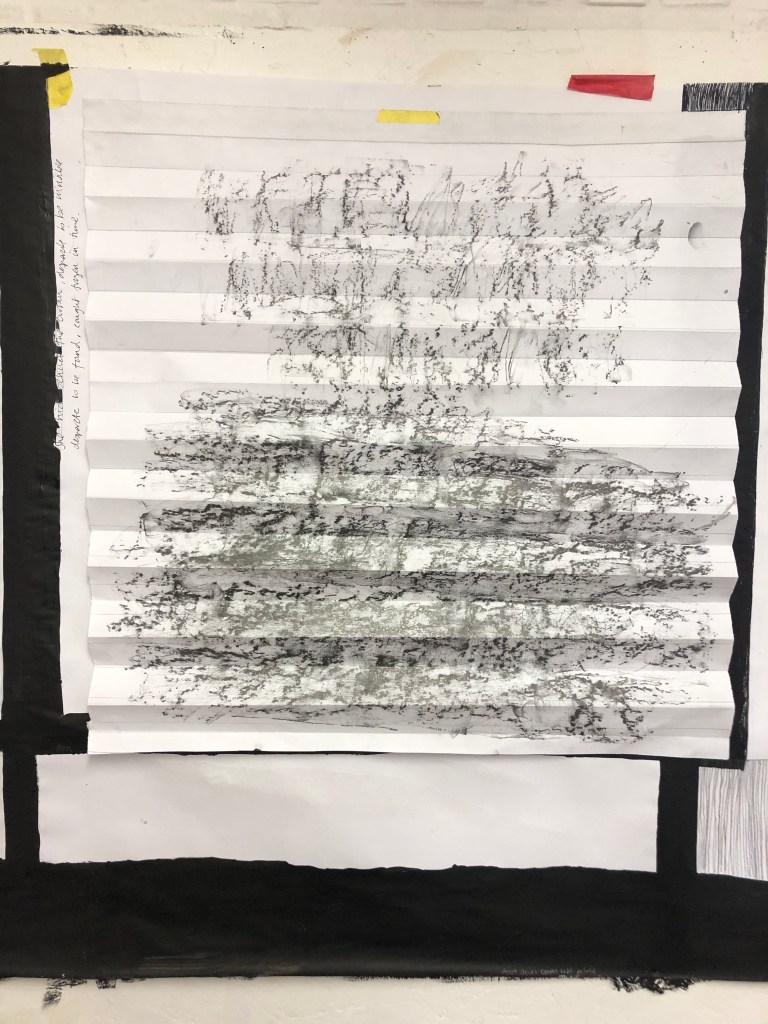
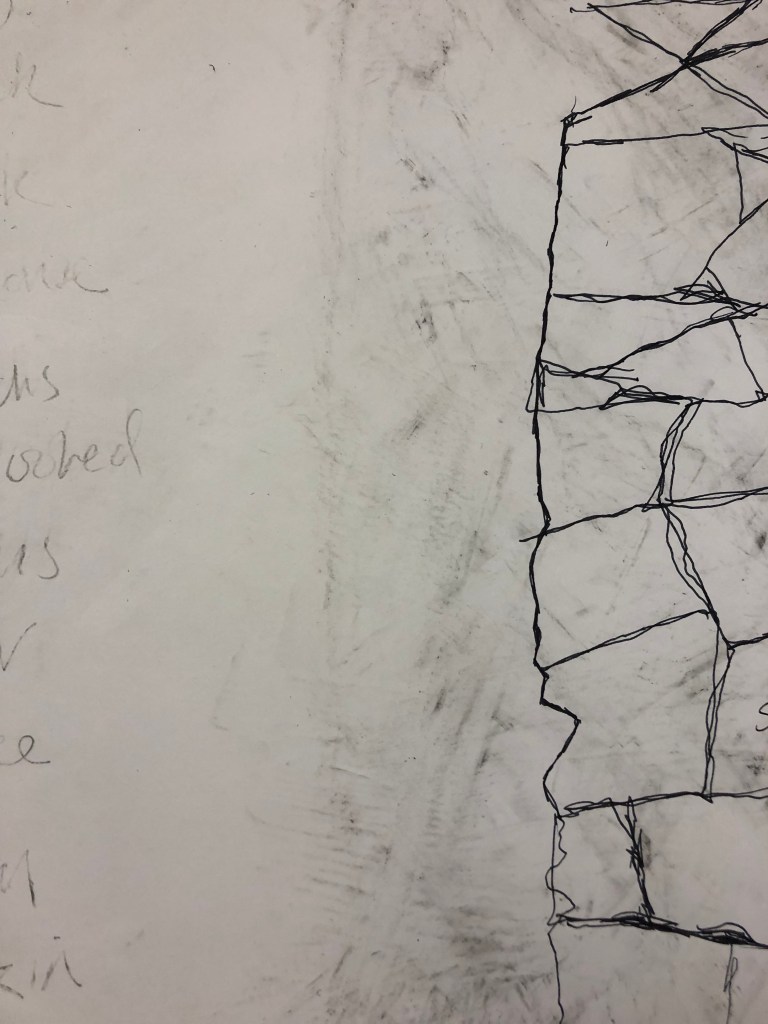
As I worked on the drawing for the the right hand side of the piece I got very annoyed that the drawing wasn’t representing what I saw in my mind. I started to erase the drawing and from it emerged a poem which I wrote down onto the frame to the side of the drawing.
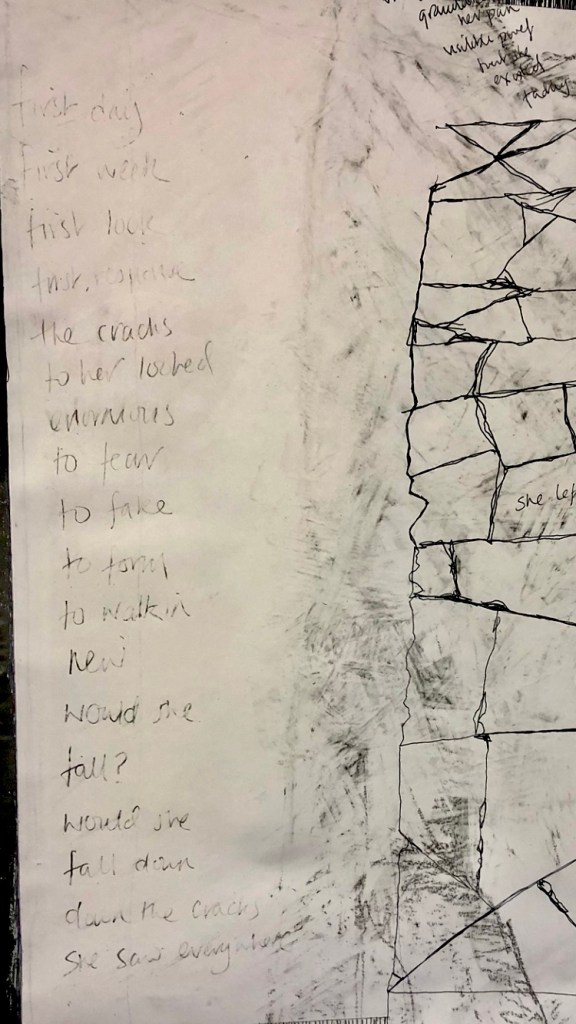
I drew in with ink the drawing from the photograph I had taken of the pavement outside my studio, where it had lorries parking on the pavement. This drawing was very intuitive and I really enjoyed it in comparison to the underdrawing I had erased to make the texture for the pavement.

I used fine liner to draw in the frame on this side rather than use paint as I wanted to be sympathetic to the drawing inside the frame. It felt right to use lines free hand drawn in my usual way to frame this side of the piece. I wrote some pieces of writing that came to mind ‘she left traces of herself to be found everywhere’.
The Outcome Final Pieces
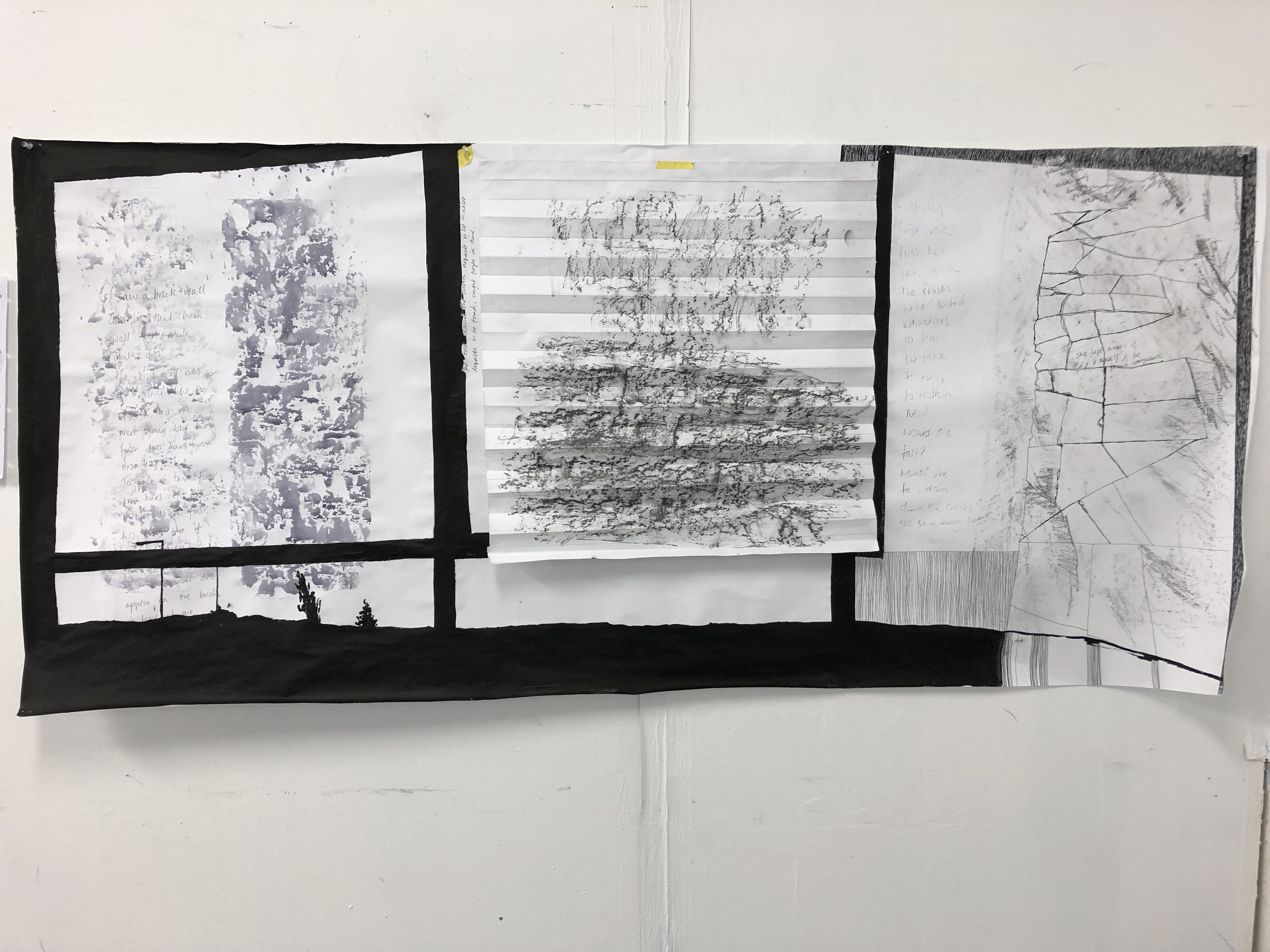
I presented the work on the 1st October in the postgraduate seminar space. Explaining how I worked in series and often threes, I had used this in the composition bringing the new studio into my old studio to make the work via the frames and windows drawn and photographed on my iPhone. Kerry Andrews really liked the fine drawing of cracks. The overall reception of the piece was positive as a depiction of the first week in the postgraduate course and the journey into it was of interest in my process.
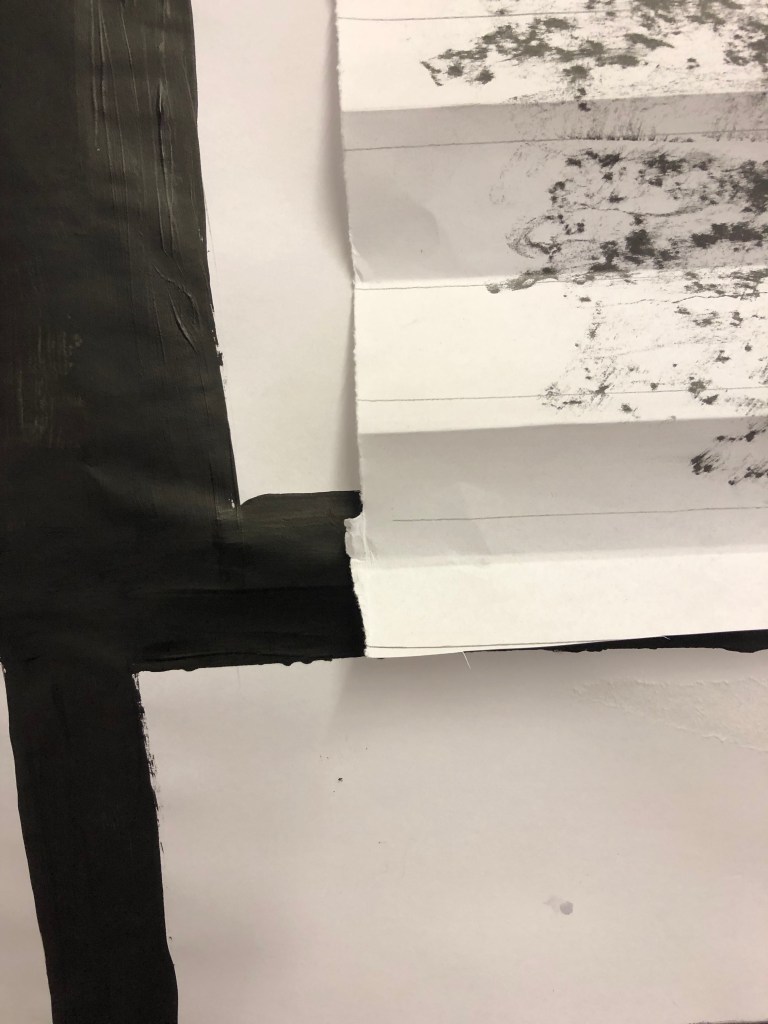
I had turned away from the piece and focused my attention on the photographs I had printed onto paper. I decided to fold, and concertina them up like the paper sculptures I had made in my final year of undergraduate degree. I systematically folded all the pieces I felt would work, leaving out some images. The results are below. The reception of these pieces by the rest of the cohort was of great interest.
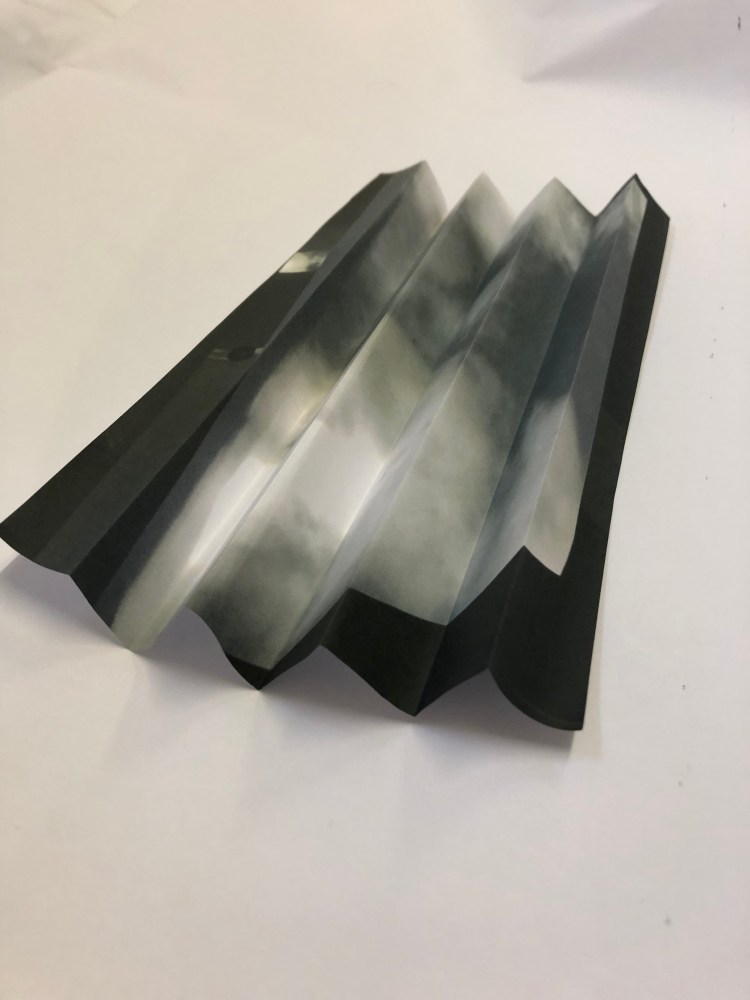
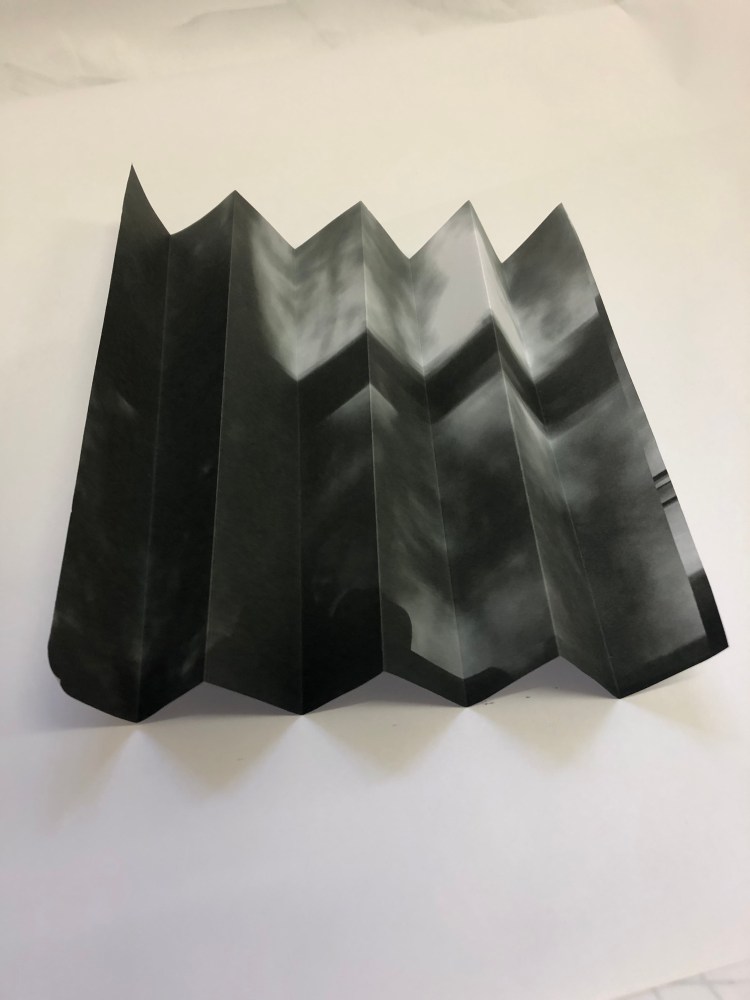
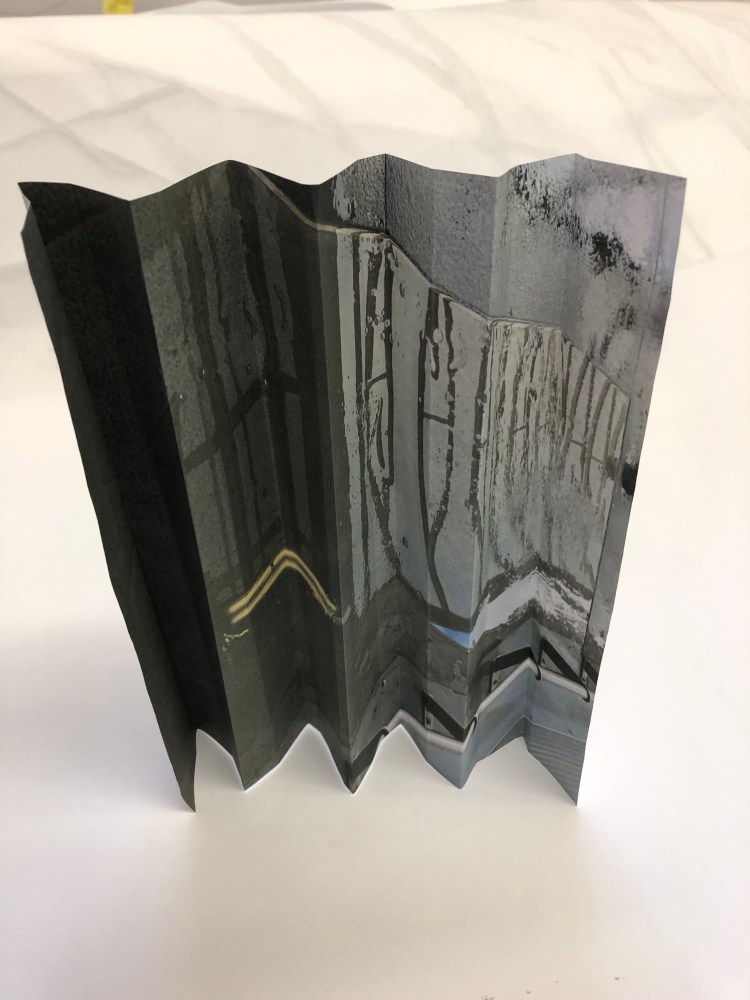
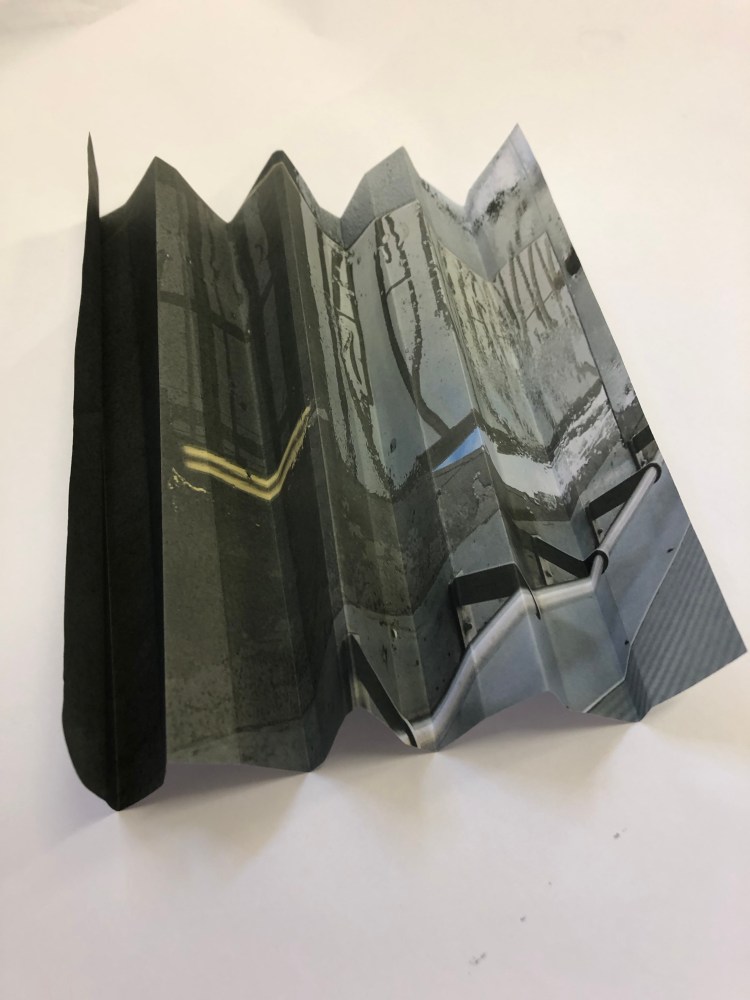

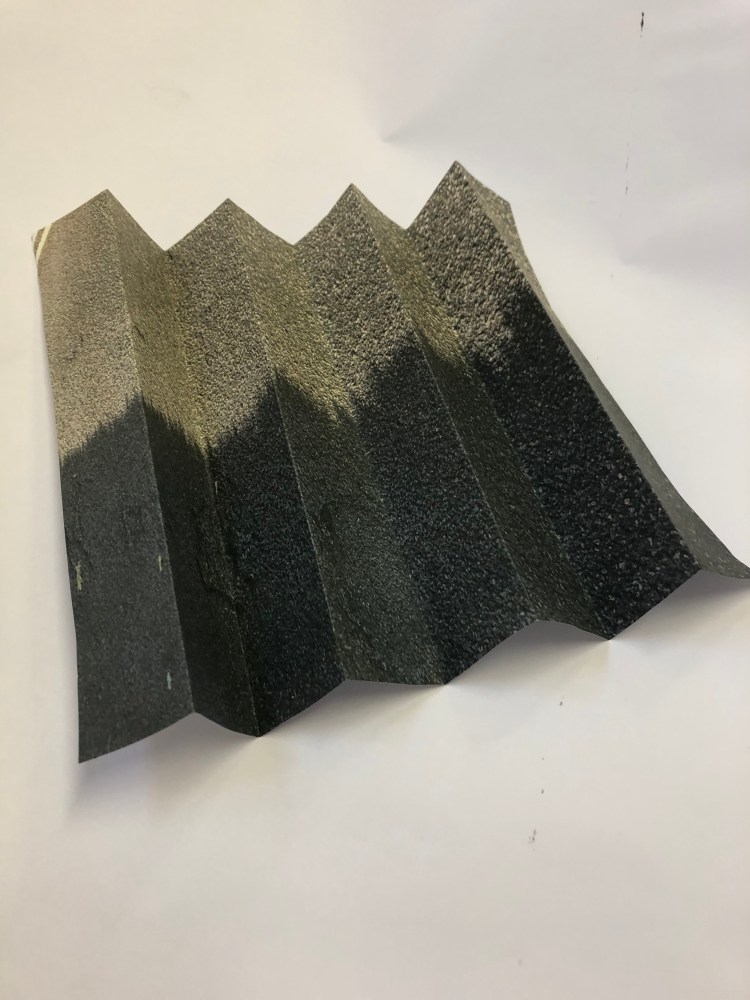
We discussed how I could make these as photograms onto folded paper and how I could also make these really large kind of really large poster size and get them printed in reprographics. I also would like to think about making them into fabric pieces somehow too. The consensus was that they could become very large indeed. I want to expand on this work. I am going to spend the next few weeks going on as many workshop inductions as I can to try to see how I can expand this work into different specialist areas especially print.
During this research I looked at Malpas, a leading philosopher and thinker. I am concentrating on how in taking a journey we can feel our ancestors and collectively bring paths together, making connections on a remembered or memory level is changing who we are as we interact with the experienced work.
In reflecting on this, reading this book is changing my thinking and understanding at a fundamental level of my practice and my journey as an artist. Within the field of visual art practice, it is useful to have writing that expands our knowledge and challenges our ideas about place and experience. In his writing on Heidegger, Malpas has questioned artwork’ being in the world we have a sense of identity that is bound up in the world around us and our presence in it. Malpas writes that artwork is ‘never appears as a final, complete or immediate presence, but is instead a constant unfolding and opening up, a constant self-presencing.’ (Malpas, 2012, p. 250). Presencing means that it can be summoned up and lives in a different not essentially material place once that artwork is experienced. It then becomes part of a thought place and is bound up in human experience of it, whether it is a piece of music, poetry, sculpture or land art.
Malpas, J. (2012) Heidegger and the Thinking of Place Explorations in the Topography of Being. Oxon: Routledge.
 Tina Culverhouse